What's inside
- Key Takeaways
- Quick Picks
- How These Picks Were Chosen
- Side-by-Side Comparison
- How to Choose a Thin Laptop for Your Kind of Travel
- Is a 17 Inch Laptop Ever the Right Travel Choice?
- What Should a Traveller Verify Before Relying on Battery Claims?
- How Should a Travel Laptop Be Packed and Protected?
- Common Mistakes
- Final Recommendation
- Frequently Asked Questions
- Related Guides
As an Amazon Associate I earn from qualifying purchases. This post may contain affiliate links at no extra cost to you.
[SITE_DOMAIN] is reader-supported. When you buy through links on our site, we may earn an affiliate commission.
Six listings are linked below, and each link lands on the Amazon page for that exact machine, where the live price and the full configuration sit side by side. Travel laptops are unusually sensitive to configuration drift — the same model name covers several memory and storage sizes — so confirm the title on the listing page matches the specification quoted in the review before the order goes through.
The best thin laptops for travel are judged by a harsher standard than desk machines ever face. A travel laptop is carried through airports in one hand while the other holds a passport, opened on a tray table the size of a hardback book, asked to survive a working day in a conference venue where the sockets are all taken, and trusted with the only copy of a presentation an entire trip depends on. Thinness is the entry requirement, not the achievement. The six machines below were chosen because each answers the travel brief in a different way: a vast 17 inch LG gram for travellers who work wherever they land, a compact Snapdragon Surface for the lightest possible serious kit, a ThinkPad X1 Carbon for the corporate road warrior, and three progressively more affordable options for travellers whose budgets travel with them.
One discipline governs every review that follows: weight figures do not appear in any of these listing titles, so this guide makes no weight claims for any pick. That may read as an odd omission in a travel guide, but it is the honest one. Makers publish weights in their own documentation, and a buyer for whom a few hundred grams either way is decisive should take the figure from the manufacturer’s specification sheet for the exact configuration — not from a review’s memory of a different unit, and not from a marketing adjective. What the titles do state, and what the reviews judge, is screen size, processor, memory, storage, and the features each maker chose to headline.
Screen size is the traveller’s first real decision, and the spread here is wider than in most laptop categories: 12.5 inches at the smallest, 17 inches at the largest, with the serious middle ground at 13.8 and 14 inches. Small screens travel effortlessly and work adequately; large screens work beautifully and travel with intent. The reviews treat that exchange openly rather than pretending any single size wins, because the right answer depends on whether the journey or the destination dominates your trips — a consultant who works in transit needs a different machine from a photographer who works on arrival.
Battery claims receive similar restraint. Only one listing in this guide, the HP Everyday Slim, puts battery life in its title at all. For the other five, endurance is discussed in terms of platform efficiency — the Snapdragon and Intel Ultra processors here are architectures designed around mobile efficiency — without inventing hour figures the titles do not provide. A traveller planning around a specific number of unplugged hours should read the manufacturer’s documentation for that figure, and should in any case pack the charger: no laptop in any guide makes a power socket irrelevant on a three-day trip.
Key Takeaways
- The LG gram 17 is the destination worker’s machine: a 17 inch touchscreen, 32GB of memory, and a 1TB SSD for travellers who work on arrival rather than in transit.
- The Surface Laptop with Snapdragon X Elite is the compact flagship — a 13.8 inch touchscreen Copilot+ PC with 16GB of memory for serious work in a small bag.
- The ThinkPad X1 Carbon Gen 13 pairs a 14 inch 2.8K display with 32GB of memory and the ThinkPad keyboard heritage business travellers swear by.
- Listing titles here state no weights, so this guide claims none; verify any weight figure against the manufacturer’s documentation for the exact configuration.
- The HP Everyday Slim is the only pick whose title headlines battery life, and it pairs that claim with the smallest storage in the guide at 128GB.
- The Acer Aspire Go 15 and the ASUS ZenBook 3 return as the budget and design ends of the travel spectrum respectively — one big and inexpensive, one small and elegant.
Quick Picks
| Pick | Badge | Why it is here |
|---|---|---|
| LG gram 17 | Destination Screen | A 17 inch WQXGA touchscreen, Intel Ultra 9, 32GB of memory, and 1TB of storage for working on arrival. |
| Microsoft Surface Laptop | Compact Flagship | A 13.8 inch touchscreen Copilot+ PC on Snapdragon X Elite with 16GB of memory and a 256GB SSD. |
| Lenovo ThinkPad X1 Carbon Gen 13 | Business Traveller | A 14 inch 2.8K screen, Intel Ultra 7, and 32GB of memory in the definitive corporate travel chassis. |
| Acer Aspire Go 15 | Budget Big Screen | A 15.6 inch Full HD IPS display and DDR5 memory, balanced against 128GB of UFS storage and S Mode. |
| ASUS ZenBook 3 UX390UA | Smallest Bag | A 12.5 inch older flagship design with an SSD, fingerprint sensor, and Harman Kardon audio. |
| HP Everyday Slim Laptop | Battery Headline | An Intel N150 machine whose title leads with long battery life, Microsoft 365, and Copilot AI. |
How These Picks Were Chosen
Selection began with the listing titles themselves, because a travel guide lives or dies on the accuracy of what it repeats. Each pick’s title had to state its screen size, processor, memory, and storage clearly enough for a buyer to verify the configuration at a glance on the listing page — travellers buy under time pressure more often than any other laptop audience, and a guide that sends them into configuration fog fails at its basic job. Machines whose titles left the storage or the processor vague beyond description were excluded, however famous the name.
The second filter was travel intent across a spread of budgets and working styles. A single ranking cannot serve both the executive who expenses a flagship and the backpacker who needs a machine that costs less than the flight, so the six deliberately span that distance: three current flagships from LG, Microsoft, and Lenovo; a budget big-screen Acer; an older premium ASUS whose design still earns its ticket; and an HP whose entire pitch is battery life at the affordable end. Every traveller reading should find at least one machine that resembles their own trips, and the reviews are written to test that resemblance hard.
The final consideration was platform honesty. This guide does not print weight figures the titles do not contain, does not convert processor architecture into invented battery hours, and does not describe S Mode or ARM compatibility as anything other than what they are — facts a traveller should know before the machine is in a bag at an airport rather than after. Where a specification matters to travellers and the title is silent, the specification boxes say so in the standard form and point to the manufacturer’s documentation.

LG gram 17 — Destination Screen
The LG gram line built its reputation on a single improbable idea — a laptop with a genuinely large screen that does not punish its owner for carrying it — and this 17 inch configuration is that idea at full stretch. The title specifies a 17 inch touchscreen IPS display at WQXGA resolution, an Intel Ultra 9-288V processor, 32GB of LPDDR5X memory, a 1TB PCIe SSD, Intel Arc 140V graphics, AI Copilot features, a backlit keyboard, and Windows 11 Pro. Read as a whole, that is not a compromise machine with a big screen bolted on; it is a fully specified workstation-class laptop whose defining trait happens to be its display size.
Who is a 17 inch travel laptop for? More travellers than the airport-lounge stereotype suggests. The consultant who flies in, sets up in a client office or a hotel room, and works there for three days gets a desktop-class view for the entire engagement and carries the machine only at the journey’s two ends. The photographer reviewing a day’s shoot on a screen large enough to judge focus honestly, the analyst living in wide spreadsheets, the writer who splits the display between draft and research — all of them work at destinations. For that pattern, the gram 17’s screen is not an indulgence but the tool itself, and its touchscreen adds presentation and annotation flexibility when the machine is handed around a table.
The supporting specification removes the usual large-laptop anxieties. A terabyte of PCIe SSD storage holds a trip’s worth of media and project files without external drives dangling from the chassis. Thirty-two gigabytes of memory keeps a destination workload — dozens of documents, a video call, a heavy browser session — entirely untroubled. The Intel Ultra 9 platform and Arc graphics handle photo work and light creative tasks that would humble lesser travel machines, and Windows 11 Pro suits the business settings this laptop will mostly inhabit. The backlit keyboard matters more than it sounds: hotel desks and dim conference rooms are where travelling work actually happens after dark.
The cautions are geometric rather than electronic. A 17 inch machine needs a bag that accepts it, will not open gracefully on a small economy tray table, and announces itself in a way a 13 inch laptop does not. Travellers who work in transit — in the seat, in the lounge, in the taxi — should read the next two reviews instead. Travellers who work on arrival, and who have been squinting at a small screen in hotel rooms for years, should linger here: go to the LG gram 17’s Amazon listing, confirm the configuration line by line, and picture your next trip’s desk with that screen on it.
One scenario deserves a paragraph of its own, because it is the gram’s strongest case and easy to overlook: the working trip that replaces an office rather than visiting one. A trainer delivering a week-long course, a researcher installed at a partner institution, an auditor living inside a client’s spreadsheets for a fortnight — these travellers do not need a laptop that performs beautifully for an hour in a lounge; they need the machine that would have been on their desk, transported. The gram’s combination of screen, memory, and storage is the only one in this guide that asks for no working compromises at the destination at all, and for trips measured in weeks rather than days, that completeness outweighs every airport inconvenience the size imposes.
- Display: 17 inch touchscreen IPS, WQXGA resolution
- Processor and graphics: Intel Ultra 9-288V, Intel Arc 140V
- Memory and storage: 32GB LPDDR5X, 1TB PCIe SSD
- Software and input: Windows 11 Pro, AI Copilot, backlit keyboard
- Positioning: business laptop, per the listing title
- Chassis weight: Not stated in the listing title — verify with the manufacturer documentation
Strengths
- The largest screen in this guide, at a sharp WQXGA resolution
- 32GB of memory and 1TB of storage remove all headroom worries
- A touchscreen and backlit keyboard suit destination working conditions
Trade-offs
- A 17 inch chassis demands a large bag and a real desk
- Impractical to use open on a small aircraft tray table
- Flagship specification carries a flagship position in the range
Best for: destination-based work trips — client offices, hotel desks, and photo review on a full-size screen.
Not suited for: working in an economy seat, or a carry-on strategy built around a small personal-item bag.

Microsoft Surface Laptop — Compact Flagship
If the gram is the destination machine, this Surface Laptop is the journey machine: a 13.8 inch touchscreen in a Sapphire finish, built on the Snapdragon X Elite with twelve cores, carrying 16GB of memory and a 256GB SSD, and badged by Microsoft as a Windows 11 Copilot+ PC. The 2024 generation of the Surface Laptop was the moment the line stopped being the tasteful alternative and became a technical statement — an ARM-based flagship intended to prove that a Windows laptop could be designed around efficiency first without giving up flagship manners. For a traveller, that design priority is exactly right: efficiency is what a machine spends when it is away from its charger, which is to say, when it is travelling.
The Copilot+ designation is worth understanding rather than merely admiring. It marks a class of Windows machines built around on-device AI capability, and for the travelling professional its practical face is features that work without a connection — useful in the air, in a foreign hotel on congested Wi-Fi, in the many places a trip puts a laptop beyond reliable networking. The 13.8 inch touchscreen sits at the size where in-transit work remains genuinely comfortable: large enough for documents and split views at a lounge table, small enough to open fully in a seat without negotiating with the passenger ahead.
Sixteen gigabytes of memory is the right allocation for this machine’s mission, doubling the headroom of the smaller Surface in our ultraportable guide and keeping a traveller’s sprawl — itinerary documents, mapping, messages, a deck being revised — fluid throughout a long day. The 256GB SSD is the specification to plan around: adequate for a working set of files and applications, tight for a media library, and a prompt to let cloud storage carry the archives while the machine carries the trip. The Sapphire finish deserves a sentence of its own, because a laptop that lives in public places is also an object its owner is seen with, and this colour manages to be distinctive without being loud.
The platform caution from our ultraportable guide applies here in full: Snapdragon means ARM, and a traveller whose work depends on a specific legacy application or an unusual peripheral should verify that tool’s ARM support before this machine becomes the only computer on an itinerary. For everyone else, this is the most complete small travel laptop in the guide. See the Surface Laptop’s own listing for the current terms, and weigh it directly against the ThinkPad below — the two machines this guide’s business readers will choose between most often.
There is a subtler travel virtue in the Surface’s design that specifications do not capture: it behaves like one object rather than an assembly. Travelling kit gets knocked, slid into seat pockets, balanced on knees, and opened one-handed while the other hand holds a bag, and a machine designed as a single coherent slab tolerates that handling with less fuss than designs that feel like a collection of panels. Owners of this line consistently describe the experience as calm, and calm is a genuine travel feature — the laptop stops being the fragile, fussy item in the luggage and becomes simply the computer, present when needed and unremarkable the rest of the time.
- Display: 13.8 inch touchscreen
- Processor: Snapdragon X Elite, 12 cores
- Memory and storage: 16GB RAM, 256GB SSD
- Platform: Windows 11 Copilot+ PC
- Finish: Sapphire
- Chassis weight: Not stated in the listing title — verify with the manufacturer documentation
Strengths
- An efficiency-first flagship platform designed for mobile work
- 16GB of memory suits a traveller’s full working sprawl
- A 13.8 inch touchscreen sized for both lounge tables and seats
Trade-offs
- 256GB of storage asks archives to live in the cloud
- ARM platform needs a compatibility check for legacy tools
- A single configuration focus — fewer variants to choose from
Best for: frequent flyers carrying one compact flagship for documents, decks, and communication.
Not suited for: a large local media library, or itineraries built on legacy Windows-only software.

Lenovo ThinkPad X1 Carbon Gen 13 — Business Traveller
The X1 Carbon is the laptop that corporate travel programmes issue when they stop arguing, and the Gen 13 configuration listed here shows why the line keeps that position. The title is terse in the ThinkPad manner: a 14 inch 2.8K display, an Intel Ultra 7 258V processor, and 32GB of memory with 512GB of storage. No lifestyle adjectives, no bundle arithmetic — a specification written for a reader who already knows what an X1 Carbon is and wants the configuration confirmed. That terseness is itself information about the machine’s audience.
The display deserves the attention the title’s brevity denies it. A 2.8K panel in a 14 inch travel laptop is a genuinely luxurious working surface: text renders with print-like crispness on documents that fill a consultant’s day, spreadsheets hold more legible columns, and the extra resolution pays its rent on every hour of a trip rather than in a single impressive moment. Paired with 32GB of memory — double the Surface’s allocation — the machine is specified for the traveller who keeps an entire engagement open at once: the model, the deck, the contract, the call, all live simultaneously without the closing-and-reopening ritual that lesser allocations impose at exactly the wrong moments.
ThinkPad ownership on the road has a texture that specifications only hint at. The keyboard is the line’s founding legend, and for a traveller whose work is writing — reports filed from hotel rooms, proposals drafted in lounges — keyboard quality is not a refinement but the primary tool interface, used more than any other component. The X1 Carbon’s business heritage also means a support and service ecosystem accustomed to machines that earn their living away from home, which matters on the one trip in twenty when something goes wrong far from base.
The storage figure, 512GB, is the one specification where the gram above it doubles this machine, and media-heavy travellers should register that. For document-centred business travel it is ample. Everything else about the Gen 13 reads as the conservative, correct choice — which is precisely its appeal to its audience. Pull up the X1 Carbon Gen 13’s Amazon page to confirm the configuration matches the title, and consider whether your trips reward the ThinkPad’s keyboard-and-display seriousness over the Surface’s efficiency-first design; that is the real fork in this guide’s road.
The X1 Carbon also rewards a particular kind of traveller: the one whose company, clients, or collaborators already live inside the ThinkPad ecosystem. Docks at client offices, chargers left in regional offices, colleagues whose machines share accessories and habits — a traveller moving through that world with the same machine encounters a hundred small frictionless moments that never appear in a specification comparison. Standardisation is unfashionable advice in a consumer guide, but on the road its value is real, and it partly explains why this line’s audience renews it generation after generation rather than shopping the wider market each time. The Gen 13’s specification gives that loyal audience no reason to reconsider.
- Display: 14 inch, 2.8K resolution
- Processor: Intel Ultra 7 258V
- Memory and storage: 32GB memory, 512GB storage
- Generation: ThinkPad X1 Carbon Gen 13
- Operating system edition: Not stated in the listing title — verify with the manufacturer documentation
- Chassis weight: Not stated in the listing title — verify with the manufacturer documentation
Strengths
- A 2.8K display that makes documents and spreadsheets visibly finer
- 32GB of memory for an entire engagement held open at once
- The ThinkPad keyboard and business support heritage
Trade-offs
- 512GB of storage, half the gram’s capacity
- A restrained design that prioritises function over flair
- The operating system edition needs confirming in the documentation
Best for: business travel built on writing, documents, and spreadsheets, with an entire trip’s work open at once.
Not suited for: a media-heavy workflow needing a terabyte locally, or a buyer seeking a touchscreen-first machine.
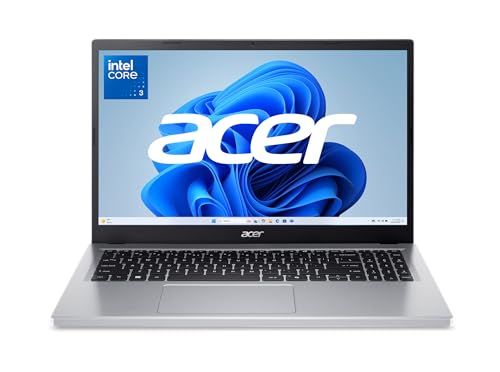
Acer Aspire Go 15 — Budget Big Screen
Every travel guide needs the machine for the trip that is not a business trip, and the Aspire Go 15 fills that seat here. Its 15.6 inch Full HD IPS screen is the second largest in this guide, its Intel Core 3 N355 processor and 8GB of DDR5 memory cover the browsing, streaming, schoolwork, and document work that family and student travel actually consists of, and its positioning is unapologetically at the affordable end. A machine like this goes on the road trips, the semester abroad with a tight budget, the grandparent visit where the laptop’s job is photographs and video calls — journeys where a flagship would be anxiety rather than equipment.
The travel-specific reading of its specification starts with the screen. Fifteen point six inches of IPS at 1920 by 1080 is a genuinely comfortable surface for the entertainment half of travel: films in a rented apartment, a match streamed in a hotel, photographs from the day reviewed at a size where everyone can gather round. IPS matters here because travel viewing is rarely solitary and square-on; a panel that holds its colours at an angle serves a group on a sofa far better than a basic display that fades for everyone except the person in the middle.
The constraints are the same ones identified in our ultraportable guide, reframed by the road. Storage is 128GB of UFS — enough for the system, core applications, and a trip’s documents, not enough for a downloaded film library, so streaming and cloud storage become the operating pattern. Windows 11 Home in S Mode confines installations to the Microsoft Store, which a browser-centred traveller may never notice and a traveller with a favourite downloaded program will notice immediately. Neither fact is hidden in the title; both reward being understood before the machine is in a suitcase rather than at a destination.
There is also an honesty in this machine’s size that deserves credit. It does not pretend to be an in-seat worker; it is a laptop that travels between places and then opens wide in them. For road trips, family visits, and study stays, that is the pattern of use anyway. Check the Aspire Go 15’s listing to confirm the AG15-32P-352Z configuration, and buy it as what it is — the inexpensive big screen for journeys whose work is light and whose viewing is shared.
For a student spending a semester abroad, the Aspire Go’s arithmetic has a specific shape worth spelling out. The budget it leaves untouched can fund the things a semester actually consumes — the rail pass, the course materials, the replacement of whatever the journey breaks — while the machine itself covers lectures in web platforms, essays in documents, and evenings of streaming on the largest affordable screen in this guide. The risk to manage is software: a course that suddenly requires a downloaded specialist program meets S Mode’s boundary head-on, so the check belongs in the pre-departure week, alongside the insurance and the visas, where a problem is still cheap to solve.
- Display: 15.6 inch Full HD (1920 x 1080) IPS
- Processor and graphics: Intel Core 3 Processor N355, Intel Graphics
- Memory and storage: 8GB DDR5, 128GB UFS
- Operating system: Windows 11 Home in S Mode
- Wireless: Wi-Fi 6
- Chassis weight: Not stated in the listing title — verify with the manufacturer documentation
Strengths
- A big IPS screen that serves shared viewing on trips
- DDR5 memory and Wi-Fi 6 keep the basics current
- Affordable positioning suits student and family travel
Trade-offs
- 128GB of UFS storage leaves downloads to the cloud
- S Mode limits installations to the Microsoft Store
- A 15.6 inch chassis is a between-places machine, not an in-seat one
Best for: family trips, study stays, and road travel where shared viewing matters more than in-seat work.
Not suited for: a downloaded offline film library, or software installed from outside the Microsoft Store.

ASUS ZenBook 3 UX390UA — Smallest Bag
The ZenBook 3 approaches travel from the opposite pole to the gram: at 12.5 inches it has the smallest screen in this guide, and its entire design argues that the best travel laptop is the one whose presence in a bag is closest to theoretical. This was ASUS’s flagship statement of its era — an Intel Core i5-7200U, 8GB of memory, and a 256GB SSD in a Silver Gray chassis with a fingerprint sensor and Harman Kardon audio — and while its processor belongs to an earlier generation, the travel virtues it was built around have not dated the way raw performance does. Small is small in any year.
Consider where a 12.5 inch machine earns its keep. It opens fully on the smallest café table and the narrowest train fold-down, slips into bags that reject a 14 inch chassis, and comes out for the twenty-minute tasks that fill a travelling day — the email that cannot wait, the booking that needs changing, the document that needs one paragraph fixed — without the ceremony of setting up a workstation. Travellers whose laptop use on the move is frequent and brief, rather than sustained and deep, will find this rhythm more valuable than a larger screen they open twice a day.
The supporting details suit that pattern better than the budget machines manage. The 256GB SSD is a proper internal solid-state drive, double the Acer’s capacity and faster in class, so the machine carries a real working set of files rather than a token one. The fingerprint sensor turns each of those frequent openings into a touch instead of a password typed in public. The Harman Kardon audio gives video calls and hotel-room films a clarity that small laptops rarely bother with. Against all that stands the era of the processor: documents, browsing, and media are its home ground, and a traveller planning to edit video or wrestle large datasets on the road should take the hint and look at the flagships above.
The ZenBook’s value, as our ultraportable guide also concluded, hangs on the deal — an older flagship design is a delight at a design-clearance price and a poor trade at a current flagship’s. Travellers charmed by it should open the ZenBook 3’s Amazon listing with that arithmetic foremost, and remember that its support horizon, like its silicon, belongs to its generation.
Minimalist travellers — the one-bag school, for whom every item must justify its space against every other — will understand the ZenBook 3 faster than anyone. In that packing philosophy a laptop competes with shoes and a change of clothes, and a 12.5 inch flagship design with a real SSD is close to the strongest computer that argument can accommodate. The machine’s age, which counts against it in a performance comparison, barely counts here: the tasks of minimalist travel are communication, navigation, writing, and media, and all four were already mature when this design was new. What the years have changed is the price such a design can command, which is where the one-bag traveller should focus.
- Display: 12.5 inch
- Processor: Intel Core i5-7200U (Kaby Lake)
- Memory and storage: 8GB RAM, 256GB SSD
- Security and audio: fingerprint sensor, Harman Kardon audio
- Finish: Silver Gray
- Chassis weight: Not stated in the listing title — verify with the manufacturer documentation
Strengths
- The smallest footprint in this guide, for the smallest bags
- A proper 256GB SSD rather than phone-class flash
- Fingerprint sign-in suits frequent, brief sessions in public
Trade-offs
- An older dual-core processor limits demanding work
- The 12.5 inch screen crowds split-screen working
- 8GB of memory, in step with its era
Best for: frequent short sessions on the move — email, bookings, and document fixes from the smallest bag.
Not suited for: sustained split-screen work in transit, or video editing on the road.

HP Everyday Slim Laptop — Battery Headline
The HP Everyday Slim earns its place in a travel guide on the strength of three words in its title that no other listing here contains: long battery life. In a category where endurance is usually implied by architecture and left unquantified, this listing states it as the product’s headline virtue, and pairs it with Microsoft 365, an Intel N150 processor, a 128GB SSD, Copilot AI branding, and Windows 11, in what HP positions as a 2027 edition of an everyday slim machine. For the traveller whose dominant anxiety is the socket hunt — the festival volunteer, the field researcher, the parent on a long itinerary day — a machine that leads with battery life is speaking directly to the trip they actually take.
Read the rest of the specification in that light. The Intel N150 is an efficiency-class processor: it exists to sip rather than to sprint, covering browsing, documents, email, streaming, and the web applications that constitute most travel computing, while asking little of the battery in return. The 128GB SSD is a proper solid-state drive — modest in capacity, honest in class — and it asks the now-familiar discipline: working files local, archives in the cloud, downloads chosen rather than accumulated. Microsoft 365 included means the document tools a traveller is most likely to need are present from the first boot, and the Copilot branding signals the AI-assistant features Microsoft builds around that suite.
What the title does not give the traveller is equally worth listing, because planning depends on it. The screen size is not stated in the title, the memory figure is not stated, and no battery capacity or hour figure stands behind the long-life headline — the specification box records each gap plainly, and the manufacturer’s documentation is where a buyer with firm requirements on any of them should look before ordering. That restraint cuts both ways: this is the least specified listing in the guide, and a traveller who needs certainty about display size for their bag or their eyes should obtain it before, not after, purchase.
Judged on its own stated terms, though, the Everyday Slim is a coherent travel proposition: an affordable, efficiency-first machine whose maker promises endurance in writing and includes the software most travellers open first. Visit the HP Everyday Slim’s listing to see the full configuration the title summarises, and if the details fit your bag and your work, its battery-first brief may fit your trips better than a flagship’s power you would rarely spend.
The traveller who should look longest at this HP is the one whose itinerary is measured in days between reliable sockets rather than hours: field workers, event crews, volunteers, and families on long driving days where the car charger is shared among five devices. For that pattern, an efficiency-class processor and a maker willing to headline battery life amount to a machine designed around the actual constraint of the trip. The trade is explicit — nobody should buy an N150 machine to edit video — but travel purchases are always trades, and this one exchanges a kind of power its target traveller rarely uses for the endurance that traveller needs daily.
- Processor: Intel N150 CPU
- Storage: 128GB SSD
- Headline feature: long battery life, per the listing title
- Software: Microsoft 365, Copilot AI, Windows 11
- Edition: 2027 Edition, per the listing title
- Screen size, memory, and chassis weight: Not stated in the listing title — verify with the manufacturer documentation
Strengths
- Battery life headlined in the title — unique in this guide
- An efficiency-class processor matched to that endurance brief
- Microsoft 365 included for immediate document work
Trade-offs
- 128GB of storage requires cloud-centred habits
- Several key specifications are absent from the title
- Everyday performance class, not a creative workstation
Best for: long itinerary days away from sockets, with browsing, documents, and streaming as the workload.
Not suited for: a buyer needing a stated screen size and memory figure before ordering, or demanding applications.
Side-by-Side Comparison
| Machine | Screen | Memory | Storage | Platform note |
|---|---|---|---|---|
| LG gram 17 | 17 inch WQXGA touch IPS | 32GB LPDDR5X | 1TB PCIe SSD | Intel Ultra 9, Windows 11 Pro |
| Microsoft Surface Laptop | 13.8 inch touch | 16GB | 256GB SSD | Snapdragon X Elite, Copilot+ PC |
| Lenovo ThinkPad X1 Carbon Gen 13 | 14 inch 2.8K | 32GB | 512GB | Intel Ultra 7 258V |
| Acer Aspire Go 15 | 15.6 inch FHD IPS | 8GB DDR5 | 128GB UFS | Windows 11 Home in S Mode |
| ASUS ZenBook 3 UX390UA | 12.5 inch | 8GB | 256GB SSD | Intel Core i5-7200U |
| HP Everyday Slim Laptop | Not stated in the listing title | Not stated in the listing title | 128GB SSD | Intel N150, long battery life headline |
How to Choose a Thin Laptop for Your Kind of Travel
Begin by locating your work on the journey-versus-destination axis, honestly and in hours. A traveller who works four hours in transit for every hour at a desk should buy small and efficient — the Surface or the ZenBook — because every gram and centimetre is spent where the work happens. A traveller who works the inverse ratio should buy the screen — the gram 17 or, at a budget, the Acer — because the destination desk is where the machine earns its keep, and the journey is merely transport for it. Most dissatisfaction with travel laptops is a mismatch on this single axis, purchased by someone who imagined a different trip from the one they actually take.
Then interrogate the specifications your trip cannot improvise around. Storage is the classic: a traveller who shoots photographs or video daily needs local capacity or a disciplined nightly offload routine, and should weigh the gram’s terabyte or the ThinkPad’s 512GB accordingly. Memory decides whether the whole trip can stay open at once. Platform decides whether your essential software comes along at all — ARM compatibility for the Surface, S Mode’s Store boundary for the Acer. Each of these is checkable in advance, and each becomes expensive only when discovered at a destination.
Also decide, before the trip rather than during it, what the laptop will not be asked to do. Travellers overload machines with intentions — the novel to be written, the course to be completed, the archive to be organised — and then judge a good travel laptop harshly for failing at a sabbatical’s workload. A machine matched to the trip’s real work, which is usually communication, documents, navigation, and entertainment, will feel excellent; the same machine judged against an imaginary workload feels inadequate. The gram and the ThinkPad can absorb more ambition than the others here, but even they serve a defined trip better than an undefined one.
Close with the unglamorous verification habit this guide has modelled throughout: the listing title is the contract. Read it on the listing page, confirm the screen, memory, and storage match the review you relied on, and take any figure the title omits — weight above all, in a travel purchase — from the manufacturer’s documentation for that exact configuration. Ten minutes of that discipline at a desk at home is worth a great deal of regret management at an airport.
A word, too, for the traveller deciding between this guide’s two large screens. The gram 17 and the Aspire Go 15 share a philosophy — arrive, open wide, work or watch in comfort — at opposite ends of the specification ladder. The gram brings a touchscreen, a terabyte, and 32GB of memory to that philosophy; the Acer brings a Full HD panel and an affordable ticket. The choice between them is not really about travel at all, but about what happens at the destination: demanding work justifies the gram, while viewing and light duties make the Acer the rational spend. Naming the destination activity honestly settles the question faster than any comparison table.
Is a 17 Inch Laptop Ever the Right Travel Choice?
Yes — for the traveller whose laptop is luggage rather than a companion. The gram 17 exists for trips structured as travel-then-work: the flight is endured, the machine emerges at the destination, and for the following days it serves as a full workstation with a screen no hotel television workaround can match. Conference presenters who run their own visuals, consultants embedded at a client site for a week, photographers on assignment with nightly review sessions — these travellers gain more from the display than they lose at the airport. The choice fails only when the same buyer also expects in-seat productivity, because a 17 inch chassis and an economy tray table are geometrically irreconcilable, and no specification can argue with geometry.
What Should a Traveller Verify Before Relying on Battery Claims?
Treat every battery statement as a claim with a source, and grade the source. A title headline like the HP’s long battery life tells you the maker’s priority, not a number of hours. A manufacturer’s specification sheet gives a tested figure, usually under conditions gentler than a travelling day of video calls and bright screens. Your own workload gives the truth, and it is always lower. The practical method is to plan around the tested figure discounted generously, to keep the charger in the cabin bag rather than the checked luggage, and to remember that screen brightness and video calls are the two hungriest items in any traveller’s day. A machine chosen for an efficiency-first platform — Snapdragon or an Intel N-class or Ultra chip — starts that arithmetic from a better place than a performance-first design.
How Should a Travel Laptop Be Packed and Protected?
The machine’s journey matters as much as its specification. A padded sleeve inside the cabin bag is the baseline; a laptop riding loose among chargers and bottles arrives with the scars to prove it. Keep the charger and any adapter in the same cabin bag, keep a copy of essential documents in cloud storage reachable from a phone in case the laptop itself is lost or damaged, and consider what your first hour at the destination looks like if the machine fails — the traveller with a phone-based fallback for email and boarding passes is inconvenienced, while the traveller without one is stranded. None of the six machines here is ruggedised, and none needs to be for ordinary travel; ordinary travel’s hazards are pressure, spills, and separation, and all three are managed by packing habits rather than by hardware.
Security habits travel too. A fingerprint sensor, like the ZenBook’s, or a modern sign-in on the flagships, keeps a momentarily unattended laptop from becoming an open door; a full sign-out and an encrypted drive, standard practice on the business machines here, protect the data if the machine itself is lost. The time to set those protections is at home, in the same pre-departure session as the platform checks this guide keeps recommending — a half hour that converts most travel disasters into mere anecdotes.
Common Mistakes
Buying for the trip you wish you took. A flagship bought for imaginary in-seat productivity, then used only at hotel desks, wastes its premium; a huge screen bought for destination work, then opened hopefully in economy seats, wastes its owner’s patience. Describe your last three real trips before shopping, and buy for those.
Trusting a weight figure from the wrong configuration. Weights vary across a model’s configurations, and a figure quoted for a different unit misleads precisely the buyer who cares most. The titles here state no weights at all — take the number for your exact configuration from the manufacturer’s documentation, or do not plan around a number.
Leaving platform checks until the destination. An ARM laptop meeting an unsupported legacy program, or an S Mode machine meeting a program outside the Store, is a manageable fact at home and a crisis abroad. Run the check while the machine can still be exchanged, not while a client waits.
Packing the charger in checked luggage. The most capable travel laptop in this guide is a paperweight with a flat battery and a charger in a suitcase on another continent’s carousel. Cabin bag, every time — the one travel rule with no exceptions and no interesting counterarguments.
Final Recommendation
For most business travellers, the decision narrows to the Surface Laptop and the ThinkPad X1 Carbon Gen 13, and the fork is temperamental as much as technical: the Surface for the efficiency-first traveller who works in transit and values the compact touchscreen design, the ThinkPad for the writerly traveller who wants the keyboard, the 2.8K display, and 32GB of memory holding an entire engagement open. Destination workers should take the gram 17 seriously despite its size — nothing else here transforms a hotel desk the way that screen does. Budget travellers are honestly served at both ends: the Acer for shared viewing and light work on family journeys, the HP Everyday Slim where battery life is the whole argument, and the ZenBook 3 for the minimalist whose bag admits nothing larger than 12.5 inches and whose taste admits nothing plainer.
Whichever machine earns the ticket, let the last act of choosing be the verification habit — title against review, omitted figures from the manufacturer’s own documentation — and let the first act of owning it be a trial pack of the bag it will actually travel in, charger, adapter, sleeve, and all, carried around the block once before it is carried around the world. A travel laptop proves itself in a carry-on and on a tray table, not on a specification page, and the buyers who test both early are the ones still pleased with their choice three trips later, when the novelty has worn off and the machine has simply become the way the work gets done wherever the work happens to be.
Frequently Asked Questions
Why does this guide not list the weight of each laptop?
Because none of the six listing titles states a weight, and this guide prints only what its sources support. Weights also vary by configuration within a model line, so a figure borrowed from a different unit could mislead a buyer planning a strict cabin-baggage allowance. The manufacturer’s documentation for the exact configuration is the reliable source, and any traveller with a hard weight limit should take the figure from there.
Which of these laptops works best in an airplane seat?
The compact machines: the Surface Laptop at 13.8 inches and the ZenBook 3 at 12.5 inches open fully within a tray table’s footprint and leave room for a drink beside them. The 14 inch ThinkPad is workable in most seats. The two large-screen machines — the gram 17 and the Aspire Go 15 — are between-places laptops whose owners sensibly keep them packed until arrival.
Is a touchscreen worth having on a travel laptop?
For presenting, annotating, and handing the machine around a table, yes — the gram and the Surface both include touch, and travellers who run their own visuals or mark up documents in meetings use it constantly. For pure document production it remains optional, and the ThinkPad’s omission of any touch claim in its title has not historically troubled its keyboard-centred audience. Buy touch for a behaviour you already have, not for one a feature list suggests.
How much storage does a travelling photographer need?
Enough for the trip’s entire shoot plus the working set, unless a nightly offload to an external drive or the cloud is a fixed routine. On the titles here, that points to the gram’s 1TB first and the ThinkPad’s 512GB second; the 256GB machines suit a photographer who offloads religiously, and the 128GB machines suit one whose camera work lives on cards and cloud rather than in the laptop. The discipline matters as much as the drive — but the drive decides how much discipline is required.
Should I insure or register a travel laptop before a long trip?
For a flagship machine on a long or multi-country itinerary, some form of cover is worth the small administrative effort — travel insurance policies vary widely in how they treat electronics, so read the relevant clause rather than assuming. Registration is the cheaper habit with most of the practical benefit: record the serial number, photograph the machine and its configuration screen, and keep the purchase record in cloud storage reachable from your phone. If the worst happens, that documentation converts a distressing loss into a process. The business machines in this guide also benefit from their makers’ support networks being reachable in most major cities.
Can a Snapdragon laptop handle a full business trip?
For the mainstream load of a business trip — documents, decks, browser platforms, communication tools, streaming — yes, and the Surface in this guide is built precisely for that pattern. The exception remains specialist or legacy software without ARM support, which is why the compatibility check for your one indispensable program belongs in the week before departure, at home, where a problem is an errand rather than an emergency.
The shortest version of this guide’s advice fits in one breath: buy the screen size your real trips demand, the storage your files actually need, and the platform your software can live on — then verify every figure against the listing title and the manufacturer’s documentation before the bag is packed, because a travel laptop is the one computer whose mistakes are discovered a thousand miles from the returns desk.
Related Guides
Travel is one way to slice the laptop market; the neighbouring slices are covered in best high performance thin and light laptops for slim machines with serious power, best convertible laptops for students for folding designs that take handwritten notes, and best detachable laptops for travellers who want the keyboard to come off entirely when the work turns to reading and viewing.


