Our Top Picks
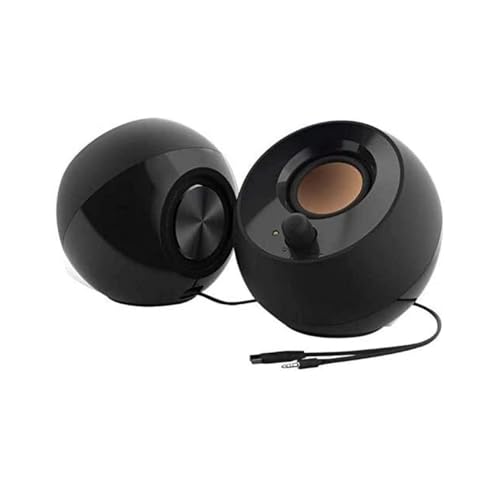
 1Mii 3.5mm Computer Speakers for Desktop Laptop Tablet2.4 x 10.2 x 2.5 inches0.4 poundsCheck on Amazon
What's inside
- Two Sprout generations, two different power budgets
- Sensitivity: the figure that converts watts into sound
- Impedance: nominal labels and the dips that matter
- The physical limits of small cabinets and low bass
- What a good Sprout pairing sounds like on paper first
- The Sprout100 subwoofer output and how to use it well
- The built in DAC and phono stage: what they change and what they do not
- Desk placement versus shelf and stand placement
- Matching the speaker to room size and listening distance
- Common pairing mistakes and how to avoid them
- Cabinet, driver, and crossover details worth reading
- Budget allocation inside a Sprout system
- A step by step selection checklist
- Where premium bookshelf designs fit
- Break in, warm up, and other claims that need a cooler head
- Check prices on Amazon
- Final reasoning before choosing
As an Amazon Associate I earn from qualifying purchases. This post may contain affiliate links at no extra cost to you.
Some product links on this page may earn a commission at no extra cost to the reader, and the opening note for this guide is written for this Sprout pairing topic alone. As an Amazon Associate, this site earns from qualifying purchases. Everything that follows rests on published specifications, manufacturer documentation, and established loudspeaker principles rather than invented listening diaries, so the numbers can be checked against the manuals for the amplifier and for any speaker under consideration.
The PS Audio Sprout occupies an unusual place among compact amplifiers. It folds a power amplifier, a digital to analogue converter, a phono stage, a headphone output, and Bluetooth reception into a chassis small enough to sit beside a laptop, yet it expects to drive ordinary passive loudspeakers through conventional binding posts. That expectation changes the shopping task completely. The speaker is not an accessory that merely needs the right plug. It is the load the amplifier must control, the device that turns modest electrical power into air movement, and the component whose size will decide how much low frequency energy a room can honestly support.
Readers who start with appearance often end up with a mismatch. A handsome walnut cabinet can hide a low sensitivity rating that leaves the Sprout sounding strained at ordinary party levels. A tiny enclosure can look perfect on a desk while producing so little bass that dialogue and acoustic guitar feel thin. A nominal impedance figure printed in large type can conceal a difficult dip in the lower midrange where music draws heavy current. This guide works through those hidden variables in the order they matter: amplifier generation, available power, sensitivity, impedance behaviour, enclosure physics, subwoofer support, source connections, placement, and room dimensions.
Two Sprout generations, two different power budgets
The original Sprout and the later Sprout100 share a name, a general layout, and a design philosophy, but they do not offer identical output. Documentation for the first generation lists 38 watts per channel into 4 ohms. The Sprout100 raises the rating to 50 watts per channel into 8 ohms and 100 watts per channel into 4 ohms. Those figures must not be blended into a single vague claim about Sprout power. A speaker that feels comfortable on the newer model in a medium room may leave the earlier model with far less headroom, particularly when the programme material contains strong bass transients.
Power ratings also depend on the load used during measurement. A doubling from 50 watts at 8 ohms to 100 watts at 4 ohms suggests an amplifier stage willing to deliver more current when impedance falls, within its thermal and protection limits. It does not mean every 4 ohm speaker is automatically suitable. Some nominal 4 ohm designs dip well below that value at particular frequencies, and some combine a low dip with a demanding phase angle. The amplifier then faces a load that draws current at moments when voltage and current are poorly aligned, which generates heat and can provoke roughness long before the volume control reaches its stop.
The first generation figure deserves equal care. Thirty eight watts into 4 ohms is not directly comparable with 50 watts into 8 ohms, because the test load differs. Owners of the earlier unit should think in terms of a smaller current budget and choose speakers accordingly. High sensitivity, a benign impedance curve, and a listening distance that does not demand heroic output will matter more than cabinet prestige. In a bedroom or a study, that budget can still produce satisfying levels. In a long living room with seating far from the speakers, the same budget narrows the field sharply.
Why watts alone never settle the question
Loudspeaker loudness grows logarithmically, not in straight proportion to wattage. Doubling power adds roughly three decibels, a clearly noticeable step but not twice the perceived volume. Moving from 5 watts to 50 watts adds ten decibels, which many listeners describe as roughly twice as loud. This relationship explains why a sensitive speaker on modest power can outperform an insensitive speaker on a stronger amplifier in everyday use. It also explains why pursuing a small difference in rated output, perhaps ten watts between two compact amplifiers, matters less than a three decibel difference in speaker sensitivity.
Headroom matters for a different reason. Music is not a steady tone. A kick drum, a piano attack, or an orchestral crescendo can demand a brief peak far above the average level. If the average level already consumes most of the available power, those peaks clip or compress. A pairing that sounds calm on a quiet vocal recording may harden on a dense rock mix at the same dial position. Sensible selection therefore leaves reserve for peaks instead of planning to run the Sprout near its ceiling as a normal habit.
Sensitivity: the figure that converts watts into sound
Speaker sensitivity is usually quoted as the sound pressure level produced at one metre with an input of 2.83 volts, or sometimes with one watt, depending on the convention the manufacturer follows. For an 8 ohm speaker those two conventions roughly coincide. For a 4 ohm speaker, 2.83 volts corresponds to two watts, so a sensitivity figure quoted that way can flatter the design by three decibels when compared with a true one watt figure. Careful readers check the fine print in the specification table before ranking candidates, and they treat unsourced sensitivity claims in retail copy with caution.
The practical window for the Sprout family sits between about 85 and 90 decibels. A speaker near 90 decibels will reach a given level with roughly one third of the power demanded by a model near 85 decibels, all else equal. That gap decides whether background listening, clear speech at a desk, and lively evening playback all fit inside the amplifier range. Below 85 decibels, the Sprout100 can still work at short distances, yet the margin for dynamic peaks shrinks. Above 90 decibels, choice narrows and some designs trade refinement, bass extension, or cabinet size for that efficiency.
Distance erodes level quickly. In free space, each doubling of distance costs about six decibels, although room reflections soften that loss indoors. A listener seated one metre away on a desk setup enjoys a large advantage over a listener four metres away on a sofa. The same 87 decibel speaker that feels generous nearfield may need sixteen times the power at the sofa to hold the same direct level, before room effects are considered. That is why the identical speaker can be a sensible Sprout partner in one home and a poor one in another, with no contradiction in the specification sheet.
Reading sensitivity alongside bass extension
Physics imposes a three way trade among cabinet size, bass extension, and sensitivity. A designer can pursue deep bass from a small box, but efficiency falls. A designer can pursue high efficiency from a small box, but bass gives up early. A designer can have deep bass and high efficiency, but the cabinet grows. Compact bookshelf speakers for the Sprout therefore reveal their priorities in the balance of those numbers. A very small model claiming unusually deep bass and modest sensitivity is following one legitimate path, yet it will ask more from the amplifier and still move less air than its claim might suggest at high levels.
For desktop and small room use, that trade can be entirely acceptable. Listening distances are short, required levels are moderate, and a subwoofer can relieve the main speakers of the lowest octave. For a larger room without a subwoofer, a slightly larger cabinet with a bigger woofer and a sensitivity figure in the upper part of the window usually serves music better than a miniature design with heroic printed bass figures. Cabinet volume is not vanity. It is part of the acoustic system.
Impedance: nominal labels and the dips that matter
A nominal impedance rating is a shorthand, not a promise that the load stays at that value across the frequency range. A speaker described as 8 ohms might dip to 5 ohms in the upper bass and rise far higher around its resonance and crossover regions. A speaker described as 6 ohms might hold a steadier curve than a rival described as 8 ohms with a sharp low dip. Amplifier stress follows the actual curve, especially the minimum value and the phase behaviour near that minimum, rather than the marketing label on the carton.
The minimum impedance often appears somewhere between 100 and 400 hertz for bookshelf designs, a region packed with vocal weight, bass guitar, piano left hand, and film effects. That placement matters. A dip at a frequency where music rarely asks for power would be less concerning. A dip exactly where sustained energy lives forces the amplifier to deliver current for long passages, not just for isolated peaks. Sprout owners should look for published impedance plots in technical documentation or reputable measurement reports, and they should favour designs whose minimum stays moderate and whose phase angle does not swing sharply at the same point.
Phase describes the timing relationship between voltage and current. When phase angles grow large near an impedance minimum, the amplifier output stage works harder than the simple wattage figure suggests. Two speakers can share the same nominal rating and the same minimum, yet the one with the kinder phase curve will be the easier partner. This detail rarely appears in short retail descriptions, which is why full specification documents and independent bench measurements deserve attention during shortlisting.
Four ohm speakers: not forbidden, not automatic
The Sprout100 rating into 4 ohms shows that the amplifier is intended to handle such loads within reason. Intention is not a blanket clearance. A stable 4 ohm speaker with high sensitivity can be a fine match because it needs little power and presents a predictable load. A low sensitivity 4 ohm speaker with a dip toward 3 ohms is a different proposition. It will call for current precisely when the amplifier has the least spare capacity, and in a big room the listener will keep turning the dial toward the region where distortion rises.
Owners of the original Sprout should apply a stricter filter. With 38 watts listed into 4 ohms, the earlier model gives less room for error. A nominal 8 ohm or 6 ohm speaker with a gentle curve and sensitivity toward the upper end of the range will usually be the calmer choice. If a 4 ohm candidate is under serious consideration for the first generation unit, short listening distance, modest level expectations, and published evidence of a tame impedance plot should all be present before the decision feels sound.
Cable resistance plays a small supporting role here. Long runs of very thin wire add resistance in series with the speaker, wasting a little power and altering the interaction between amplifier and crossover, particularly with low impedance loads. Sensible gauge for the run length, firm connections at both ends, and equal cable lengths for the stereo pair keep the electrical side tidy. Exotic cable claims are unnecessary for this class of system. Solid contact and appropriate thickness do the real work.
The physical limits of small cabinets and low bass
A bookshelf speaker earns its name from placement history, not from an ability to defy acoustics. Most passive models in this class use a woofer between roughly four and six and a half inches across, mounted in a ported or sealed enclosure of modest volume. Such a driver can reproduce the upper bass and lower midrange with clarity, and a port can extend useful output downward. It cannot move the volume of air that a large floorstanding woofer moves, and it cannot sustain very deep bass at high level without distortion, port noise, or protective compression from the driver reaching its excursion limits.
Printed frequency response figures need interpretation. A response quoted down to 55 hertz at a minus three decibel point describes a very different speaker from one quoted to 55 hertz at minus ten decibels. The second speaker may already be fading badly at that frequency. The listening room also lifts bass through boundary reinforcement, so a speaker that looks lean on an anechoic chart can sound fuller on a shelf against a wall. That lift is not free extension, though. It tends to emphasise some frequencies more than others and can blur bass definition when the cabinet sits in a corner or inside a bookcase cavity.
Ported and sealed designs handle the low end differently. A ported cabinet uses the rear wave from the woofer to reinforce output near the tuning frequency, gaining extension and efficiency, then rolls off steeply below tuning. A sealed cabinet rolls off more gradually and can sound tighter in some placements, at the cost of extension and output. For Sprout systems, either approach can succeed. The important point is honesty about the job: expecting a five inch woofer to reproduce the lowest notes of a pipe organ, an electronic dance track, or a film explosion at cinema level will end in disappointment regardless of amplifier brand.
When a specification looks too generous
Claims deserve a consistency check. If a palm sized cabinet promises response into the thirties, high sensitivity, and thunderous maximum output all at once, at least one figure rests on generous conditions. Perhaps the bass figure uses a wide tolerance. Perhaps sensitivity was measured with a method that favours the result. Perhaps maximum output refers to a brief peak in a small room. None of this makes the product fraudulent, but it does mean comparison should rely on like for like data. Driver diameter, cabinet dimensions, sensitivity, and the stated tolerance together give a more reliable picture than any single headline number.
Music choice also changes the verdict. String quartets, acoustic jazz, folk, podcasts, and most television dialogue place modest demands below 60 hertz. Electronic music, hip hop, large orchestral works, and action films place heavy demands there. A Sprout owner whose listening centres on the first group can live happily with compact speakers alone. A listener in the second group should budget attention for a subwoofer from the start rather than pushing small woofers beyond their comfortable range and blaming the amplifier for the resulting strain.
What a good Sprout pairing sounds like on paper first
Strong candidates share a recognisable profile before any listening begins. Sensitivity sits in the middle or upper part of the 85 to 90 decibel window. Nominal impedance is 6 or 8 ohms, or a 4 ohm rating is backed by a smooth measured curve. The minimum impedance does not collapse. Bass extension suits the room and the catalogue, with figures quoted at a clear tolerance. Cabinet size fits the intended surface without blocking ventilation for the amplifier or forcing the tweeters far below ear height. Binding posts accept ordinary wire securely, and the manufacturer publishes enough data for a buyer to verify each of those points.
Within that profile, voicing remains a matter of taste. Some listeners prefer a slightly forward presentation that brings voices close. Others prefer a relaxed treble that softens bright recordings. Some value a wide soundstage in a nearfield arrangement, while others care more about tonal weight for cello and piano. The electrical fit should be settled first, because taste cannot rescue a pairing that runs out of power or current. Once the technical shortlist is safe, tonal preference becomes the deciding layer rather than a gamble.
Readers comparing complete systems rather than single components may also find the guide at best active bookshelf speakers useful, since powered models remove the amplifier load question entirely and replace it with questions about built in amplification and input flexibility.
The Sprout100 subwoofer output and how to use it well
The Sprout100 provides a subwoofer output, which turns bass management into a practical option rather than a wiring puzzle. A powered subwoofer carries its own amplifier, so it does not consume Sprout power. Its contribution can transform a bookshelf system: the main speakers handle the range where they are articulate, the subwoofer handles the lowest frequencies where cabinet size dominates, and the whole system gains scale without demanding a larger main cabinet on the desk or shelf.
Connection alone does not guarantee integration. The crossover point on the subwoofer decides where its output hands over to the main speakers. Set that point too high and male voices gain chesty thickness while the subwoofer location becomes easy to identify. Set it too low and a gap opens between the subwoofer range and the natural rolloff of the bookshelf pair. A starting region near the main speakers minus three decibel bass point often makes sense, followed by small adjustments in level and crossover while familiar recordings play. Phase or polarity controls help align arrival at the seat, especially when the subwoofer sits at a different distance from the listener than the main pair.
Placement of the subwoofer shapes its output as much as its controls do. A corner loads the room strongly and can produce impressive depth with modest gain, at the risk of boomy peaks. A position along a wall, nearer to one main speaker, often balances reinforcement and integration. Open plan spaces leak bass energy into adjoining areas, so a compact subwoofer that fills a closed study may struggle in a combined kitchen and living area. Dual subwoofers can smooth room response, although that path adds cost and setup complexity beyond what most Sprout systems need.
Full range signal and what the main speakers still carry
Owners should check the manual for how the subwoofer output behaves, because a subwoofer feed does not always mean the main speakers are filtered. In many compact systems the bookshelf speakers still receive the full range signal and roll off naturally, while the subwoofer fills underneath. That arrangement avoids extra filtering in the main path, yet it leaves the small woofers still attempting low bass. At moderate levels the blend can work beautifully. At higher levels, woofer excursion in the main cabinets remains a limit even though the deepest notes are covered elsewhere.
Level calibration deserves patience. A subwoofer set by excitement tends to sit several decibels too loud, drawing attention to itself on every bass note. A well blended subwoofer often reveals itself most clearly when switched off: the music loses foundation and scale, but while it plays, the listener notices the instruments rather than the box. That subtlety suits the Sprout character well. The system is meant to be compact and musical, not a contest in room shaking.
Desk systems need extra restraint. A subwoofer under a desk can excite the desk panels and the floor, and the listener sits so close that small level errors feel large. Lower gain, a crossover chosen with care, and isolation from direct contact with resonant furniture can keep the result clean. In a shared home, a modest subwoofer setting also travels less through walls late at night than a bookshelf pair being driven hard to compensate for missing bass.
The built in DAC and phono stage: what they change and what they do not
The Sprout includes digital conversion and a phono input for a turntable, and those features sometimes confuse speaker selection. They do not change the electrical relationship between amplifier and speaker at all. A digital file arriving through USB or Bluetooth and a record arriving through the phono stage both end up as an analogue signal feeding the same power stage and the same binding posts. Sensitivity and impedance requirements stay identical regardless of source.
What the sources do change is the quality and character of the signal the speakers are asked to reveal. A clean digital feed can expose hiss, harsh mastering, or a speaker with a ragged treble. A turntable adds variables of its own: cartridge output, grounding, record condition, and the accuracy of the phono equalisation. If a system sounds bright on every source, the speaker voicing or the room may be responsible. If it sounds bright only through one source, attention should move upstream before the speakers are blamed or replaced.
The phono stage also sets a practical boundary for turntable pairing. It is designed for the cartridge class described in the Sprout documentation, and owners should confirm cartridge compatibility there rather than assuming every moving coil design will suit. That question belongs to the source side of the system. It does not alter the speaker shortlist, but it does affect total budget, and budget trade offs are real: money spent correcting a source mismatch cannot also be spent on the larger, more sensitive speaker that the room actually needs.
Bluetooth, headphone listening, and speaker expectations
Bluetooth convenience encourages casual listening at varied levels, often from a phone across the room. Compression in the wireless link and in the source file can soften detail, so a speaker chosen only through casual wireless listening may be judged unfairly. When comparing candidates on paper, the wired digital path gives the cleaner reference for what the system can do. Headphone listening is separate again. The headphone output drives a completely different load, and success there says nothing about whether a low sensitivity bookshelf speaker will fill a room.
Gain structure matters across sources too. A quiet phono feed may require a higher volume setting than a loud digital stream, and that difference is normal. It does not indicate that the speakers became less sensitive. Judging headroom should therefore use the loudest source the household actually plays, at the highest level genuinely needed, with dynamic material. A pairing that holds together under those conditions will feel relaxed on everything quieter.
Desk placement versus shelf and stand placement
Where a bookshelf speaker sits changes its sound as surely as its specification sheet does. On a desk, the listener sits close, the desktop reflects sound toward the ears, and the rear port of many designs fires toward a wall only a short distance behind. Each of those facts can be managed. Raising the tweeters toward ear level with small stands or angled pads reduces the comb filtering and tonal dullness that come from listening far off axis. Moving the cabinets a little forward from the wall gives a rear port room to breathe. A thin isolation pad can reduce desk vibration without turning setup into a ritual.
Nearfield listening rewards speakers with smooth off axis behaviour and a crossover that integrates the drivers over a short distance. Some larger bookshelf models need more space for their woofer and tweeter outputs to blend, and at arm length the listener can hear them as separate sources. Compact models often shine here. Their drivers sit closer together, their cabinets fit beside a monitor, and the short distance keeps required power low, which flatters both Sprout generations.
Anyone building a dedicated desk arrangement will find related placement reasoning in best bookshelf speakers for a desk, where monitor height, desktop reflections, and nearfield distance receive their own detailed treatment.
On a shelf, inside furniture, and on stands
A literal bookshelf is often the worst home a speaker can have. Side panels and a back board form a cavity that colours the sound, the shelf board can resonate, and neighbouring books create uneven boundaries. If shelf placement is unavoidable, bringing the front baffle flush with or slightly ahead of the shelf edge helps, as does keeping the cabinet away from the side walls of the compartment. Front ported or sealed designs tolerate tight placement more gracefully than rear ported designs that need clearance behind.
Speaker stands remain the most predictable option in a living room. They place the tweeter at seated ear height, allow distance from the back wall to be chosen rather than inherited from furniture, and let the stereo pair form a triangle with the listening seat. The classic starting point puts the speakers and the listener at roughly equal distances from one another, with toe in adjusted so the axes cross near or just behind the seat. Small changes in toe in trade image focus against treble energy, and the right amount depends on how widely the speaker disperses high frequencies.
Wall distance shapes bass balance. Close placement reinforces low frequencies, which can warm a lean speaker or thicken an already full one. Greater distance reduces that reinforcement and often improves clarity and stage depth, while asking the speaker to supply more of its own bass. In small rooms the listener may not have the luxury of wide spacing from every boundary, so a speaker with moderate bass output can integrate better than a bass heavy model that excites every wall at once.
Matching the speaker to room size and listening distance
Room volume, not floor area alone, sets the scale of the task. A narrow room with a low ceiling asks less of a system than a wide room with a tall ceiling and openings into other spaces. Soft furnishing absorbs energy, bare plaster and glass return it, and an open plan layout lets bass escape the listening zone. Two rooms with identical floor measurements can therefore need different speakers. The checklist later in this guide uses area as a starting point, then adjusts for ceiling height, openings, furnishings, and distance.
For a desk or a bedroom up to roughly twelve square metres, compact speakers with sensitivity near the middle of the recommended window usually suffice, especially at distances under two metres. For a living room between twelve and twenty five square metres, a larger woofer, sensitivity toward the upper part of the window, and the option of subwoofer support become valuable. Beyond that scale, or with seating beyond four metres, the Sprout100 remains usable with efficient speakers and realistic level goals, while the original Sprout will feel its limits sooner. Honest expectations preserve enjoyment; pretending a compact system is a concert rig leads to constant strain.
Background listening changes the arithmetic again. Music played for conversation sits perhaps twenty decibels below focused listening levels, and almost any electrically compatible speaker can handle it. The critical case is the loudest focused listening the household truly does. Designing the pairing for a level that occurs twice a year at a party, in a room full of absorbent guests, may push the choice toward efficiency above all else. Designing for ordinary focused sessions gives tonal quality more room in the decision.
Small rooms bring their own problems
Small rooms are not automatically easy. Their walls sit close to both speakers and listener, so reflections arrive early and bass modes cluster in the range where bookshelf speakers and subwoofers operate. A mode can boost one bass note strongly while cancelling another a short distance away, and moving the seat by a modest amount can change the balance noticeably. Speakers with restrained low output sometimes sound clearer in such rooms than larger models whose extra bass energy has nowhere orderly to go.
The guide at best bookshelf speakers for small room explores those modal and boundary questions for compact spaces in greater depth, and its reasoning pairs naturally with the sensitivity and impedance filters used here for the Sprout.
In a small room, stereo separation also needs attention. Placing speakers too far apart for a close seat creates a hole in the centre image, so voices detach from the middle and drift toward each cabinet. Placing them too close together collapses the stage into mono. The distance between the speakers should suit the seat distance, not the width of the available furniture. A television or monitor between them is fine, provided the front baffles sit ahead of the screen plane and the tweeters remain unobstructed.
Common pairing mistakes and how to avoid them
The most frequent mistake is choosing a demanding speaker for a large room because its reviews praise transparency. Transparency at low power means little if the amplifier clips before the room fills. The second mistake is the mirror image: choosing a very sensitive speaker with limited bass and a bright balance for a tiny desk, then fighting its forwardness at close range. Both errors come from reading quality judgements without the context of load, distance, and level.
Another mistake is trusting a single impedance number. A nominal 8 ohm label can hide a dip that behaves more like a 4 ohm load through the busiest part of the music. Shoppers who check the minimum figure and, where available, the phase plot avoid that trap. A related error is assuming a 4 ohm rating alone disqualifies a speaker. The Sprout100 was rated into 4 ohms for a reason. Evidence about the specific design matters more than a reflex about the category.
Placement errors follow close behind. Rear ported speakers pushed against a wall, tweeters firing into the underside of a shelf, cabinets laid on their sides with tweeters at mismatched heights, and one speaker in a corner while its partner stands in open space all undermine a sound pairing. So does leaving the Sprout buried under papers or inside a closed cabinet. Compact amplifiers still generate heat, and ventilation slots need open air. Thermal stress shortens component life and can trigger protection behaviour that looks, misleadingly, like a speaker fault.
Level, distortion, and the temptation of the last few decibels
Most systems sound their worst in the final stretch of the volume control. Distortion from the amplifier rises, woofer excursion limits approach, port turbulence appears, and the room itself contributes harsh reflections at high level. A pairing chosen with headroom avoids living in that stretch. If regular listening already needs the dial near its upper region, the correct response is a more sensitive speaker, a shorter listening distance, subwoofer support to relieve the system, or lower level expectations, not a habit of pushing through audible strain.
Ears provide a useful warning system. When voices lose ease, cymbals turn splashy, and bass notes blur into one another as level climbs, the system is reporting stress somewhere in the chain. Turning down slightly often restores more musical information than the lost decibels remove. Published maximum output figures for speakers deserve the same scepticism as bass claims: they may be calculated rather than measured, and they rarely describe a level at which the speaker still sounds composed.
Cabinet, driver, and crossover details worth reading
Beyond the headline numbers, construction details help predict behaviour. A rigid, well braced cabinet stores less energy and adds less of its own voice to the music. A heavy feel alone does not prove good bracing, but a hollow knock from a knuckle on the side panel is not encouraging. Driver materials vary widely, from treated paper to metal cones and textile domes, and none guarantees quality by itself. Implementation decides. A metal dome can sound smooth in a careful crossover and harsh in a careless one; a paper cone can sound warm and articulate or loose and coloured depending on the motor and surround around it.
Crossover quality rarely appears in consumer summaries, yet it shapes impedance, off axis response, and driver integration. A speaker whose response holds together as the listener moves sideways will be more forgiving in real rooms, where seats are rarely locked to a single sweet spot. Published off axis or listening window measurements, when available, tell more about family listening than a single on axis curve polished for a brochure.
Grilles matter in homes with children or pets, and they can affect high frequencies slightly depending on frame design. Removable grilles let the owner choose. Magnetic grilles are convenient and leave no visible peg holes. None of these points should override the electrical fit, but between two speakers that both suit the Sprout, build honesty and placement tolerance are legitimate deciding factors.
Finish, size, and living with the object
A speaker is furniture as well as equipment. Depth is the dimension that most often surprises buyers, because a cabinet that looks modest from the front may project far from the wall once cable clearance is added. Measuring the shelf or desk depth, allowing room for the connectors, and checking the height against monitor arms and shelving avoids returns. Finish also interacts with light: a glossy cabinet reflects a television screen and window glare, while a matte finish sits quieter in a media room.
Long term ownership favours designs from makers who publish full data, keep replacement drivers available for a reasonable period, and use standard binding posts rather than captive cables. A passive speaker has no firmware and no battery, so its service life can span decades. That longevity is one of the quiet strengths of building around the Sprout: the electronics may evolve, while a well chosen passive pair remains useful across several amplifier generations.
Budget allocation inside a Sprout system
Without naming figures, a sensible order of spending emerges from the physics already covered. The speakers and their placement deserve the largest share of attention because they dominate tonal balance, output capability, and room interaction. A subwoofer, when the room and catalogue call for one, comes next. Stands or desk supports that set tweeter height correctly outrank decorative accessories. Cable of adequate gauge and a reliable source device complete the practical list. Spending heavily on accessories while the main speakers are insensitive, poorly placed, or too small for the room reverses the true order of influence.
Second hand passive speakers can be excellent value, since the technology changes slowly, but inspection matters. Foam surrounds on older woofers can crumble, ferrofluid in some tweeters can dry, and crossover capacitors age. A used candidate should have verifiable specifications, intact surrounds, matching serial behaviour between the pair where relevant, and no sign of a replaced driver of the wrong type. The electrical filters in this guide apply with full force to used models, whose published data may require a search through archived manuals.
New buyers gain warranty protection and current documentation. Either route can succeed. What neither route permits is skipping the specification check because a cabinet looks attractive in a photograph. Photographs reveal finish and proportion. They reveal nothing about a 3 ohm dip at 180 hertz or a sensitivity figure that will leave the original Sprout short of breath in a long room.
A step by step selection checklist
- Confirm which Sprout generation is in the system, and write down its rated output into the relevant load before looking at any speaker.
- Measure the room, note ceiling height, openings, and the exact distance from the intended speaker position to the main seat.
- Set a realistic maximum listening level based on focused sessions, not on a guess about parties that rarely happen.
- Shortlist passive bookshelf models with sensitivity between about 85 and 90 decibels, checking which measurement convention the maker used.
- Check nominal impedance, the published minimum, and any available phase information; treat a low dip in the upper bass as a serious caution.
- Compare bass extension figures only when the tolerance is stated, and relate them to driver size and cabinet volume.
- Decide whether a subwoofer belongs in the plan, based on music and film habits, room size, and neighbours, then confirm the Sprout100 subwoofer output arrangement in its manual.
- Choose placement first: desk, shelf, or stands, with tweeter height, wall distance, and port clearance settled before the cabinet size is finalised.
- Verify dimensions including connector clearance, and confirm the amplifier will keep open ventilation in its own position.
- Plan cable gauge for the actual run length, with secure terminations and equal lengths for the pair.
That sequence can feel slower than browsing photographs, yet each step removes a category of regret. A speaker that survives the full list may still be one of several, and taste can choose among them freely. A speaker that fails an early step will not be rescued by a glowing paragraph about its finish.
Worked examples using only arithmetic
Consider a speaker rated at 88 decibels for one watt at one metre. At eight watts it would produce roughly 97 decibels at that distance before room support, leaving the Sprout100 with useful reserve below its rated output for peaks at a desk or in a small room. Move the seat to four metres and the direct level falls by about twelve decibels, so the same eight watts now deliver roughly 85 decibels at the seat, and holding 97 would demand far more power than the amplifier can give. The speaker did not change. The geometry did.
Now consider a speaker rated at 85 decibels under the same convention. It needs twice the power of the 88 decibel model for every level, at every distance. At a desk that penalty is trivial, because absolute power stays tiny. Across a large living room it becomes the difference between relaxed playback and constant proximity to clipping. This arithmetic, done with a pencil before any money moves, is the most reliable shortlisting tool a Sprout owner owns.
A third example involves impedance rather than sensitivity. Two speakers both claim 6 ohms nominal. One holds a minimum of 5.2 ohms with gentle phase; the other falls to 3.4 ohms where its phase angle is also steep. The first will behave like the label promises. The second will ask the amplifier for current like a much lower impedance design through the heart of the music. Published curves expose the difference in seconds, which is why documentation review belongs near the start of the process rather than after a disappointing purchase.
Where premium bookshelf designs fit
Higher priced bookshelf speakers can bring better cabinets, smoother measured response, lower distortion at a given level, and drivers with greater excursion control. They do not repeal the sensitivity and impedance rules. Some premium designs are deliberately inefficient, trading output for extension and refinement, and those models belong with amplifiers carrying larger reserves than the Sprout offers. Others are both refined and efficient, and they can be superb Sprout partners in rooms of suitable size.
Readers drawn toward that tier should compare the candidates discussed at best high end bookshelf speakers against the same electrical checklist, because price alone says nothing about load difficulty or suitability for a compact amplifier.
Diminishing returns also deserve honesty. In a reflective room with compromised placement, the audible gap between a competent mid range speaker and a costly flagship shrinks. Correcting placement, adding appropriate stands, and integrating a subwoofer carefully often yield larger gains than moving up a speaker tier while leaving the room untouched. The Sprout itself rewards that order of priorities: it is a compact, thoughtfully integrated amplifier whose results depend heavily on the sense of the system built around it.
Multi purpose systems: music, film, and speech
Many Sprout systems serve television and film as well as music, in stereo rather than surround. Dialogue clarity then becomes a central requirement. A speaker with a smooth midrange and controlled cabinet resonance will render speech intelligibly at low evening levels, while a design with exaggerated bass and recessed midrange will bury voices under effects. Stereo imaging also carries part of the centre image in a two channel film setup, so symmetrical placement and matched toe in matter more than they do for casual background music.
For sport and news, absolute bass extension hardly matters. For streamed drama, it matters moderately. For blockbuster films, the subwoofer decision returns. The checklist approach handles all of these uses because it begins with content and level rather than with a universal ranking. There is no single best speaker for every Sprout owner. There is a best fit for a defined room, distance, catalogue, and amplifier generation, and that fit can be reasoned out from published data with confidence.
Break in, warm up, and other claims that need a cooler head
Speaker break in is real in a narrow mechanical sense and exaggerated in much casual discussion. Surrounds and spiders are compliant parts, and their stiffness can shift slightly during early use as the materials flex. Driver manufacturers account for normal production variation, and any change tends to settle quickly rather than transform a speaker over hundreds of hours. A buyer who dislikes the tonal balance of a new pair on day one should not expect months of use to turn it into a different product. The electrical fit with the Sprout will certainly not change: sensitivity, impedance curve, and cabinet size remain what they were.
Amplifier warm up invites similar proportion. A compact amplifier reaches a stable operating temperature, and listeners also adapt to a new presentation during the first sessions with unfamiliar equipment. Adaptation is powerful. A brighter speaker can seem to mellow simply because the ear stops treating its balance as novel. Keeping notes about volume settings, placement changes, and programme choices gives a steadier record than memory alone, and it prevents placement improvements from being credited to mysterious electronic settling.
Room treatment belongs in this cooler discussion as well. A rug between the speakers and the seat, curtains over a large window, and a filled bookcase on a side wall can tame reflections that make a good speaker sound hard. Those measures cost little compared with a speaker upgrade, and they help every source the Sprout carries. They cannot repair a severe impedance mismatch or give a tiny woofer genuine deep bass, which returns the decision to the order used throughout this guide: electrical compatibility first, acoustic environment second, tonal preference third.
Keeping a simple setup log
A short written log turns ownership into a calmer process. Record the speaker position measured from the back wall and side walls, the toe in angle in plain language, the subwoofer crossover and level settings if one is fitted, and the volume range used for familiar recordings. When something later sounds wrong, the log shows whether a cleaner moved a cabinet, a control shifted, or a new source entered the chain. Without it, fault finding becomes guesswork, and perfectly good speakers get blamed for a subwoofer level that crept upward or a grille left half seated.
The log also protects the next upgrade. If a future amplifier with greater reserves joins the system, the recorded distances and levels reveal how hard the Sprout was actually working. If a larger room arrives after a move, the same notes explain why a pair that once sounded generous now needs subwoofer help or a shorter seat distance. Good documentation, in short, does for a hi-fi system what good specification sheets do for a purchase: it replaces impressions with evidence that can be revisited.
Check prices on Amazon
Live listings for the shortlist in this guide are pulled from Amazon below, so prices and availability are always current at the moment you look.
Final reasoning before choosing
Start with the generation on the shelf. Respect the difference between 38 watts into 4 ohms and the Sprout100 figures of 50 watts into 8 ohms and 100 watts into 4 ohms. Let sensitivity between about 85 and 90 decibels do the heavy lifting, verify that the impedance curve is as kind as its nominal label, and accept the bass limits that small cabinets impose. Add a subwoofer through the Sprout100 output when the room and the repertoire call for one, place the main pair where their tweeters and ports can work properly, and keep the checklist beside the shortlist until every line is answered.
A Sprout system chosen this way will not chase specifications for their own sake; it will put the amplifier, the speakers, and the room in proportion, which is exactly where compact hi-fi stops feeling like a compromise and starts feeling like a deliberate design.


