What's inside
- Key Takeaways
- Quick Picks
- How We Chose These Picks
- Where Do Budget Towers Cut Corners — and Which Cuts Matter?
- What Should You Power Budget Towers With?
- Why Do Towers Beat Soundbars for Television at This Money?
- What Do Budget Towers Sound Like With Everyday Material?
- How Do These Six Budget Towers Stack Up?
- How Do You Grow a Budget Pair Into a Full System?
- How Should You Set Up Budget Towers for the Best Sound?
- What Mistakes Do Buyers Make in This Price Class?
- How Long Will Budget Towers Last — and When Should You Upgrade?
- Should You Buy Budget Towers New or Used?
- What About Children, Pets and Shared Houses?
- What Cables and Small Extras Does a First Tower System Need?
- Final Recommendation
- Frequently Asked Questions
- Related Guides
As an Amazon Associate I earn from qualifying purchases. This post may contain affiliate links at no extra cost to you.
widgetverdict.com is reader-supported. When you buy through links on our site, we may earn an affiliate commission.
Where to buy: the five linked towers below go straight to the Amazon listings we checked for this guide, and the sixth — a design-led Danish tower sold through hi-fi retailers — is named in full for local auditioning. In this price class, listings change finishes and bundle configurations often, so confirm whether a listing is for one speaker or a pair before you compare anything.
The best 300 floor speakers answer a question every first-system builder asks: how much tower can a genuinely modest budget buy, and where do the corners get cut to reach it? The honest answer is encouraging. The three-hundred-dollar class — whether you read that figure as the pair budget for the strictest shoppers or as the per-speaker ceiling for the ambitious ones — contains towers from serious manufacturers that share drivers, crossovers and engineering with their costlier ranges. What the money does not buy is cabinet luxury, exotic finishes or the last octave of bass, and a guide that pretends otherwise would be selling you something.
What it does buy, chosen well, is the full floorstanding experience: real scale, voices that project into a room rather than leaking out of a box, and bass deep enough that a subwoofer becomes an upgrade instead of a rescue. For televisions especially, a pair of towers in this class transforms dialogue and film scores beyond anything a soundbar at similar money attempts, because physics is on their side — two cabinets, real woofers, and air moved honestly.
The six towers below are the class’s defining choices, ranked for the buyers who actually shop here: first-system builders, television upgraders, students and renters furnishing a room that must do everything. We have been candid about each one’s compromises, because at this level the compromises are the product — the art is in which ones a maker chose. Choose the set whose compromises you will never notice, and this class delivers more music per pound of budget than any other in home audio.
Key Takeaways
- In this class you are choosing which compromises to live with — finish, bass depth or refinement — not avoiding compromise altogether.
- The Polk T50 is the default recommendation: balanced, forgiving and backed by a full matching range for theatre growth.
- The Polk XT60 is the theatre-first pick, with passive radiators that keep bass clean in small rooms and near walls.
- The Sony SS-CS3 is sold as a pair, which makes its true cost the easiest in this guide to understand and budget.
- The ELAC F5.2 sounds like it costs more than it does, trading visual drama for genuine engineering from the Debut line.
- The Klipsch R-800F brings big-tower dynamics into reach when found within this tier — the loudest personality here by far.
Quick Picks
| Pick | Badge | Why it earns its place |
|---|---|---|
| Polk T50 | Best overall in class | A balanced, room-filling tower with a matching centre and surrounds waiting when theatre calls. |
| Polk XT60 | Best for budget home theatre | Passive bass radiators and a modern Monitor XT range behind it make film systems easy to grow. |
| Sony SS-CS3 | Best pair value | Sold as a pair with a super tweeter for high-resolution sources and an easygoing balance. |
| ELAC Debut 2.0 F5.2 | Best sound per currency | Aramid woofers and Debut engineering deliver the most refined listen in this class. |
| Klipsch R-800F | Best big-room dynamics | Dual 8-inch woofers and a horn tweeter for listeners who want scale and excitement first. |
| Jamo S 809 | Best looks in class (prose-only) | A slim, Scandinavian-styled tower that furnishes the room while it fills it. |
How We Chose These Picks
Budget towers attract more exaggeration than any other speaker category, so our first filter was specification honesty: makers who state sensitivity and frequency response in ways that survive comparison, and whose driver counts describe engineering rather than decoration. A tower wearing four drivers where two would do, fed by a crossover built to a price, loses to a simpler design honestly executed every time. We also required a real manufacturer behind each pick — warranty support, spare parts, a matching centre channel in the catalogue — because a first system is usually the start of a system.
Listening priorities at this level differ from the tier above. Forgiveness matters more than forensic detail, because these towers will be fed by games consoles, television outputs, phones and ageing receivers as often as by good sources. Bass behaviour in real rooms mattered enormously: budget towers live against walls, in corners and beside television stands, so a design whose low end stays controlled in those positions beats a deeper design that booms. And because many buyers here are furnishing a first proper room, we weighted how a tower sounds at modest volume — the level of evenings, conversations and late films — as heavily as its party voice.
Value arithmetic closed the selection, applied carefully. Some of these towers are priced per speaker and some per pair, and we have flagged which is which in the detailed notes, because comparing a single-speaker listing against a pair listing is the classic way this class confuses its buyers. The Jamo S 809 earns its prose-only place on design and sound through retailers; its marketplace presence was too inconsistent to link with confidence, and at this budget a wrong listing costs a larger share of the whole purchase than it would in any tier above.
Where Do Budget Towers Cut Corners — and Which Cuts Matter?
The cabinet is the first economy, and the easiest to live with. Budget towers use thinner panels and simpler bracing than premium models, finished in vinyl wraps rather than veneers. Rap a knuckle on the side and you will hear the difference — a duller, hollower note than the tier above returns. In listening, that economy shows up as a faint boxiness on loud low notes, audible mainly in direct comparison and mainly on material with serious bass. For the rooms and volumes this class serves, it is the right economy to make, and every maker here manages it better than the no-name alternatives.
The crossover is the second economy, and the one that separates these six from the crowd beneath them. Cheap crossovers use the fewest possible components, letting drivers overlap messily and wasting the drivers’ potential. The brands in this guide spend enough here to keep voices coherent — the single most important quality in a speaker — which is why a Polk or ELAC at this money sounds composed while an unknown badge with more drivers sounds shouty. If you audition nothing else, audition a voice: the newsreader test exposes crossover honesty in ten seconds.
The third economy is bass depth, and it is physics rather than cheating. A modest cabinet with modest woofers will not reproduce the lowest octave of film effects or electronic music, and the specifications that claim otherwise are measuring in corners at volumes nobody uses. The mature response — and the one this guide recommends — is to enjoy what these towers do, which is everything from the mid-bass upward with real authority, and to add a subwoofer later if your films demand the floor-shaking remainder. A budget tower plus a later subwoofer is a better system than a costlier tower straining to be both.
What Should You Power Budget Towers With?
The good news is that this class was designed for the amplifiers people actually own. Every tower here will run happily from a mainstream AV receiver — the kind bundled into first theatre systems — because their designers know exactly what will be connected to them. The Klipsch R-800F needs the least of all, its horn efficiency turning modest receiver power into large-room volume, while the ELAC F5.2 sits at the other end of the appetite scale and rewards the receiver or stereo amplifier with the most honest current delivery you can afford. Between those poles, the Polks and the Sony ask nothing special of anyone.
Stereo listeners on a budget face a pleasant choice. A compact modern stereo amplifier — the new generation of small, efficient designs — drives any of these towers to satisfying levels in small and medium rooms, and leaves the television to its own devices. Buyers who game and watch films should let an AV receiver do the switching and calibration instead, accepting a small musical compromise for a large convenience gain. Either route is legitimate; the mistake is buying neither properly, feeding good towers from a television’s headphone socket through an adaptor and wondering where the scale went.
One specification deserves translation. Sensitivity tells you how loud a speaker plays for a given input, and at this level a few decibels of sensitivity is worth more than a doubling of advertised amplifier watts. That is the Klipsch’s structural advantage and the reason it anchors big-room recommendations despite its price wandering. Conversely, do not fear a lower-sensitivity tower like the ELAC if your room is small — at the distances small rooms impose, its appetite is a non-issue, and its composure is the quality you will actually hear.

Polk T50 — Best overall in class
The T50 has been the budget tower recommendation for so long that it is easy to forget why: Polk simply refused to make the mistakes its price invites. The cabinet is plain, the finish is plain, and everything the budget allowed went into a balanced driver set — a 6.5-inch woofer supported by two passive radiators — and a crossover that keeps the whole thing sounding like one speaker rather than a stack of parts. The result is a tower that plays music and films with a room-filling ease that embarrasses flashier rivals, and that forgives the modest receivers and television outputs it will spend its life connected to.
The passive radiators deserve their sentence, because they explain the T50’s room manners. Instead of a port that can boom against a wall or chuff at volume, the radiators extend the bass smoothly and keep it controlled in the against-the-wall positions budget systems actually occupy. Bass depth is moderate — this is not a subwoofer substitute — but bass quality is well above the class average, and voices sit on top of it cleanly at every volume a living room uses.
As the anchor of a growing system the T50 is unmatched here: Polk’s T-series centre and bookshelf models match it directly, so the path from stereo pair to full theatre is a shopping list rather than a research project. It is priced per speaker, so budget for two. Nothing about the T50 excites a specification enthusiast, and everything about living with it explains its reputation — it is the tower we would hand a family member and never think about again.
Renters should note a T50 virtue that never appears on spec sheets: it is light enough to move house without drama and tough enough to survive the move. Budget towers live mobile lives — first flats, shared houses, the spare room that becomes a nursery — and a speaker that travels well and forgives the rooms it lands in earns its keep across all of them, not just the first.
Gamers form an underserved constituency in speaker guides, so a word for them: the XT60’s dialogue lift and tidy near-wall bass suit the desk-adjacent, television-centred setups most gaming actually happens in, and its efficiency keeps late-night levels clear without waking the house. The Monitor XT path also means the inevitable centre channel purchase is already decided.
The SS-CS3 also deserves credit as the gift purchase of this guide. A pair in one box, from a brand the recipient recognises, that connects to whatever amplifier or receiver they already own — as a present for a parent upgrading a television or a student furnishing a first room, it removes every decision that makes audio gifts go wrong.
There is a second F5.2 audience beyond first-system builders: owners of ageing premium speakers facing repair bills. A pair of these delivers modern, warranted, composed sound for less than many recone-and-recap jobs, and more than a few listeners who made that swap as a stopgap have quietly kept the ELACs as the system. Stopgaps that satisfy have a way of becoming permanent.
A placement warning specific to the R-800F: its rear port and big woofers will find every boom the room owns if it is pushed into a corner, and new owners often blame the speaker for the corner’s behaviour. Pulled out and given air, the same cabinet tightens dramatically. If your room cannot give it that air, the honest choice is a smaller pick from this guide, not a disappointed relationship with this one.
- Configuration: 6.5-inch woofer, twin passive radiators, 1-inch tweeter
- Pricing: one cabinet per listing, so a stereo pair means two
- Character: balanced, forgiving, controlled bass near walls
- Range: matching T-series centre and bookshelf speakers available
Strengths
- Balanced sound suits films, music and television equally
- Passive radiators keep bass tidy in real living-room positions
- Clear growth path to a full Polk theatre system
Trade-offs
- Plain cabinet and finish beside design-led rivals
- Bass depth is moderate rather than cinematic
- Per-speaker pricing requires care when comparing listings
Best for: first systems and television upgraders who want one safe, balanced answer. Not suited for: buyers chasing maximum bass depth or furniture-grade looks.

Polk XT60 — Best for budget home theatre
The XT60 is the T50’s younger, theatre-keener sibling from Polk’s Monitor XT range, and the family resemblance is a compliment to both. A 6.5-inch bilaminate woofer works with twin passive radiators beneath a terylene dome tweeter, in a cabinet finished to a slightly more modern standard. The voicing leans a degree more cinematic than the T50 — dialogue presence lifted, effects given a little more scale — without tipping into the harshness that budget theatre speakers often mistake for excitement.
What makes the XT60 the theatre pick is the range behind it. Monitor XT centres, surrounds and even height modules for immersive formats share its voicing, so a buyer can start with this pair and assemble a full object-based system over several birthdays without ever facing a mismatched front stage. For renters and first-home buyers building toward that goal in stages, the XT60 is the most future-proof purchase in this guide.
In stereo duty it remains an enjoyable, easy listen — warmer than the ELAC, less forensic, happy with games and streamed music — and its passive radiators keep the same wall-friendly bass manners as its sibling. It is priced per speaker. Choose between the two Polks by intention: the T50 for a stereo-first life, the XT60 for a theatre that happens to start as a pair of towers.
- Configuration: 6.5-inch bilaminate woofer, twin passive radiators, terylene tweeter
- Pricing: sold singly; the pair costs twice the listing
- Character: cinematic lean, warm and easygoing for music
- Range: Monitor XT centres, surrounds and height modules match
Strengths
- Most complete growth path to an immersive theatre system
- Dialogue clarity tuned for film-first buyers
- Wall-friendly bass from the passive radiator design
Trade-offs
- Stereo refinement sits a step behind the ELAC
- Shares the class’s moderate ultimate bass depth
- Modern styling is smart rather than luxurious
Best for: buyers building a home theatre in stages, starting with the front pair. Not suited for: stereo purists who will never add a centre channel.
Sony SS-CS3 — Best pair value
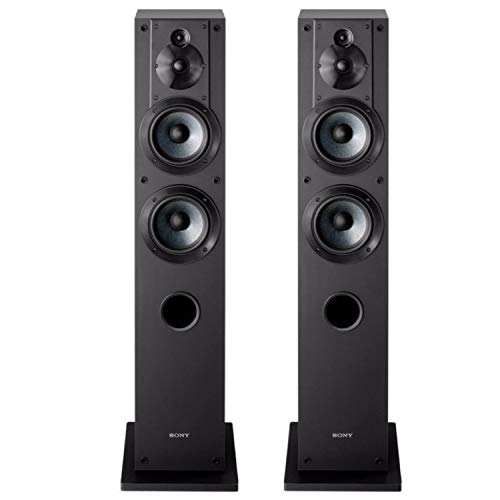
Sony’s SS-CS3 removes this class’s most common arithmetic headache by arriving as a pair, and then adds a feature none of its rivals here offer: a super tweeter dedicated to the extended frequencies of high-resolution audio. The main drivers — a pair of 5.25-inch woofers per cabinet with a soft dome tweeter between them — cover the music itself, while the super tweeter handles the air above it that high-resolution recordings and Sony’s own ecosystem make much of. Whether or not your sources exploit that range today, the speaker is ready for the ones that will.
The listening character is friendly and spacious. Sony voices the Core Series for the living rooms of its own television and receiver customers, which means dialogue clarity, a gentle top end that never fatigues during long viewing, and bass that is present and tidy rather than deep. Streamed music, games and films all pass through happily; the SS-CS3 is the least specialised speaker in this guide, and for households whose media diet is everything at once, that generality is the point.
The compromises are the expected ones: the cabinet is light for its size, the finish is a simple black, and determined bass hunters will add a subwoofer sooner with this pair than with the Klipsch. But as a single purchase that puts two real towers either side of a television, from a brand with a service network in every country, the SS-CS3 is the class’s easiest cheque to write.
- Configuration: twin 5.25-inch woofers, dome tweeter plus super tweeter
- Sold as: a pair — the listing price is the system price
- Character: friendly, spacious, tuned for television and mixed media
- Ecosystem: designed to partner Sony receivers and high-resolution sources
Strengths
- Pair pricing removes all per-speaker confusion
- Super tweeter readies it for high-resolution sources
- Gentle balance suits long television and film sessions
Trade-offs
- Light cabinet and plain finish reflect the budget
- Bass depth is the most modest of the linked picks
- Matching range is smaller than Polk’s two ecosystems
Best for: television-first households wanting one simple pair purchase. Not suited for: bass-led listeners or builders of large expanding systems.
ELAC Debut 2.0 F5.2 — Best sound per currency
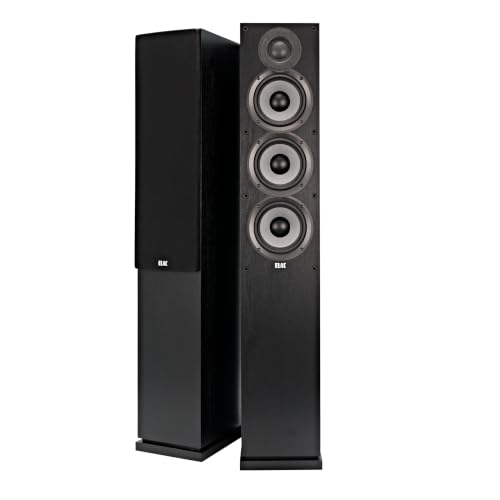
The F5.2 is what happens when the engineering of a respected range is allowed to trickle all the way down. It is the smaller sibling of the F6.2 in our thousand-tier guide — three 5.25-inch aramid woofers under a cloth dome tweeter, in a cabinet whose budget went to bracing and crossover rather than gloss — and it sounds like a member of that family: balanced, composed and quietly confident in a class that usually shouts to be noticed. If sound quality per unit of currency is your only metric, this guide ends here.
The composure is the story. Where budget rivals harden as volume rises, the F5.2 keeps its proportions; where they blur a busy chorus, the ELAC keeps the strands separate. Its bass is firm rather than deep, its treble extended rather than sparkling, and the whole presentation has the even-handedness that lets a system grow around it — better amplifiers and sources reveal more of it rather than exposing it. First-system buyers who suspect they will become enthusiasts should start here, because this is the tower least likely to be replaced in year two.
The costs are visible and audible at the extremes: the finish is a plain black wrap, the cabinet is narrower and less imposing than the Klipsch, and sensitivity is modest enough that very small amplifiers will run out of enthusiasm in big rooms. It is priced per speaker. None of that dents the central fact — in a class defined by compromise, the F5.2’s compromises are the ones a listener outgrows last.
- Configuration: three 5.25-inch aramid woofers, cloth dome tweeter
- Pricing: each box is one tower — order two for stereo
- Character: balanced and composed, the most refined listen here
- Pedigree: smaller sibling of the Debut 2.0 F6.2 in the tier above
Strengths
- Refinement and composure beyond the class norm
- Grows with better electronics instead of being exposed by them
- Firm, articulate bass suits music-first listeners
Trade-offs
- Plain finish and modest visual presence
- Modest sensitivity asks more of small amplifiers
- Bass depth is firm rather than cinematic
Best for: music-first buyers and future enthusiasts starting a serious system. Not suited for: buyers wanting maximum scale, depth or visual drama.

Klipsch R-800F — Best big-room dynamics
The R-800F is the interloper in this class — a full-size Klipsch tower with dual 8-inch woofers and a horn-loaded tweeter that belongs to a more expensive conversation, and which regularly drifts within reach of this tier’s ambitious end. When it does, it offers something none of the other picks can: genuine big-speaker dynamics, the kind that make a film explosion a physical event and a rock recording feel like the band is in the room. Its efficiency means even a modest receiver produces those levels without strain, which makes it the natural pick for large rooms on a small electronics budget.
Honesty requires the context. At its full list territory the R-800F competes with the tier above, and buyers should compare it there too; its place in this guide is as the stretch purchase, the tower to grab when pricing brings it into the class rather than a resident of it. Its character is also the most divisive here — forward, vivid, unapologetic — and listeners who prefer the ELAC’s calm will find the Klipsch relentless over a long evening. Rooms matter too: it is a big cabinet that needs space, and in a small room its talents curdle into excess.
Within its habitat, though, nothing else at the money does what it does. Games gain scale, films gain threat, and parties gain a speaker that never sounds like it is trying. If your room is large, your taste runs vivid and your timing catches it in this tier, the R-800F is the most exciting purchase in this guide by a wide margin.
- Configuration: dual 8-inch woofers, horn-loaded tweeter
- Pricing: priced per tower, like most of its range
- Character: vivid, efficient, physically dynamic
- Tier note: a stretch pick that enters this class when pricing allows
Strengths
- Scale and dynamics no resident of this class can match
- High efficiency flatters modest receivers and amplifiers
- Films and games gain genuine physical presence
Trade-offs
- Full pricing belongs to the tier above — buy it when it dips
- Forward character divides listeners over long sessions
- Big cabinet overwhelms small rooms
Best for: large rooms, film and game lovers, and bargain hunters with patience. Not suited for: small rooms or listeners who prefer a calm presentation.
Jamo S 809 — Best looks in class (prose-only)
Jamo, the Danish speaker maker now under the same roof as Klipsch, builds the S 809 for the buyer who refuses to choose between a styled room and a serious system. The cabinet is slim, the finishes are furniture-conscious, and details like the wood accents and clean front baffle make it the only tower in this guide that interior-minded partners actively approve of. Looks open the discussion; the sound keeps it open — a smooth, easy balance with a gentle top end that suits long, mixed listening.
The S 809’s drivers are modest on paper, and its bass is tidy rather than deep, so it sits behind the ELAC for refinement and behind both Polks for theatre ecosystems. What it offers instead is the complete domestic package: a tower that looks designed, sounds friendly and grows into Jamo’s own S-series centre and surrounds if films call. We list it without a link because its sales run through hi-fi retailers and its marketplace listings were inconsistent when checked; through a retailer, with the matching centre in the same finish, it is the class’s most liveable purchase.
One more S 809 note for the design-minded: its matching centre channel keeps the same styling language, which matters more than it should in open-plan rooms where the whole system is on display. A theatre that looks intentional gets used more, and used more is the only metric that finally counts.
- Configuration: slim cabinet, modest drivers, smooth voicing throughout
- Character: friendly balance, gentle treble, tidy bass
- Design: Scandinavian styling with furniture-grade finish choices
- Buying note: retailer-channel product; check listings carefully elsewhere
Strengths
- The best-looking tower in this class by consensus of households
- Smooth sound suits long, mixed listening sessions
- Slim cabinet fits styled rooms and smaller spaces
Trade-offs
- No stable verified Amazon listing at the time of writing
- Refinement and depth sit behind the ELAC and Klipsch
- Matching range is smaller than Polk’s ecosystems
Best for: design-conscious rooms that still want real tower sound. Not suited for: specification-led buyers or maximum-bass hunters.
Why Do Towers Beat Soundbars for Television at This Money?
The comparison deserves a fair hearing because the soundbar is the purchase most buyers in this class are actually considering. A soundbar offers one box, one cable and a remote that works — genuine virtues in a rented room. But its drivers are small, its stereo separation is a few dozen centimetres, and its bass comes from a wireless subwoofer doing its best from a corner. Dialogue, the thing television viewers actually complain about, depends on a real centre image and drivers big enough to reproduce voices at natural scale, and that is precisely what two towers provide before any other virtue is counted.
Music widens the gap further. A soundbar renders a record as background; a pair of towers renders it as an event, with a soundstage that extends beyond the furniture and bass that has pitch as well as thump. Households that rediscover their record collections after buying towers are a cliché of this price class because the experience is a cliché — it keeps happening. And the growth argument closes the case: towers are the first stage of a system, while a soundbar is the whole system forever, replaced rather than upgraded when its limits arrive.
None of this denies the soundbar its rooms. Where space forbids two cabinets, where the television is a bedroom set, where simplicity outranks sound — there the bar earns its place honestly. But where a pair of towers can physically stand, this class of speaker is the better purchase at the same money by every measure except tidiness, and tidiness has never once been the reason a film scene gave anyone goosebumps.
What Do Budget Towers Sound Like With Everyday Material?
Television dialogue is the first test and the one this class is bought for. A newsreader’s voice through the T50 or XT60 sits forward and intelligible at volumes where conversation remains possible — the exact quality that sends people shopping for speakers in the first place. The Sony matches them with a slightly softer edge that flatters older broadcasts, the ELAC presents the same voice with the least added character, and the Klipsch projects it with a vividness that large rooms need and small rooms may find insistent. Every one of the six passes the test that the television’s own speakers fail, which is worth remembering when the budget whispers about settling for less.
Music separates them more honestly. A well-recorded acoustic track exposes the ELAC’s composure and the Jamo’s smoothness as the class’s two flavours of refinement, while a dense rock mix shows where the budget crossovers earn their keep — the Polks keep the chorus together, the Sony keeps it friendly, and the Klipsch makes it an occasion. Bass-led electronic music is the class’s shared limit: all six play the tune and none plays the sub-bass foundation, so listeners whose libraries live there should budget the subwoofer as part of the system from the start rather than as a later apology.
Film soundtracks combine both tests and add a third: dynamic range. The jump from whispered dialogue to an effects peak is where small amplifiers and small speakers confess, and here the Klipsch’s efficiency and the Polks’ composure earn their rankings, keeping the quiet parts quiet and the loud parts clean in a way that makes night-mode compression unnecessary in most rooms. That, in the end, is what this class buys at its best — not spectacle, but the absence of strain, in systems that cost less than the television they stand beside.
How Do These Six Budget Towers Stack Up?
| Pick | Sold as | Character | Strongest use |
|---|---|---|---|
| Polk T50 | Single | Balanced, forgiving | First systems, all-round use |
| Polk XT60 | Single | Cinematic, warm | Staged theatre builds |
| Sony SS-CS3 | Pair | Friendly, spacious | Television and mixed media |
| ELAC Debut 2.0 F5.2 | Single | Balanced, refined | Music-first systems |
| Klipsch R-800F | Single | Vivid, dynamic | Large rooms, films, games |
| Jamo S 809 | Single | Smooth, design-led | Styled living rooms |
How Do You Grow a Budget Pair Into a Full System?
The staged build is this class’s superpower, and the picks divide by how gracefully they support it. Polk offers the smoothest road twice over: the T50 grows into a T-series theatre, and the XT60 into a Monitor XT system with height channels for immersive audio, each step sharing the voicing of the towers you started with. A buyer can add the centre this year — the single most valuable theatre upgrade, since dialogue lives there — surrounds next year, and a subwoofer whenever the film habit justifies it, without ever re-buying the front pair.
Sony’s road is shorter but simpler: the Core Series centre and bookshelves complete a competent theatre, and the ecosystem logic suits buyers whose whole rack wears the same badge. ELAC’s Debut range offers the audiophile’s version of the same path, with centres and surrounds that keep the F5.2’s composure, while Klipsch’s Reference range surrounds the R-800F with the most theatrical supporting cast of all. Jamo’s S-series completes the design-led route for buyers who started with the S 809’s looks.
Sequencing advice is consistent across all of them. Centre before surrounds, because dialogue clarity changes every film tonight, while surrounds change only the scenes mixed for them. Subwoofer before height channels, because the low octave underpins everything and height effects garnish some of it. And patience before everything: a staged system built from one range, bought as budget allows, ends up better matched than a one-day bundle of whatever was discounted, which is the entire philosophy of this price class expressed as a shopping habit.
How Should You Set Up Budget Towers for the Best Sound?
Budget towers reward the same placement care as expensive ones, and the gains are larger because the speakers start with less margin. Give them what space you can from the wall behind — even a few extra inches calms the bass of the ported designs — and keep the pair symmetric in the room wherever furniture allows, because asymmetry is the flaw no receiver setting fully repairs. Angle them slightly toward the listening seat for dialogue clarity, or leave them facing forward for a wider, softer picture if the room is lively with hard surfaces.
Then attend to the unglamorous details that cost nothing. Level the cabinets so they do not rock, tighten the feet, and run the receiver’s room calibration if it has one — at this level, calibration fixes more than it breaks. Set any television or receiver bass management honestly: if there is no subwoofer, tell the system so, and the towers will receive the full signal they were bought to play. Finally, resist the loudness temptation for the first week. Budget towers sound their best balanced rather than boosted, and the listener who learns their natural voice before reaching for tone controls ends up with the better system.
What Mistakes Do Buyers Make in This Price Class?
The expensive mistake is comparing a single-speaker price against a pair price and concluding one tower is half the cost of another — the table above exists to prevent exactly that. Next comes buying by driver count, which rewards decoration over engineering every time. A third is placing towers hard into corners on day one and judging their bass forever by that boom. A fourth is spending the entire budget on speakers and nothing on the stands-free essentials — decent cable, a surge protector, the centre channel fund — so the system stalls half-built. And the subtlest mistake is dismissing this class entirely and buying a premium soundbar instead: at equal money, two real towers with real woofers win on dialogue, music and scale, and they can grow. The soundbar cannot.
How Long Will Budget Towers Last — and When Should You Upgrade?
Budget towers from serious makers are not disposable. The drivers in these six are conventional, proven designs, the cabinets are inert boxes with no electronics to age, and a pair kept out of damp and direct sun will play for a decade or more — typically outliving the receiver, the television and the streaming format they were bought alongside. The realistic failure points are domestic: a woofer dented by a toy, a terminal snapped in a move, a grille lost to a house clearance. All are repairable or survivable, which cannot be said of a soundbar’s sealed electronics.
Upgrade timing follows from that durability. The owners who replace budget towers fastest are the ones who bought against their taste — the vivid-speaker buyer who needed calm, the refinement buyer who needed scale. The owners who keep them longest bought the compromise they could live with, which is the selection principle this guide has applied throughout. When the upgrade does come, these towers demote gracefully: to a second room, a child’s first system, a relative’s television. A speaker that stays in the family’s service for fifteen years across three roles has repaid its modest price several times over, and that arithmetic — not the specification sheet — is the final argument for buying a known badge in this class rather than an unknown one at half the money again.
Should You Buy Budget Towers New or Used?
The used market teems with towers from this class, because first systems get upgraded and rooms get redecorated. A used pair from the six badges here can be excellent value — speakers are simple machines, and a cosmetically honest T50 or F5.2 with both grilles and no driver damage will sound as it did when new. The inspection is short and non-negotiable: press no cones, but look at them — creased or pushed-in dust caps on a woofer suggest a life you do not want to inherit; listen at moderate volume for rattles, buzzes or one channel quieter than the other; and check that both speakers of the pair are truly the same model and finish, because mismatched pairs circulate.
New buying carries its own arithmetic in this class. The warranty matters more at this level than above it, because the buyer’s whole system budget is smaller and a dead tweeter is a larger fraction of it. Seasonal pricing also moves this class more than any other — the same tower can occupy noticeably different positions in the tier across a year — so a buyer with a shortlist and a little patience usually lands a better speaker than the one the budget first suggested. That patience is the used Klipsch’s and the discounted ELAC’s natural habitat, and it is why this guide ranks by character rather than by the price on any given day: character is permanent, and the price is weather.
What About Children, Pets and Shared Houses?
Budget towers disproportionately live in real family rooms rather than dedicated listening spaces, so their survival traits deserve a paragraph of their own. Grilles are not a styling option in a house with toddlers; they are the difference between a woofer and a woofer with a small handprint pressed into its dust cap, and every maker here supplies grilles voiced into the design rather than apologised for. Magnetic or pegged, they should stay on until the household’s youngest member can be trusted, which experienced parents will confirm is later than hoped.
Stability follows. A tower is a tall, narrow object in a room where balls get kicked and dogs get excited, so place them where traffic does not brush past, use the supplied feet or plinths properly, and consider the wall-side positions that double as protection. The lighter cabinets here — the Sony especially — benefit most from thoughtful placement, while the big Klipsch’s mass is its own anchor. None of this is glamorous, and all of it decides whether a budget system reaches its tenth birthday, which is the entire economic proposition of the class.
Shared houses add a social specification: how the system behaves at low volume, late, through a wall. The composed picks — ELAC, both Polks, the Sony — keep their balance quietly enough that a film at midnight does not become a negotiation with housemates. The Klipsch can play quietly too, but its talents invite the volume control upward, and the honest buyer in a thin-walled flat should weigh that temptation as seriously as any specification in this guide.
What Cables and Small Extras Does a First Tower System Need?
Very little, and anyone who tells you otherwise at this budget is selling something. Speaker cable of sensible thickness — heavier for long runs across a room — with cleanly stripped ends or inexpensive banana plugs for convenience, is the whole cable story; the remainder of any accessory budget belongs to the system itself. A basic surge protector guards the receiver that guards everything else, and a roll of cable channel or a few clips keeps runs tidy in rented rooms where drilling is forbidden. If the towers will sit on hard floors, the supplied feet plus a pair of inexpensive isolation pads can calm a boomy rental floorboard more honestly than any electronic tweak.
The one accessory with genuine sonic value is a measuring app on a phone, used once, to set the pair level and check that both towers play at the same volume from the listening seat. Asymmetry from a loose connection or a receiver setting has embarrassed more first systems than any driver ever made, and five minutes with a free app eliminates the entire category of doubt. After that, the correct accessory is a record, a film or a game you have been saving — the system is finished when the buying stops, and this class, chosen well, lets the buying stop for years.
Final Recommendation
Start with the Polk T50 unless you have a reason not to: it is balanced, forgiving, wall-friendly and attached to the easiest upgrade path in the class. Choose the XT60 instead when the plan is explicitly a theatre built in stages, the Sony SS-CS3 when one simple pair purchase for the television is the whole brief, and the ELAC F5.2 when your ears already know they are building toward hi-fi — it is the connoisseur’s budget tower. Stretch to the Klipsch R-800F when the room is big and the pricing cooperates, and find the Jamo S 809 at a retailer when the room must look as good as it sounds. This class rewards buyers who choose their compromises deliberately, and every tower here repays that deliberation with years of service.
A final note for buyers furnishing a room from nothing: sequence the room, not just the system. Towers placed either side of a television that has not arrived yet will be moved when it comes, and every move is a chance to damage a cabinet or lose a grille peg. Buy in the order the room settles — screen, seating, speakers — and the placement advice in this guide can be applied once, properly, instead of approximately three times. The patience costs nothing and the system sounds like it.
And keep the boxes through the first month, stacked in a corner without apology. If a driver arrives with a fault, the original packaging is the difference between a painless return and an argument; once the pair has survived a month of films and records, the boxes can go to the loft as the system’s insurance policy for every future move. Small habits like this are how budget systems become decade-long ones.
Register the pair, note the serial numbers in the same place you keep the receiver’s, and photograph the setup once it sounds right. That photograph — positions, angles, distances — is the cheapest service manual your system will ever have, and the day a cleaner, a child or a house move disturbs the arrangement, it will restore in minutes what memory would argue about for an evening.
Then stop reading speaker guides — including this one — and go and listen to something you love at the volume the evening allows. The system is not a project to be optimised forever; it is the room’s new furniture for making films clearer and records bigger, and it starts paying its modest price back the first night it is simply used.
One more habit separates satisfied owners from restless ones in this class: revisit the placement once, about a month in, when your ears have learned the system and the room has finished teaching its lessons. A few centimetres of movement, a degree of toe-in, a rug that arrived late — small corrections made with knowledge outperform the frantic first-day tweaking that most systems endure, and after that single revisit, the setup can be left alone with a clear conscience.
Keep the receipt somewhere findable, too. Budget speakers are bought from many sellers across many seasons, and the owner who can produce proof of purchase in year three owns a warranty; the owner who cannot owns a story. A photograph of the receipt, stored with the serial numbers, closes the last administrative gap in the whole purchase.
Frequently Asked Questions
Are floor speakers in this class better than a soundbar?
For dialogue clarity, music and sheer scale, yes — two cabinets with real woofers move air a soundbar cannot, and they can grow into a full system. A soundbar wins only on simplicity and space, which are real virtues but different ones.
Do I need a subwoofer with budget towers?
Not to begin with. Every pick here covers music and television convincingly alone. Film lovers chasing the lowest effects will want one eventually, and adding it later is the budget-friendly order — towers first, subwoofer second.
Why are some of these priced per speaker and others per pair?
Hi-fi convention prices floorstanders singly so buyers can add centres and surrounds from the same range, while television-oriented brands like Sony package pairs for simplicity. Always check the listing’s quantity before comparing — it is this class’s oldest trap.
What receiver or amplifier do budget towers need?
Almost any modern AV receiver or modest stereo amplifier drives these towers happily; the Klipsch needs least, the ELAC appreciates the most honest power. Spend on a receiver with room calibration before spending on wattage.
How close to the wall can these towers sit?
The passive-radiator Polks and the Jamo tolerate near-wall placement best. The ported designs — ELAC, Sony and Klipsch — sound cleaner with some space behind them, though a hand’s breadth and sensible volume solve most rooms.
Related Guides
Build the rest of the system with our best 1000 floor standing speakers, our best 2 0 home theater speakers, and our best 100 200 dollar desktop speakers.



[…] the listening room with our best 300 floor speakers, our best 15 inch powered speakers, and the cinema view in our guide to 2.0 home theater […]