What's inside
- Key Takeaways
- Quick Picks
- How We Chose These Picks
- Which 5TB Portable Survives Your Kind of Travel?
- Why Does 5TB Mark the Ceiling for Portable Hard Drives?
- How Do You Turn a 5TB Portable Into a Backup That Actually Runs?
- Portable 5TB, Desktop External or SSD: Which Shape of Storage Fits?
- What Should You Check When a Portable Drive Starts Misbehaving?
- How Should a Household Organise Two Portable Drives Instead of One?
- What Happens to Your Data When a Portable Drive Reaches Old Age?
- How Do Cables, Ports and Hubs Change a Portable Drive’s Behaviour?
- Which Habits Shorten a Portable Drive’s Life?
- Final Recommendation
- Frequently Asked Questions
- Related Guides
As an Amazon Associate I earn from qualifying purchases. This post may contain affiliate links at no extra cost to you.
widgetverdict.com is reader-supported. When you buy through links on our site, we may earn an affiliate commission.
There is a specific moment that sends people shopping for the best 5tb external hard drives: the backup that fails for lack of space, the game console that demands a deletion before every install, the photo library that finally outgrows the drive bought in a more optimistic year. Five terabytes is the largest capacity the portable hard drive format offers — the ceiling of the 2.5-inch platter — and it arrives in a case that runs from a single USB cable with no power brick. This guide compares six ways to buy that capacity: four portables with verified listings, spanning plain backup duty, console service, built-in encryption and expedition-grade armour, plus two further models described without links.
Because all six picks hold the same headline capacity, the decision is made by everything around the platters. Do you need password protection that works without installing anything clever? Does the drive live in a laptop bag, a games console’s shadow or a photographer’s rucksack in the rain? Will it be written to in one enormous dump each month or nibbled at daily? Each pick below answers a different combination of those questions, and the guide is organised so that your combination points at its pick within a few minutes.
One shared characteristic deserves stating before the individual verdicts: portable drives at this capacity generally reach 5TB with shingled recording inside a slim 2.5-inch mechanism, which makes the whole class best at the same work — large, deliberate copies, media libraries, backups and game storage — and less happy under constant small random writes. That is not a flaw in any single pick; it is the physics of the format, and the picks are judged by how honestly their design and software embrace the roles the format is good at.
Key Takeaways
- WD Elements 5TB is the plain, dependable backup drive: no software layer, no encryption, nothing between your files and the disk.
- Seagate’s Portable 5TB is the console-friendly all-rounder, equally at home behind a games machine or a laptop.
- WD My Passport 5TB adds hardware password protection and backup software, making it the pick for drives that travel with personal data.
- LaCie Rugged USB-C 5TB wraps the same capacity in drop, shock, dust and rain resistance for people whose drives work outdoors.
- Every 5TB portable is bus-powered and cable-simple; the differences are protection, software and shell, not capacity or connection drama.
Quick Picks
| Drive | Badge | Why it earns its place |
|---|---|---|
| WD Elements 5TB Portable | No-frills backup workhorse | The default recommendation: slim, silent about its software, formatted and ready for straightforward backup and archive duty. |
| Seagate Portable 5TB | Console-and-PC all-rounder | Equally happy as a PC backup drive or a console game vault, with rescue services attached to the listing. |
| WD My Passport 5TB | Password protection built in | Hardware encryption and backup software for travellers whose drive holds a life, not just files. |
| LaCie Rugged USB-C 5TB | Armour for travelling drives | The orange icon: shock, drop, dust and rain resistance for location work and rough bags. |
| Seagate One Touch 5TB | Styled backup, unlinked | A fabric-finished alternative with scheduled backup software, described here without a verified listing. |
| WD Black P10 Game Drive 5TB | Game-vault specialist, unlinked | A gaming-briefed portable built to live beside a console, included without a link. |
How We Chose These Picks
The shortlist was built around the four jobs a 5TB portable is actually bought for: scheduled backup, console game storage, travelling personal data and field storage for photography and video. Each job got a first-choice pick whose design centres on it, rather than six near-identical black rectangles ranked by trivia. Where a job has a strong second candidate — game storage and styled backup — that candidate appears as a prose-only pick, because the market’s map matters to readers even when a listing cannot be verified.
Protection was weighed in both its forms. Physical protection is the LaCie’s entire proposition and is judged on its stated resistances and its connector choice. Data protection is the My Passport’s, judged on whether its encryption is hardware-based, whether the software is optional rather than compulsory, and whether a forgotten password means a wiped drive — a feature, stated plainly, rather than a support loophole. The two unadorned drives, Elements and Seagate Portable, were judged on the opposite virtue: how completely they stay out of the user’s way.
Listing verification followed the site pool, as in every guide in this series. Four models matched verified listings and carry links; the One Touch and the P10 are current, widely retailed products that could not be matched to pool listings with confidence, so they are analysed on their specifications and positioning and left link-free. No pick was demoted for that status — it is a statement about our verification, not about the drive.
WD Elements 5TB Portable — No-frills backup workhorse
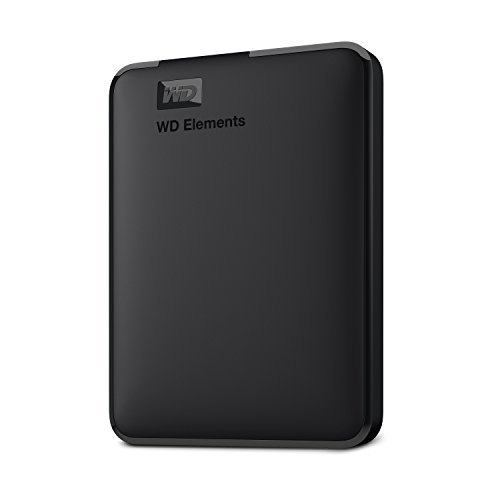
The Elements formula has survived every storage fashion of the last decade because it refuses all of them: a slim matte case, a USB connection, a drive inside, and nothing else. There is no backup suite to install, no encryption chip to configure, no dashboard, no account. You plug it in, your operating system sees 5TB, and whatever backup discipline you already have — a scheduled program, a sync tool, a Sunday-evening drag-and-drop ritual — uses it exactly as it uses any disk. For the large population of buyers who already know how they back up and simply need somewhere bigger for it to land, that absence of opinion is the product.
Physical manners match the philosophy. The case is light enough to disappear into a laptop sleeve, the USB 3.2 Gen 1 connection is the familiar Micro-B-to-A arrangement this class standardised on, and the drive runs from bus power alone, so a backup can happen anywhere a laptop can open — a train table, a kitchen counter, a client’s office. It is formatted for Windows from the box and reformats for a Mac in under a minute, a detail that matters to mixed households more than any benchmark.
What the Elements asks in return is that you bring your own everything: your own encryption if the data is sensitive (operating-system encryption works fine on it), your own protective sleeve if it travels hard, your own backup software. Buyers who want the drive itself to manage those concerns should keep reading — the My Passport and the LaCie below exist precisely for them. Buyers who prefer their storage dumb and their systems smart will find this the most honest 5TB on the market, and the one this guide recommends first for plain backup duty.
Long-term, the Elements’ simplicity ages well. There is no proprietary layer between your files and a standard filesystem, so a drive pulled from a drawer in six years will mount on whatever computer is current then and surrender its contents without archaeology. In a category where features date quickly, the featureless drive is paradoxically the most future-proof purchase in this guide.
There is a generational point worth making for upgraders: if your current backup drive is a 1TB or 2TB portable from years ago, the Elements is not merely a bigger version of it but the same ownership experience with the anxiety removed — the backup that used to demand a tidy-up before it would run simply runs. Owners consistently report that the largest drive in a format is the one that finally makes the backup routine invisible, and invisible is exactly what a backup routine should be.
- Capacity and format: 5TB in a slim 2.5-inch portable case
- Connection: USB 3.2 Gen 1 / USB 3.0, single cable
- Power: drawn entirely from the USB port, no adapter
- Software: none bundled — works with any backup tool
- Encryption: none built in; use your operating system’s
- Formatting: Windows-ready out of the box, Mac reformat required
Strengths
- Zero proprietary layer between your files and the disk.
- Light, silent and bus-powered for backups anywhere.
- The default choice of backup software everywhere already supports it.
Trade-offs
- No hardware encryption for sensitive travelling data.
- Plastic shell offers no special drop protection.
- Everything — software, sleeve, encryption — is bring-your-own.
Best for: scheduled home backup and archive duty with your own software.
Not suited for: travellers carrying sensitive data or working in rough environments.

Seagate Portable 5TB — Console-and-PC all-rounder
Seagate’s Portable line plays the same simplicity card as the Elements with one difference in emphasis: it is marketed, packaged and genuinely used as heavily beside games consoles as beside computers. The listing itself names PC, Mac, PS4 and Xbox, and that dual citizenship reflects how these drives actually live — bought for a console whose internal storage filled with installs, then borrowed for laptop backups, then returned to the console. If your household’s storage needs refuse to stay in one category, a drive designed to be unremarkable in all of them is a rational centre of the system.
Console duty deserves a paragraph of its own, because it shapes the purchase. Current-generation consoles restrict what external drives can do — older-generation titles and storage overflow, yes; playing the newest releases directly, generally no — while previous-generation libraries run from a drive like this happily. The honest framing is that a 5TB portable is a vault: it holds the whole library so nothing is ever re-downloaded, and it shuttles games to internal storage when they return to the rotation. Judged as a vault, capacity and reliability are the whole specification, and this drive delivers both without a gaming tax.
The listing’s inclusion of Seagate’s Rescue data-recovery services adds a quiet differentiator. A portable drive leads a riskier life than a desktop one — bags, desks, drops, car boots — and a recovery association converts some of those accidents from losses into delays. It does not replace a backup, and a drive holding the only copy of anything remains a mistake whatever services attend it, but as bundled reassurance on a generalist drive it is worth having.
Against the Elements, the choice is nearly a coin toss decided by ecosystem and price on the day: WD’s drive is the incumbent default, Seagate’s is the same idea with console branding and recovery services. Households already invested in one maker’s tools will find continuity pleasant; everyone else can buy either with confidence and spend their deliberation on the backup routine the drive will serve.
Parents of teenagers will recognise a further use that Seagate’s console positioning quietly serves: the family games archive. A single 5TB vault holding every downloaded title the household owns ends the cycle of deletion and re-download that capped broadband connections make miserable, and it gives the console’s internal storage back to the two or three games actually in rotation. Few storage purchases produce gratitude from quite so many directions at once.
- Capacity and format: 5TB portable, 2.5-inch mechanism inside
- Connection: USB 3.0 single-cable hookup
- Power: bus-powered, nothing else to plug in
- Compatibility pitch: PC, Mac and games consoles named on the listing
- Services: Rescue data-recovery association included per listing
- Model reference: STGX5000400 in a black finish
Strengths
- Equally at home on console overflow and PC backup duty.
- Rescue services soften the consequences of portable accidents.
- Same plug-and-go simplicity as the class default.
Trade-offs
- No encryption or bundled backup suite to manage data for you.
- Shell is ordinary plastic, not travel armour.
- Console play restrictions belong to the consoles, not the drive — check yours.
Best for: households splitting one drive between console vault and PC backup.
Not suited for: users wanting the drive itself to encrypt or armour their data.

WD My Passport 5TB — Password protection built in
The My Passport exists for the buyer whose portable drive holds a life rather than a library: tax records, family photographs, work documents, the scanned archive of a household. Its defining feature is hardware password protection — WD’s 256-bit AES encryption built into the drive — which means the data is unreadable without the password even if the mechanism is removed from its case and attached elsewhere. That is a categorically stronger promise than a software lock on an unencrypted drive, and for a drive that travels in bags and sits in hotel rooms, it is the right kind of strong.
The bargain must be understood with equal clarity: forget the password and the data is gone by design. There is no back door, no support override, no recovery service for an encrypted drive whose key is lost — that absence is precisely what makes the protection real. Buyers should set the password through WD’s software, store it in a password manager the same day, and consider whether the household’s other adults need it recorded somewhere they can reach. Encryption converts a physical risk into a memory risk, and it should be adopted with that trade stated out loud.
Around that centre, the My Passport is a polished mainstream portable: slim case in several colours, USB connection with the maker’s backup software available for scheduled copies and ransomware-defence positioning in its current software suite. The software is optional — the drive works as a plain disk without it — which is the correct arrangement; buyers who want set-and-forget backups can enable it, and buyers with their own systems can ignore it entirely.
Choose the My Passport over the Elements when the drive will leave the house with personal data on it, when it will be stored offsite as a backup (where encryption protects it in someone else’s building), or when a workplace policy simply requires encrypted media. Choose the Elements when the drive will live its whole life on your own desk, where the password would be ceremony without benefit. The capacity is identical; the threat model decides.
Small businesses without an IT department are the My Passport’s other natural constituency. A drive that encrypts itself, backs up on a schedule and travels between an office and a home safe answers the compliance questions a sole trader actually faces — client data protected at rest, a copy existing offsite — without a server, a subscription or expertise. It is not an enterprise system, but it is a defensible one, and for a one-person firm that distinction is the whole game.
- Capacity and format: 5TB in WD’s slim Passport case
- Connection: USB 3.x single cable, bus-powered
- Protection: built-in password security with 256-bit AES hardware encryption
- Software: WD backup tools available, optional to use
- Finishes: several colours across the range
- Recovery note: a forgotten password cannot be bypassed — by design
Strengths
- Hardware encryption protects data even out of the case.
- Backup software available for set-and-forget routines.
- Slim, coloured, travel-friendly industrial design.
Trade-offs
- A lost password means lost data, permanently and intentionally.
- Software features tie you partly to WD’s ecosystem.
- Shell is styled for desks and bags, not for drops.
Best for: travelling personal data, offsite backup copies and policy-bound workplaces.
Not suited for: anyone likely to forget a password they cannot reset.

LaCie Rugged USB-C 5TB — Armour for travelling drives
The orange bumper is the most recognisable silhouette in portable storage, and at 5TB the Rugged USB-C carries the family formula to the format’s capacity ceiling: drop resistance, shock absorption, dust and rain sealing, wrapped around a standard portable mechanism. Its buyers are not being theatrical. Photographers backing up a wedding in a field, field engineers whose kit bag rides in a truck bed, students whose drive crosses a rainy campus daily — for them the drive’s environment is genuinely hostile, and the premium buys survival probability, not style.
Understand what the armour does and does not promise. The rubber sleeve and internal mounting absorb the knocks and short drops that kill unprotected portables, and the sealing shrugs off the weather a location day delivers. It does not make the drive waterproof for immersion, indestructible under a vehicle, or immune to the slow vibration of a badly packed bag on a long drive. Treat it as a drive that survives the accidents other drives do not, while still deserving the padded pocket and the careful packing you would give any disk holding the day’s work.
The USB-C connection is the second half of the proposition, aligning the Rugged with current laptops that have abandoned older ports, and LaCie’s habit of including cable options in the box reduces the adapter roulette that plagues travelling kits. Bus power keeps the one-cable discipline. Performance is portable-class — the mechanism inside is a conventional 5TB portable drive — so the Rugged’s premium buys protection and connection fit, not speed, and buyers should not let the professional aura suggest otherwise.
For desk-bound users the Rugged is money spent on a life the drive will never lead, and the Elements above is the same capacity with the savings kept. For anyone whose drive genuinely works outdoors, off desks or inside working bags, it is the only pick in this guide designed for their reality, and its two decades of professional adoption in exactly those environments is the strongest testimony any portable drive carries.
The Rugged’s secondary career is worth a mention: because the case telegraphs durability, these drives become the ones lent, borrowed and thrown into communal kit — film sets, survey teams, school expeditions — where an anonymous black portable would be babied or lost. There is an operational logic to owning the drive that everyone can identify at twenty paces and nobody is afraid to use, and LaCie’s colour choice, whatever its origins, serves that logic perfectly.
- Capacity and format: 5TB portable inside a sealed rugged case
- Connection: USB-C, suited to current laptops
- Power: bus-powered through the same cable
- Protection: drop, shock, dust and rain resistance per LaCie’s ratings
- Shell: signature orange bumper over an aluminium core
- Model reference: STFR5000800
Strengths
- Survives the knocks and weather that end ordinary portables.
- USB-C fit for modern laptops without adapter hunting.
- The field-work standard, with a long professional track record.
Trade-offs
- Premium pricing buys protection, not performance.
- Bulkier and heavier than the slim plastic portables.
- Armour has limits — immersion and crushing are still fatal.
Best for: photographers, field workers and anyone whose drive works outdoors.
Not suited for: desk-bound backup duty, where its talents go unused.
Seagate One Touch 5TB — Styled backup, unlinked
Seagate’s One Touch line answers a buyer the plain Portable ignores: the one who wants the drive to look like an object they chose, with a woven fabric finish in several colours, and who wants backup software that schedules itself rather than a bare disk awaiting instructions. At 5TB it offers the same capacity with that lifestyle polish, plus optional password protection in the line’s software toolkit. It is a legitimate, current product that appears here without a link because no pool listing could be verified for it — a bookkeeping fact, not a judgement on the drive.
In service, the One Touch’s pitch is the managed routine: install the toolkit, set the schedule, and let mirrored or backed-up folders stay current without a Sunday ritual. For households whose backup discipline has repeatedly failed at the “remember to plug it in and copy” stage, software that lowers the activation energy is a real feature, worth more than a marginal specification difference. The fabric finish, meanwhile, genuinely suits drives that live visibly on desks rather than inside bags.
Readers choosing between it and the linked Seagate Portable should decide by routine, not by appearance: if your backups already happen through your own system, the Portable’s bare simplicity matches you; if they do not happen at all, the One Touch’s software hand-holding is the feature that changes outcomes. Either way, source it from a retailer you trust, since this guide cannot hand you a verified link for it.
There is a subtle behavioural argument for the One Touch that goes beyond its toolkit: a drive people like looking at stays on the desk, plugged in, where backups happen — while a drive people find ugly migrates to a drawer, where backups do not. Storage design is usually judged as decoration, but in a product whose entire value depends on being connected, visibility is a feature with measurable consequences for whether the data survives.
- Capacity and format: 5TB portable with a fabric-finished case
- Connection: USB single-cable, bus-powered
- Software: Seagate toolkit with scheduled backup and mirroring
- Protection: optional password features within the toolkit
- Finishes: multiple colours across the range
- Positioning: the styled, software-managed branch of Seagate’s portable range
Strengths
- Scheduled backup software that lowers the discipline barrier.
- Desk-friendly design in finishes beyond basic black.
- Optional password protection for light security needs.
Trade-offs
- No link here; purchase research falls to the reader.
- Toolkit-centric experience will not suit bare-disk purists.
- Fabric finish prefers desks to muddy field bags.
Best for: households whose backups need software to make them happen.
Not suited for: shoppers who insist every pick carry a buy link, or anyone after a bare unmanaged disk.
WD Black P10 Game Drive 5TB — Game-vault specialist, unlinked
WD’s Black line extends to portables in the P10, a 5TB drive in an industrial, ridged case sold squarely at console and PC gamers. The proposition is the vault logic from the Seagate Portable section, sharpened: a single drive that swallows an entire game library — dozens of current titles or well over a hundred smaller ones — so that the console’s internal SSD is reserved for whatever is actively being played, and nothing is ever deleted to make room for a download again. At 5TB, the largest portable capacity, the P10 is the endgame version of that idea.
The gaming brief brings positioning rather than magic: the mechanism is a portable hard drive, bound by the same console rules as every external — current-generation titles generally must live on internal storage to play, with the portable serving as their vault and as direct storage for previous-generation games. WD’s gaming packaging does not change those platform rules, and buyers should set expectations by them. What the P10 adds over a generic portable is design intent, a case built to sit beside a console permanently, and a warranty and support story aimed at gamers.
It is included here prose-only, without a verified pool listing, because a 5TB external guide that omitted the gaming segment’s flagship would mislead the many readers whose 5TB search begins at a console. If your drive will live behind a television, the P10 and the linked Seagate Portable are your two candidates; if it will live in a laptop bag, the four picks above it in this guide are aimed at your life instead.
One practical detail separates the P10 from improvised console storage: it is sold in console-ready form, formatted and intended to be recognised by the machines it serves without a preliminary evening of setup. For the large audience whose storage problem is urgent and whose patience for filesystem research is nil, a drive that simply works when the console asks its questions is worth the gaming branding it wears.
- Capacity and format: 5TB portable in a gaming-styled case
- Connection: USB single cable, bus-powered
- Audience: console and PC game library storage
- Role: vault for current titles, direct play for older libraries per platform rules
- Design: industrial case intended to sit beside a console
- Positioning: the gaming branch of WD’s portable range
Strengths
- Purpose-built for the console storage problem.
- Maximum portable capacity ends library deletion anxiety.
- Case design suits permanent placement by a television.
Trade-offs
- Platform rules still govern what plays from external storage.
- No verified link in this guide.
- Gaming styling is wasted on backup-only duty.
Best for: console households wanting one permanent game vault.
Not suited for: laptop-bag backup duty or buyers needing a link here.
Which 5TB Portable Survives Your Kind of Travel?
| Drive | Protection story | Software story | Choose it when… |
|---|---|---|---|
| WD Elements 5TB | Plain slim case | None — bring your own | Your backup system already exists and works. |
| Seagate Portable 5TB | Plain case, recovery services | Minimal | One drive must serve console and computer alike. |
| WD My Passport 5TB | Hardware encryption | Backup tools included | The data itself needs protecting, not just the disk. |
| LaCie Rugged 5TB | Drop/shock/dust/rain armour | Minimal | The drive works outdoors or in rough bags. |
| Seagate One Touch 5TB | Fabric case, optional password | Scheduled backup toolkit | Backups need software encouragement to happen. |
| WD Black P10 5TB | Gaming case | Minimal | The drive’s home is beside a console. |
The comparison reduces to a sentence: at 5TB the platters are a commodity, so buy the wrapper — armour, encryption, software or deliberate absence of all three — that matches the life the drive will lead. Every pick here stores the same files at the same portable speeds; they differ in what happens on the drive’s worst day, and choosing by that day, rather than by the spec sheet, is the whole skill this category asks of you.
Why Does 5TB Mark the Ceiling for Portable Hard Drives?
Inside every pick in this guide sits a 2.5-inch mechanism, the laptop-drive format, and that format’s platter physics top out at 5TB with current technology. Manufacturers reached the figure by stacking platters and using shingled recording, and no 2.5-inch hard drive beyond it exists to buy. The practical consequence is a clean decision boundary: if a portable requirement exceeds 5TB, the answer is no longer a bigger portable hard drive but a different product — a desktop external with its own power supply, two portables, or an SSD at a very different price.
There is a historical neatness to the ceiling that helps buyers calibrate: the first portable hard drives held their gigabytes in the hundreds, and each format generation since has multiplied capacity until the platter physics said stop. Five terabytes is where the 2.5-inch hard drive’s story ends, which makes these drives the final, most refined version of a very long idea — every lesson the industry learned about portable mechanisms is inside them, and no successor is coming to make them obsolete from within their own technology.
The ceiling also shapes value. Because 5TB is the format’s maximum, it commands the class’s flagship positioning even though the underlying drives are mainstream; buyers pay a modest premium for the last terabyte over the 4TB models below it. Whether that premium is rational depends entirely on whether the library actually needs it — a backup target sized at twice the data it protects is good planning, while capacity bought for a library that will never grow is decoration.
Shingled recording, the enabling technology, deserves its sentence here too: in portable service its weakness — sustained random writes — rarely appears, because portables are written to in deliberate sessions and read in long streams. The format and the technology suit each other, which is why the 5TB portable, for all its engineering compromises, remains one of the most sensible storage purchases a household can make.
How Do You Turn a 5TB Portable Into a Backup That Actually Runs?
Buy the routine along with the drive. Connect it, let your operating system’s backup tool or the maker’s software claim it, set a schedule that matches when the computer is actually on and awake, and run the first full backup immediately rather than at the weekend. A backup system whose first run is postponed is a plan, not a backup, and plans fail silently for months while their owners believe themselves protected.
Then verify like a sceptic. Restore three files of different kinds — a photograph, a document, something from a folder you did not create — and open each one. Check that the schedule’s history shows completed runs after a week of ordinary use, including at least one occasion when you forgot the drive entirely, because the system must tolerate your real habits, not your intended ones. If the drive lives offsite or in rotation, write the swap into the same calendar that governs the rest of the household’s admin.
Households with more than one computer should decide the drive’s allegiance early. A backup target can serve several machines through most backup tools, but a drive that wanders between computers on no schedule serves none of them reliably. Assign it to the machine with the most irreplaceable data, let other machines visit it on the calendar, and resist the temptation to make it the household’s general-purpose ferry — ferry duty is how backup drives end up reformatted by a helpful relative.
Finally, plan the drive’s retirement on the day it arrives: a note in the calendar two or three years out to review its health and this guide’s successors. Portable drives die of their travels as much as their hours, and a backup target replaced on schedule is a system; a backup target replaced after its failure is a story told at the worst possible moment.
Portable 5TB, Desktop External or SSD: Which Shape of Storage Fits?
The portable’s rivals clarify its virtues. A desktop external drive offers more capacity per purchase and often a faster mechanism, at the cost of a power brick, a larger shell and a permanent address on the desk; it is the right shape for a backup that never travels and a library that has outgrown 5TB entirely. An external SSD offers speed and shock immunity that make hard drives feel antique, at a cost per terabyte several times higher; it is the right shape for active project work, video editing on the move and anyone whose transfers are measured in minutes of their working day.
The portable hard drive wins where the requirement is bulk that moves occasionally and waits patiently in between: backups, archives, game vaults, media libraries. Its cost per terabyte remains unmatched by anything solid-state, its one-cable manners work everywhere, and its slowness is irrelevant in roles measured in overnight schedules rather than working seconds. Most households eventually own all three shapes, each doing the job its physics suits — and the 5TB portable is usually the first and hardest-working of the set.
Budget sequencing follows from the same logic. Buy the portable hard drive first, because it discharges the household’s largest unmet obligation — the absence of a real backup — at the lowest cost per terabyte available anywhere. Add the SSD later, when a specific creative workload demands it, and the desktop external when the archive outgrows portables altogether. Households that buy in that order rarely waste money; households that buy the glamorous SSD first often discover it holding backups it was never shaped for.
Choose by the verb, not the noun. Storing and safeguarding point to the hard drive; editing and creating point to the SSD; anchoring a desk-bound archive points to the desktop external. The buyers who regret storage purchases are almost never those who bought the wrong brand; they are those who bought the right capacity in the wrong shape.
What Should You Check When a Portable Drive Starts Misbehaving?
Work from the cheapest component outward. Replace the cable first — portable cables live hard lives in bags and drawers, and a failing cable produces exactly the disconnects, vanishing drives and stalled copies that owners blame on the disk. Change the port next, preferring a direct connection over a hub, because an underpowered hub starves a bus-powered drive in ways that mimic mechanical failure. Only after cable and port are innocent should the drive itself stand accused.
Software deserves its thirty seconds in the sequence too. A drive that mounts but shows an empty or garbled folder tree may be suffering a filesystem injury rather than a mechanical one, especially after an unclean unplug; the operating system’s disk-checking tools exist for exactly this, and they should be allowed to run before any conclusion about the hardware is drawn. Keep the two failures separate in your mind — a repaired filesystem on a healthy drive is an evening’s work, while a dying drive wearing a filesystem costume is a data emergency.
If suspicion survives, read the drive’s health data with the maker’s diagnostic and listen while it works: new clicking, repeated spin-up attempts or a copy that stalls at the same point each time are the mechanical vocabulary of a drive asking to be retired. Copy in priority order — irreplaceable first — and do not let diagnostic curiosity spend the drive’s remaining life before the photographs are safe.
Encrypted drives add one rule to the sequence: before any troubleshooting that might involve reformatting or reinitialising, confirm the password is recorded and the data exists elsewhere. A My Passport doing its job will resist every recovery attempt exactly as designed, and the time to discover your password discipline is before the troubleshooting, not during it.
How Should a Household Organise Two Portable Drives Instead of One?
Sooner or later most households following this guide own two portables, and the moment the second arrives is the moment to assign roles rather than let both drives become miscellaneous. The durable arrangement is a primary and a rotation partner: one drive attached and receiving scheduled backups, the other stored away — ideally in a different building — and swapped on a fixed rhythm, weekly or monthly. At any moment, the household’s data exists on the computer, on the attached drive and on the absent drive, and no single accident, theft or malfunction can reach all three.
Labelling is what makes rotation survivable. Write the role and the swap month on each drive’s case or its sleeve, and keep the calendar — not memory — in charge of the exchange. The classic failure of home rotation systems is not hardware at all; it is the swap that silently stops happening in a busy season, leaving the “offsite” drive six months stale in the same drawer as its partner. A dated label turns that drift visible at a glance.
The two drives need not match. A common and sensible pairing puts the encrypted My Passport in the travelling or offsite role, where its protection matters, and the plain Elements on the desk, where simplicity does. Capacity should match if the rotation is a true mirror, because a smaller partner quietly truncates the backup it was meant to hold in full — the one specification detail in a two-drive system that cannot be fudged.
The swap rhythm itself should be boring enough to survive real life. Tie it to an existing household event — the first weekend of the month, the day a regular bill arrives — rather than to a floating intention, and put both drives’ names in the calendar entry so a partner or housemate can perform the swap in your absence. Systems that depend on one person’s memory are not systems; they are habits waiting for a busy month to break them.
Households that reach this arrangement have, usually without noticing, built the same architecture professionals use at larger scales: redundancy, rotation, separation. The 5TB portable’s contribution is that it makes the whole system cost less than a single recovery bill, which is why this guide keeps returning to systems rather than drives — the drive is a component, and components are only as good as the arrangement they serve.
What Happens to Your Data When a Portable Drive Reaches Old Age?
Portable drives age by travel as much as by hours, and their retirement should be a planned migration rather than a posthumous one. The signs to schedule by are cumulative: mounting takes longer than it used to, copies occasionally retry, the health report shows its first reallocated sectors, or the drive simply reaches an age — several years of regular service — where prudence outranks optimism. Any one of those is a reason to buy the successor while the old drive can still be copied at leisure.
Migration from a portable is the easiest in storage: connect old and new to the same machine, copy in irreplaceability order, verify the irreplaceable folders, and only then reassign the veteran. Retired portables make excellent tertiary copies — the drawer copy, the car-boot copy, the set-and-forget archive refreshed twice a year — roles where their remaining life is spent mostly asleep and a failure costs nothing because two younger copies exist.
Disposal deserves the same deliberateness as purchase. A drive that held personal data should be wiped with a full overwrite and verified, or physically destroyed if it no longer spins reliably enough to wipe. Drives donated, resold or recycled while merely “formatted” carry their previous owner’s life with them in recoverable form; the ten minutes a proper wipe takes is the last service the drive’s owner owes their own privacy.
Before the migration, take the old drive’s health report and file it with the household records alongside the new drive’s baseline. Years later, when the successor itself begins to age, that little archive of reports is what turns guesswork about your storage’s condition into knowledge — and it costs nothing but the habit of saving a screenshot at each changing of the guard.
And keep one sentimental exception in mind: a retired drive that holds nothing unique can simply be kept. Many households maintain a shelf of old portables as a time capsule of superseded backups, and provided nobody mistakes them for a live system, they do no harm at all — occasionally, years later, one of them produces the only surviving copy of something everyone assumed was gone.
How Do Cables, Ports and Hubs Change a Portable Drive’s Behaviour?
The USB ecosystem around a portable drive is invisible until it misbehaves, and then it is the first place to look. The 5TB class standardised on a Micro-B connector at the drive end for most models — the LaCie’s USB-C being the modern exception — and those small connectors wear: a cable that has been bent at the plug a thousand times develops intermittent contact that presents exactly like a failing drive. Owners of this class should treat the cable as a consumable with a spare in the drawer, because it is the cheapest component and the most common culprit in the whole system.
Ports matter through power. A bus-powered 5TB drive draws close to what the USB specification promises, and tired front-panel ports, unpowered hubs and ageing laptop sockets can each under-deliver just enough to cause spin-up retries and mid-copy disconnects. The diagnostic is simple and free: move the drive to a rear port or a direct connection and watch the symptoms vanish or persist. A drive condemned on a hub’s evidence deserves a retrial on a proper port before it is replaced.
One cable habit deserves promotion to a rule: never let a portable drive dangle. A drive hanging by its connector, or perched where the cable’s weight pulls sideways, stresses the exact joint that years of plugging cycles have already loosened — and a mid-copy disconnection caused by gravity is the most avoidable data injury in this entire category. Flat surface, slack cable, no exceptions.
Speed expectations should be set by the format, not the port’s marketing: the mechanism inside every pick here is the bottleneck, so a faster port generation does not produce a faster portable hard drive. What newer connections buy is convenience — one cable type across the desk, as with the LaCie — rather than throughput. Buyers planning around transfer windows should plan them around hard-drive pace and schedule accordingly, instead of hunting for a port specification that cannot change the physics inside the case.
Which Habits Shorten a Portable Drive’s Life?
Unplugging mid-write as a routine. The occasional accident is survivable; a lifestyle of yanking the cable while copies run corrupts filesystems and stresses the drive’s housekeeping. Eject properly, especially after large sessions.
Carrying it loose in a bag’s main compartment. Keys, chargers and hardback books are a portable drive’s natural predators. A padded sleeve or a dedicated pocket is the lowest-cost protection on this page — or buy the LaCie and let the bumper take the argument.
Treating the backup drive as the archive. A portable that holds the only copy of the family photographs is not a backup of anything; it is a single point of failure with a USB cable. The drive in this guide should be one copy in a system, never the system itself.
Leaving it baking in a car. Heat is cumulative damage for mechanical drives and their lubricants. A drive that rides along should ride in the cabin’s shade, and a drive stored offsite should live somewhere climate-reasonable, not in a metal shed.
Ignoring the first strange noise. Portable drives that are going to fail usually announce it — a new click, a slower mount, a copy that retries. Acting on the first announcement, while the drive still mostly works, is the difference between a migration and a recovery bill.
Final Recommendation
For straightforward backup duty, buy the WD Elements 5TB and spend your remaining attention on the backup routine it will serve. For a household split between console and computer, the Seagate Portable is the same simplicity with the right branding and recovery services attached. For data that travels and matters, the My Passport’s hardware encryption is the feature that justifies itself the first night the drive sleeps in a hotel room. And for drives that work where drives get dropped, the LaCie Rugged stands alone in this guide, as it has in the field for years.
Five terabytes in a coat pocket still feels faintly improbable; buy the wrapper your life requires, and it will feel ordinary within a week — which is what good storage is supposed to feel like.
One closing distinction for readers torn between the two unadorned drives and the two protected ones: protection features are insurance, and insurance is bought against the accidents your life actually schedules. Count the drive’s journeys, its overnight addresses and its neighbours in the bag, and the arithmetic usually settles the question without further deliberation. Then buy once, set the routine the same evening, and let the drive get on with the quietest job in your house. Storage bought this deliberately has a way of vanishing from your attention for years at a time, and that vanishing is the surest sign the purchase was right. Buy well once, and storage stops being a topic in your house at all.
Frequently Asked Questions
Can a 5TB portable run entirely from one USB cable?
Yes. Every pick in this guide is bus-powered: the same cable carries data and power, with no adapter or second lead. The only caution is tired hubs and very old ports, which may not supply enough power; a direct connection to the computer is the reliable arrangement.
Will a 5TB external drive play current-generation console games directly?
Generally no — current consoles require their newest titles to run from internal or approved expansion storage. External drives serve as vaults for those titles and as direct-play storage for previous-generation libraries. The drive is not the limitation; the platform rules are, and they apply to every pick here equally.
Is the My Passport’s encryption worth managing a password for?
When the drive leaves your home carrying personal, financial or work data, yes — hardware encryption is the only protection that survives the drive being opened. When the drive never leaves your desk, the password is ceremony. Match the feature to the drive’s actual travels and the answer decides itself.
How fast is a 5TB portable compared with an SSD?
Far slower, and for its intended roles it rarely matters. Large copies proceed at hard-drive pace — plan them as background tasks — while backups, media streaming and game vaulting are insensitive to the difference. If your work involves editing directly from the drive all day, that is the SSD’s job, not this class’s.
Can I use one of these drives with both a Mac and a Windows PC?
Yes, with the right filesystem: format the drive as exFAT and both systems read and write it natively. Drives formatted for one system only — NTFS for Windows, APFS for Mac — will frustrate the other. Decide the drive’s citizenship before the first backup, because reformatting erases it.
What should I do when my 5TB drive fills up?
Treat a nearly full portable as a planning signal, not a crisis: archive the coldest data to a desktop external or a second portable, keep the backup target at a comfortable fill level, and let the next purchase be a considered one. A backup drive kept permanently at the brim eventually fails to complete the very job it exists for.
Related Guides
Bigger libraries and the listening gear that often shares the same desk are covered in the neighbouring guides:
- the best 6TB hard drives across portable and desktop formats
- our roundup of the best 8TB hard drives
- the best 10 headsets for calls, work and play