What's inside
- Where to Buy
- Key Takeaways
- Quick Picks
- How We Chose These Picks
- Comparison
- How to Choose a Roku TV
- Is a Roku TV Better Than a TV With a Roku Stick?
- What Is Bluetooth Headphone Mode Actually For?
- How Long Does a Roku TV Stay Current?
- Which Roku TV Suits a Guest Room or Rental?
- Common Mistakes
- Final Recommendation
- Frequently Asked Questions
- Related Guides
As an Amazon Associate I earn from qualifying purchases. This post may contain affiliate links at no extra cost to you.
[SITE_DOMAIN] is reader-supported. When you buy through links on our site, we may earn an affiliate commission.
Where to Buy
Every set below runs Roku TV — no sticks, no boxes, the platform built into the panel — and each name opens its Amazon listing. Roku’s own hardware leads with the Roku 55-Inch Select Series QLED, whose page covers the voice remote and headphone mode in full. The smaller sibling, the Roku 43-Inch Select Series, suits rooms where 55 inches would crowd the wall, and its listing confirms the same platform manners at the smaller size. TCL’s long-running Roku line appears as the TCL 43-inch Class 4-Series, the value route into the platform. The newer TCL 55-Inch R7D Series adds QLED colour and a high brightness pitch, detailed on its page. Hisense’s entry, the Hisense 55-inch E6SR Series, brings Dolby Vision and a game mode to Roku, worth checking for film households. Finally, the Roku 55-Inch Plus Series MiniLED tops the range with Mini-LED backlighting, and its listing is where that premium is priced.
Shoppers hunting the best roku tvs are really shopping for an interface as much as a television. Roku’s proposition has always been calm: one grid of services, search that treats every provider even-handedly, a remote with few buttons and fewer mysteries, and no storefront steering the home screen toward its owner’s shop. The six sets in this guide all deliver that experience, because all six are televisions with Roku built in — the platform is the constant, and the variables are the panel, the size and the extras each manufacturer wraps around it. Choosing well means deciding how much television you need around the interface you already want.
The field divides by maker and by ambition. Roku builds two of the six itself: the 55-inch Select Series with a QLED panel, and the 43-inch Select for smaller rooms, both carrying the voice remote and the Bluetooth headphone mode that Roku households use for private listening. TCL, the platform’s longest-standing television partner, offers the 43-inch 4-Series as the value entry and the 55-inch R7D as a brighter QLED step with casting provisions. Hisense’s E6SR aims at film and gaming households with Dolby Vision and a named game mode. Roku’s own Plus Series closes the list at the top, adding Mini-LED backlighting and Dolby Atmos to the familiar interface — the answer for the buyer who loves Roku’s manners and wants the panel to match.
Two sizes dominate because two room types dominate. The 43-inch sets suit bedrooms, kitchens, student rooms and second screens, where the viewing distance is short and the wall is shared with furniture. The 55-inch sets are main-room televisions, and among them the differences are picture differences: QLED colour on the Select and R7D, Mini-LED dimming on the Plus, Dolby Vision on the Hisense. Every listing here was checked as a television in its own right — panel, platform and all — because a streaming stick in a box is a different product, and this guide contains none of them.
Key Takeaways
- All six picks are televisions with Roku built in; the platform experience is the constant, the panel is the variable.
- Roku’s own Select Series comes in 55-inch QLED and 43-inch versions, both with a voice remote and Bluetooth headphone mode.
- TCL’s 4-Series 43 is the value entry; its R7D 55 steps up to QLED with high brightness and both Google Cast and AirPlay 2.
- Hisense’s E6SR is the film-and-gaming Roku pick, with Dolby Vision, Game Mode Plus, VRR and ALLM in its title.
- Roku’s Plus Series is the premium panel, adding Mini-LED backlighting and Dolby Atmos to the standard interface.
- Private listening via Bluetooth headphone mode is a Roku signature worth weighting if partners keep different hours.
Quick Picks
| Pick | Badge | Why it makes the cut |
|---|---|---|
| Roku 55-Inch Select Series QLED | Roku’s own flagship value | 4K QLED panel, voice remote and Bluetooth headphone mode from the platform’s own hardware line. |
| Roku 43-Inch Select Series | The smaller room Select | The same Roku hardware manners at 43 inches, with HDR and headphone mode for bedrooms and dens. |
| TCL 43-inch Class 4-Series | Value entry | 4K UHD HDR Roku television from the platform’s longest-running TV partner, at the entry tier. |
| TCL 55-Inch R7D Series | Bright QLED step-up | QLED 4K with high brightness, Motion Rate 240 processing and both Google Cast and AirPlay 2. |
| Hisense 55-inch E6SR Series | Film and gaming Roku | Dolby Vision, Game Mode Plus, VRR, ALLM and DTS Virtual:X on a Hi-QLED panel. |
| Roku 55-Inch Plus Series MiniLED | Premium Roku panel | 4K QLED Mini-LED backlighting, Dolby Vision and Atmos, and an enhanced voice remote. |
How We Chose These Picks
The first filter was categorical: televisions only. Any product that was a streaming stick, a streaming box or a display without Roku built in was excluded before picture quality was discussed, because the keyword promises a Roku TV and a dongle behind an ordinary panel is a different purchase with a different remote story. Survivors then needed verifiable listings through the site’s product pool, with their platform and headline features stated in the listing title itself.
The six were then chosen to map how the platform is actually sold. Roku’s own hardware appears twice because Roku sells its Select line in both main-room and smaller-room sizes, and that size fork is the first decision most buyers face. TCL appears twice because its range spans the platform’s value floor and a brighter mid-tier, and because TCL’s long partnership with Roku makes its sets the reference point many shoppers start from. Hisense earns its place by aiming the platform at film and gaming features the others do not claim. The Plus Series closes the range because a household that loves the interface and wants Mini-LED contrast should not have to leave the platform to get it.
Specification discipline followed the titles. Where a title states a motion figure, it is reported as the manufacturer’s processing index — the R7D’s Motion Rate 240 is described that way, never as a panel rate. Where a title is silent on a feature, the review says so rather than borrowing the feature from a sibling model: headphone mode, for instance, is credited to the two Roku-built Select sets whose titles state it, and not assumed for the partner sets. That restraint keeps the comparison honest in a category where the platform tempts writers to treat every set as identical.

Roku 55-Inch Select Series QLED — Roku’s own flagship value
When a platform builds its own television, the result is a reference design: the interface running exactly as its makers intend, on hardware chosen to flatter it. Roku’s 55-inch Select Series is that reference for the current range — a 4K QLED panel, a voice remote, Wi-Fi, and the Bluetooth headphone mode that has become a Roku household ritual. The listing’s own framing leans on live local news, sports and movies, which is a fair description of how these sets are used: as the household’s uncomplicated window onto everything, rather than as a shrine to one service.
The QLED panel matters because Roku’s own sets were once easy to dismiss as interface-first and picture-second. Quantum-dot colour at 55 inches gives streamed film and sport a richness that matches the platform’s polish, and the flat-screen format keeps the design simple for wall or stand. Headphone mode deserves its paragraph: it routes the television’s sound to Bluetooth headphones for the viewer whose partner is asleep, whose children are studying, or whose own hours are the house’s quiet hours. No other feature in this guide solves a domestic problem so completely for so little complexity, and Roku builds it into its own hardware’s title rather than leaving it to chance.
As a 2026 model, the Select carries the platform’s current generation and its longest support runway among the partner-era sets here. The comparisons a buyer should make are against the Plus Series below — same maker, Mini-LED panel, higher tier — and against the TCL R7D, which answers with brightness and casting breadth. If neither the Mini-LED premium nor the casting argument moves you, the Select is the Roku television in its purest form, and purity is a defensible thing to buy. Roku loyalists who want the maker’s own QLED panel should begin with the Select 55 listing and its headphone mode details.
The Select also suits the household standardising its rooms. A family that puts Roku’s own sets in the living room and the bedroom gets identical remotes, identical menus and a single way of finding anything, which quietly removes the low-grade friction of multi-platform homes. That sameness is a feature a specification table cannot show, and it compounds over years of evenings.
Picture setup on the Select rewards a few calm minutes. QLED panels arrive tuned bright for showrooms, and a main room’s evening light asks for a gentler hand: choose the film-oriented picture mode for streamed cinema, let sport keep a touch more punch, and set the sleep behaviour before the first late night rather than during it. None of that is unique to this set, but a reference platform makes the settings easy to find and easier to keep, and the Select’s owners are the ones most likely to standardise those choices across several rooms at once.
There is a discipline to buying the reference model of anything: you give up the thrill of the outlier specification and gain the assurance that the product is the platform’s own idea of itself, supported first and understood best. The Select 55 is that purchase inside the Roku range. Households that keep televisions for a long time, and that value the absence of surprises over the presence of novelties, will recognise the type and choose it without needing the rest of this guide — though the rest of the guide exists for the households whose rooms ask for something more specific.
- Screen size: 55-inch
- Panel and resolution: QLED, 4K (2160p)
- Remote: Voice Remote
- Private listening: Bluetooth Headphone Mode
- Connectivity: Wi-Fi
- Content focus: Live local news, sports and movies per listing
- Model year: 2026
Strengths
- Roku’s own hardware runs the platform as its reference implementation.
- Bluetooth Headphone Mode solves late-night and quiet-hours viewing natively.
- QLED colour at 55 inches matches the interface’s polish with picture richness.
Trade-offs
- No Mini-LED dimming, so the Plus Series holds the contrast advantage.
- No Dolby Vision is stated in its title, unlike the Hisense and Plus picks.
- One size only in this listing; smaller rooms are served by the 43-inch sibling.
Best for: a main room standardising on Roku’s own hardware, especially where headphone listening is a nightly habit.
Not suited for: dark-room film purists who need Mini-LED local dimming, which only the Plus Series offers here.

Roku 43-Inch Select Series — The smaller room Select
The 43-inch Select exists because the second television is a different appliance from the first. Bedrooms, kitchens, home offices, student rooms and dens share a pattern: short viewing distances, walls shared with wardrobes and shelves, and viewers who value a screen that wakes fast and explains itself. Roku’s smaller Select carries the same platform manners as its 55-inch sibling — voice remote, Wi-Fi, Bluetooth headphone mode — on a 4K HDR LED panel sized for those rooms, and that continuity is its whole argument.
Resolution deserves a fair word at this size. The listing states 4K (2160p) with HDR, so the smaller Select does not ask its owner to accept a resolution compromise for the room’s sake; menus stay crisp at desk distance, and streamed film holds the detail a bedside viewer actually sits close enough to see. The headphone mode, again, is the bedroom feature that outranks specifications: one sleeper, one viewer, no negotiation. Kitchens make a different use of the same set — live news over breakfast, a recipe video at counter distance — and the platform’s impartial search serves both without a settings expedition.
Against the TCL 4-Series at the same size, the Select argues from the maker’s own hardware, the stated headphone mode and the current model year; against its own big sibling, it argues from the room. A household choosing between the two Selects is really measuring its wall and its seating, not its platform, and that is the simplest decision in this guide. If the room is a bedroom or a den and the platform is Roku, the 43-inch Select’s listing is the one sized to your life.
There is also a first-television case for this set: the young household equipping one room properly rather than several rooms thinly. A 43-inch current-model Roku with headphone mode and full 4K resolution covers living-room duty in a small flat without embarrassment, and migrates gracefully to a bedroom when a larger main set arrives later. Appliances that re-home well are worth more than their first room suggests.
Second-room sound deserves a mention the specification table will not give it. A bedroom or kitchen television is heard at close range and low volume, often against a kettle, a fan or a sleeping house, and dialogue clarity at those levels matters more than any audio branding. The Select 43’s plain, close-range delivery suits that life, and where it does not, the headphone mode removes the problem entirely by moving the sound into the viewer’s ears. Rooms are honest judges of televisions, and this set is specified for the rooms it will actually serve rather than the showroom it was sold in.
Wall or stand is the last decision this set asks, and bedrooms argue for the wall more often than other rooms: a mounted 43-inch screen frees the dresser, tilts toward the bed and removes the wobble of drawers and doors. The Select’s light, simple format makes that an easy afternoon’s work for one person, and its quick-waking platform suits a room where the television is used in short, frequent sessions rather than long ceremonies. Small sets live differently from big ones, and this one is specified for the difference.
- Screen size: 43-inch
- Panel and resolution: LED, 4K (2160p) HDR
- Remote: Voice Remote
- Private listening: Bluetooth Headphone Mode
- Connectivity: Wi-Fi
- Content focus: Live local news, sports and movies per listing
- Model year: 2026
Strengths
- Full Roku hardware manners — voice remote and headphone mode — at a room-friendly size.
- 4K HDR resolution holds up at the close distances second rooms impose.
- Current 2026 model with the platform’s longest support runway.
Trade-offs
- LED rather than QLED, so colour richness trails the 55-inch Select.
- Too small to anchor a large living room’s seating distance.
- No Dolby Vision is stated in the title.
Best for: bedrooms, dens and small flats where a 43-inch screen matches the wall and the seating distance.
Not suited for: a main living room with seating beyond the distance a 43-inch picture can fill.
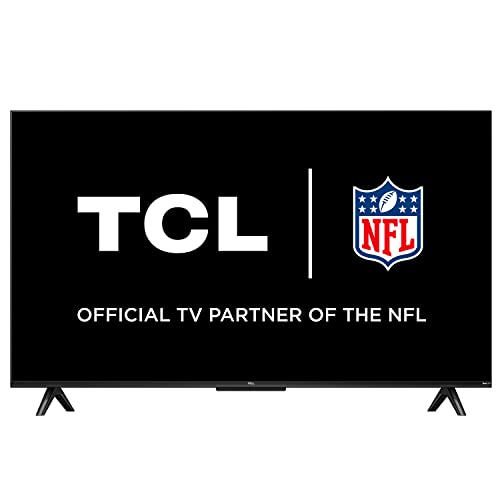
TCL 43-inch Class 4-Series — Value entry
TCL’s 4-Series is where a generation of buyers met Roku TV, and its formula remains the platform’s value reference: a 43-inch 4K UHD HDR panel with the Roku interface, from the manufacturer whose partnership with the platform is the longest in the business. The listing is terse — model 43S455, the essentials stated, nothing gilded — and that terseness is the honest signature of the tier. This is the set for the room that needs a proper Roku television without the household conducting a panel-technology seminar first.
What the value tier buys, in 4-Series terms, is the complete platform experience on a competent panel. The interface is the same grid, the search the same impartial search, the app catalogue the same catalogue; what the higher tiers add is panel richness, brightness and extras, not a better Roku. For a guest room, a teenager’s room, a rental property or a kitchen wall, that trade is not a compromise at all — it is the correct allocation of money, since those rooms’ viewers will use the platform daily and the panel’s finer virtues weekly at most.
The cautions are equally plain. The title states no headphone mode, no QLED colour and no casting provisions, so none are claimed here; anyone needing private listening should take one of the Select sets, whose titles state it. As an earlier-generation model beside 2026 listings, its platform support horizon is also the one to check against your intended years of use. None of that dims its role: every platform needs an honest floor, and the 4-Series is Roku’s. Budget-led rooms should read the 4-Series listing and spend the savings on the mount, the sound or the second room.
There is a reliability-of-the-known in the 4-Series that newer listings cannot claim. The model line has been sold in volume for years, its behaviour is documented across countless households, and a shopper who values the absence of surprises over the presence of novelties will find that history reassuring. Value picks earn their place by being understood completely before purchase, and few sets in this guide are as completely understood as this one.
The 4-Series also makes a quietly strong case as the household’s utility screen — the set that goes where viewing is occasional but expectations are not. A home office that doubles as a news room during the day, a workshop with a wall to fill, a holiday let where guests must be able to work the television without instructions: each of these is a 4-Series-shaped job, because the platform explains itself to a stranger in under a minute and the panel asks nothing of anyone. Utility is not a glamorous tier, but it is the tier with the most rooms in it.
Buyers comparing the 4-Series with the Select 43 should name what the step between them buys: the maker’s own current hardware, a stated headphone mode and the newer model year, against the 4-Series’ value and long track record. Neither answer embarrasses the other. A household equipping several second rooms at once will often rationally take the 4-Series everywhere and spend the difference on mounts and sound; a household equipping one important bedroom will rationally take the Select. The guide’s job is to make that arithmetic visible, and at 43 inches it is the whole decision.
- Screen size: 43-inch class
- Panel and resolution: 4K UHD HDR
- Platform: Smart Roku TV
- Model: 43S455
- Headphone mode: Not stated in the listing title — verify with the manufacturer documentation
- Panel technology: LED class; no QLED stated in the title
Strengths
- The complete Roku platform experience at the range’s value tier.
- 4K UHD HDR panel covers the resolution bases for a 43-inch room.
- A long-sold model line whose behaviour is thoroughly documented.
Trade-offs
- No headphone mode is stated, unlike Roku’s own Select sets.
- An earlier generation beside the 2026 models in this guide.
- No QLED colour or casting provisions are claimed in the title.
Best for: guest rooms, rentals and second rooms where the platform matters and the panel budget should stay lean.
Not suited for: viewers who need stated Bluetooth headphone listening, which its title does not offer.

TCL 55-Inch R7D Series — Bright QLED step-up
The R7D is TCL’s argument that a Roku television can compete on picture ambition, not just platform manners. Its title leads with QLED colour and high brightness on a 55-inch 4K UHD HDR panel, adds a Motion Rate 240 — TCL’s processing index, reported here as such and not as a panel rate — and then does something no other partner set in this guide does: it states both Google Cast and AirPlay 2, covering casting from Android and Apple households in one set. A Live TV Channel Guide rounds out a listing aimed at the mixed-device, bright-room mainstream.
High brightness is the feature with a room attached to it. The R7D suits the living room that cannot or will not darken itself for television — the open-plan space, the room with the garden doors, the family room where the set competes with daylight and overhead light all day. Brightness there is not a specification trophy; it is the difference between a picture that holds its colour at noon and one that retires until dusk. Paired with QLED colour, which needs light output to show its range, the R7D’s panel story is coherent in a way a feature list alone does not convey.
Casting breadth deserves its emphasis too, because the television is often the household’s shared screen for phone-born content: the relative’s holiday video, the child’s school performance, the work presentation rehearsed at home. A set that accepts both major casting systems without favour removes a small recurring friction from that life. Against Roku’s own Select 55, the R7D trades the stated headphone mode for brightness and casting; against the Plus, it trades Mini-LED dimming for the same. Households that cast daily and watch in bright rooms will find the R7D’s listing makes the most room-shaped argument of the six.
The R7D also marks how far the partner model of Roku TV has come. A decade ago the platform’s partner sets competed on price alone; a set like this competes on brightness, colour and cross-platform casting while keeping the interface that made the platform popular. Buyers who left Roku’s partner sets behind years ago on picture grounds owe the current generation a fresh look, and the R7D is the place to take it.
Brightness claims deserve one careful sentence. High brightness in the R7D’s title is the manufacturer’s own framing, quoted here as stated rather than converted into a number the listing does not print. What a buyer can hold onto is the combination — brightness emphasis plus QLED colour plus the channel guide — which coherently describes a set tuned for lit rooms and mixed broadcast-and-streaming habits. Judge it in that role against the Select’s headphone mode and the Plus’s dimming, and the R7D’s identity as the daylight, casting-friendly member of the range stays clear.
The channel guide in the R7D’s listing points at a viewing habit platform guides often forget: broadcast and free live television still fill a large share of many households’ hours, especially for news, daytime sport and background viewing. A set that organises that life well — guide forward, channels quick to reach — serves the household’s ordinary week, not just its streaming evenings. The R7D’s combination of that guide with a bright QLED panel describes a family-room appliance in the fullest sense, and families are the buyers who should weight it accordingly.
- Screen size: 55-inch
- Panel and resolution: QLED, 4K UHD HDR
- Brightness: High brightness as stated in the title
- Motion figure: Motion Rate 240 (manufacturer processing index)
- Casting: Google Cast and AirPlay 2
- Content: Live TV Channel Guide; live news, sports and movies per listing
- Model: 55R7D, 2026
Strengths
- High brightness QLED panel suits rooms that stay lit all day.
- Both Google Cast and AirPlay 2 cover mixed-device households in one set.
- Live TV Channel Guide strengthens its free and broadcast viewing life.
Trade-offs
- Motion Rate 240 is a processing index, not a native panel figure.
- No headphone mode is stated in its title, unlike the Select sets.
- No Mini-LED dimming, so the Plus keeps the dark-room contrast lead.
Best for: a bright, open-plan family room in a mixed Android and Apple household that casts to the TV often.
Not suited for: late-night headphone viewers, since no Bluetooth headphone mode is stated in its listing.

Hisense 55-inch E6SR Series — Film and gaming Roku
Hisense builds the E6SR for the Roku buyer whose evenings are films and games rather than channels. The title stacks the evidence: a Hi-QLED 4K UHD panel with Dolby Vision, a Game Mode Plus carrying VRR and ALLM, DTS Virtual:X audio, Apple AirPlay, and compatibility with both Alexa and Google Assistant. That is a feature set aimed at the crossover household — the one that streams cinema on the simple Roku interface, then hands the same screen to a console, and wants the television to respond properly to both without a platform change.
Dolby Vision is the film credential, and its presence separates the E6SR from the Select sets, whose titles do not claim it. On a QLED-class panel, Vision’s scene-by-scene tone mapping gives streamed cinema a depth that a single static HDR setting cannot match, and for the household that watches films attentively in a dimmed room, that is the specification that will be felt nightly. DTS Virtual:X works the audio side of the same evenings, widening the sound of the set’s own speakers for rooms without a soundbar.
The gaming provisions are stated with unusual completeness for a platform-led set. VRR and ALLM together under Game Mode Plus describe a television that synchronises with variable console frame rates and switches itself into its low-latency posture when a game appears — the two behaviours a console household otherwise hunts through menus to arrange. Roku’s interface then does something quietly useful for gamers: it treats the console input as a tile on the same home grid, so the screen’s two lives are one remote press apart. A household whose screen time splits between streamed film and console play, and which wants Roku’s calm over a gaming-brand interface, should examine the E6SR listing closely.
Voice diplomacy completes the picture. Compatibility with both Alexa and Google Assistant, on a Roku set with AirPlay aboard, makes the E6SR the most ecosystem-neutral television in this guide — a set that joins whatever smart-home allegiance the household already holds instead of demanding a new one. In divided or evolving households, that neutrality is a practical feature, and Hisense is the only maker here claiming it in so many words.
Film households should also note what the E6SR does not force on them. Feature-rich televisions often bury their virtues under gaming-brand interfaces and aggressive motion defaults; the E6SR runs Roku, so the film library lives on the calmest home screen in the guide, and the gaming provisions wait in their mode until a console calls for them. That separation — cinema manners by default, gaming behaviour on demand — is exactly how a shared family screen should behave, and it is rarer in the market than it ought to be.
Console placement is the E6SR’s last practical test, and it passes the way a shared screen should. The set lives in the main room, the console lives beneath it, and the television’s job is to make the handover between a streamed film and a game session a single unremarkable moment rather than a settings project. VRR and ALLM stated in the title are the technical half of that handover; Roku’s tile for the console input is the ergonomic half. Households that have watched a parent or partner defeat a gaming television’s menus will understand why both halves matter.
- Screen size: 55-inch class
- Panel and resolution: Hi-QLED, 4K UHD
- HDR: Dolby Vision
- Gaming: Game Mode Plus, VRR, ALLM
- Audio: DTS Virtual:X
- Casting and voice: Apple AirPlay; compatible with Alexa and Google Assistant
- Model: 55E6SR, 2026 model
Strengths
- Dolby Vision gives streamed film the guide’s strongest tone-mapping claim outside the Plus.
- Game Mode Plus with VRR and ALLM serves console households properly.
- AirPlay plus both voice assistants make it the most ecosystem-neutral pick.
Trade-offs
- No headphone mode is stated in its title for quiet-hours listening.
- No Mini-LED backlight, so the Plus holds the local-dimming advantage.
- Its feature breadth aims at film and gaming; channel-led viewers use less of it.
Best for: a household splitting its evenings between streamed cinema and console gaming on one screen.
Not suited for: viewers who need a stated Bluetooth headphone mode for a sleeping partner, which its title omits.
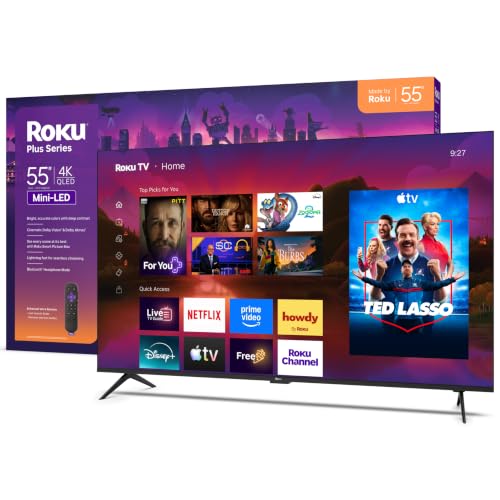
Roku 55-Inch Plus Series MiniLED — Premium Roku panel
The Plus Series exists for the buyer who settled the platform question years ago and resents being asked to reopen it for the sake of a better panel. Roku’s answer is a 55-inch 4K QLED with Mini-LED backlighting — the local-dimming technology that gives dark scenes their depth — plus Dolby Vision, Dolby Atmos and an enhanced voice remote, all under the same unhurried interface. It is the range’s ceiling, and its argument is that loyalty to a platform should not cap the quality of the picture in front of it.
Mini-LED is the specification that justifies the tier. Hundreds of small backlight zones, dimmed locally, let a night scene hold a bright window and a dark room in the same frame without either surrendering — the exact failure mode of edge-lit panels that film viewers know as glow and grey. For the Roku household that watches cinema attentively, the Plus is the first set in its own line that competes on those terms, and Dolby Vision’s tone mapping plus Atmos audio complete a film specification the Select cannot claim. The enhanced voice remote upgrades the daily touchpoint to match.
Position it honestly against the field. The Hisense E6SR matches its Dolby Vision and adds stated gaming provisions the Plus’s title does not claim; the R7D counters with brightness and dual casting. The Plus counters with the backlight, the Atmos badge and the maker’s own integration. A buyer choosing among the three is choosing a picture philosophy — dimming depth, gaming readiness or daylight punch — inside the same interface, which is a pleasant problem and a sign of how complete the Roku range has become. If your evenings are dark-room films and your platform is not negotiable, the Plus Series listing is where your comparison should end.
There is a final, unfashionable virtue to name: simplicity at the top of a range. Premium televisions often arrive wrapped in experimental interfaces and motion gimmicks their owners disable within a week. The Plus spends its premium on the panel and the audio, and leaves the experience exactly as calm as the value sets below it. For the household that wants the best Roku picture without a new way of watching television, that restraint is the product.
The Plus also reframes the upgrade question for existing Roku households. A family whose current set is an older partner model does not need to relearn anything to step up: the remote’s language, the home grid and the search all carry over, and only the picture changes. Upgrades that cost no learning are the ones households actually make, which is why a premium tier inside a familiar platform is a more realistic purchase than a technically superior set behind an unfamiliar interface. The Plus is built for that exact moment in a household’s life.
Sound completes the Plus’s premium story in a way worth separating from the panel. Dolby Atmos on a television’s own speakers is about spaciousness and dialogue placement rather than cinema volume, and in the main room’s ordinary evenings — drama, documentary, the late film — that spaciousness is the difference between a set that fills its room and one that merely talks at it. Households planning a soundbar regardless can discount the point; households that prefer the television to stand alone should count Atmos among the reasons the Plus, and not the Select, is their tier.
- Screen size: 55-inch
- Panel and resolution: QLED Mini-LED, 4K
- Backlight: Mini-LED local dimming
- Formats: Dolby Vision, Dolby Atmos
- Remote: Enhanced Voice Remote
- Connectivity: Wi-Fi
- Model year: 2026 Roku TV
Strengths
- Mini-LED local dimming gives Roku’s range a genuine dark-room film panel.
- Dolby Vision and Atmos complete the premium format pairing.
- The calm standard interface survives the step up in hardware untouched.
Trade-offs
- No gaming provisions are stated in its title, unlike the Hisense E6SR.
- Its premium buys panel and audio, which bright-room viewers may value less.
- No headphone mode is stated in the title despite the enhanced remote.
Best for: a committed Roku household whose main room watches films in dimmed light and wants Mini-LED depth.
Not suited for: console-led rooms needing stated VRR and ALLM, which the Hisense E6SR claims and this title does not.
Comparison
| Pick | Size | Panel | Stated extras | Maker |
|---|---|---|---|---|
| Roku Select 55 | 55-inch | QLED 4K | Voice remote, Bluetooth Headphone Mode | Roku |
| Roku Select 43 | 43-inch | LED 4K HDR | Voice remote, Bluetooth Headphone Mode | Roku |
| TCL 4-Series 43 | 43-inch | 4K UHD HDR | Platform value tier, model 43S455 | TCL |
| TCL R7D 55 | 55-inch | QLED 4K | High brightness, Google Cast and AirPlay 2 | TCL |
| Hisense E6SR 55 | 55-inch | Hi-QLED 4K | Dolby Vision, Game Mode Plus, VRR, ALLM | Hisense |
| Roku Plus 55 | 55-inch | QLED Mini-LED 4K | Dolby Vision, Dolby Atmos, enhanced voice remote | Roku |
How to Choose a Roku TV
Choose the room first and the tier second. A 43-inch set — the Select 43 or the TCL 4-Series — serves bedrooms, kitchens and dens at their natural distances; a 55-inch set anchors a main room. Within a size, the decision is about which picture virtue your viewing actually uses. Dark-room film households should climb to the Plus Series’ Mini-LED dimming or the Hisense’s Dolby Vision. Bright family rooms should take the R7D’s stated high brightness. Console households should take the E6SR’s stated VRR and ALLM. And any household where someone watches while another sleeps should weight the Select sets’ stated Bluetooth headphone mode above every panel argument in this guide.
Finish with the ecosystem questions. Casting divides the field: the R7D states both Google Cast and AirPlay 2, the Hisense states AirPlay with both voice assistants, and Roku’s own sets lean on the platform’s native strengths instead. None of these choices is a trap, but each is a commitment measured in years, so make it with the household’s phones, speakers and habits in front of you rather than the specification table alone.
One more axis deserves a place in the choosing: who else will use the set. A television bought for a parent or an older relative should be judged by the support calls it will not generate, which pushes the decision toward Roku’s own hardware and the simplest tier that covers the room. A television bought for a household of enthusiasts can carry the Plus’s or Hisense’s richer provisions without friction. The platform is forgiving in both directions, which is precisely why the hardware tier — not the interface — is where the choosing energy belongs.
Is a Roku TV Better Than a TV With a Roku Stick?
For most households, yes, and the reasons are ergonomic rather than technical. A built-in set means one remote, one input, one power state and an interface that owns the whole screen from the moment the set wakes; a stick behind another television means two remotes or a compromise remote, an input to find, and a television whose own menus still govern volume, picture and sleep behaviour. The stick retains one advantage — it can move between screens and be replaced cheaply when the platform ages — which suits renters and second rooms. But the household buying a television today, for a room it will serve for years, gets the more coherent appliance by choosing from this guide’s six, all of which were verified as televisions with the platform inside.
What Is Bluetooth Headphone Mode Actually For?
It is for the hour when the house disagrees about whether it is awake. The mode, stated in the titles of Roku’s own Select sets, routes the television’s sound to Bluetooth headphones so one viewer can finish the film at full clarity while the room stays silent. Its beneficiaries are predictable and numerous: couples on different shifts, parents of sleeping children, students in shared houses, and anyone whose best viewing hour is the household’s worst noise hour. Buyers who recognise their evenings in that description should treat the feature as a headline rather than a footnote — it is the rare specification that changes who can watch, not just how the picture looks.
Private listening has a second use the marketing rarely mentions: the household where one viewer is hard of hearing. Headphones at a personal volume, while the room’s speakers stay at a level everyone else finds comfortable, solve a problem that subtitles only partly address, and they solve it without anyone negotiating. For multi-generational households — a grandparent in the spare room, a parent whose hearing has changed — the Select sets’ stated headphone mode can be the feature that decides the purchase outright, ahead of every panel consideration in this guide. Specifications are usually about pictures; occasionally one is about peace in a household, and this is that one.
How Long Does a Roku TV Stay Current?
A platform television’s useful life is set by two clocks: the panel’s physical life and the platform’s software support. Roku’s advantage in the second race is the size of its installed base, which gives the platform every reason to keep older sets updated, and the current 2026 models in this guide start with the longest runway available. The earlier-generation TCL 4-Series is the pick whose remaining runway deserves a buyer’s explicit check against their intended years of use. Practically, a household that buys a current model and uses mainstream services should expect the set to feel supported for the span it would keep any television, with the interface’s simplicity ageing better than feature-heavy rivals.
Which Roku TV Suits a Guest Room or Rental?
The guest room is the platform’s natural habitat, because a guest cannot be given a tutorial. The test for a guest-room set is whether a tired traveller can find the news, a film and the volume control within a minute of picking up the remote, in the dark, in an unfamiliar house. Every set in this guide passes the interface half of that test by construction, so the choice turns on size and tier: the TCL 4-Series covers the role at the value end, the Select 43 adds headphone mode for the guest who keeps late hours, and either leaves the host free of the support role that complicated televisions impose. Rentals sharpen the same logic — a set a tenant cannot break by misunderstanding it, on a platform with no household accounts tangled into it, is worth more than a finer panel behind a fussier interface.
Hosts should also think about accounts before the first guest arrives. A platform television signed into the household’s own services is a convenience for family and an awkwardness for strangers; set the guest room’s set up on its own footing, with the mainstream free content prominent, and the room becomes self-service. The six sets here all support that arrangement, and the half hour it takes is the difference between a guest room that works and one that generates questions at breakfast.
Common Mistakes
Buying a streaming stick’s virtues in a television search is the category error this guide guards against. A stick is portable and replaceable; a television is neither, and the two should be shopped with different questions. Buyers who drift between the two end up comparing a television’s panel against a dongle’s price, which flatters neither. Decide that the purchase is a television — as this guide’s six all are — and the comparison becomes coherent.
Assuming every Roku set shares every Roku feature is the second error. The platform is common; the hardware provisions are not. Headphone mode is stated for the Select sets, Dolby Vision for the Hisense and the Plus, casting breadth for the R7D, gaming provisions for the E6SR. A shopper who assumes a feature travels across the range because the interface looks identical will eventually meet the evening it does not. Read each set’s own title the way these reviews do, and let the stated features — not the shared logo — close the sale.
The third error is sizing by the showroom. A 55-inch set that looks modest under warehouse lighting can dominate a small living room, and a 43-inch set that looks lost there can be perfect above a bedroom dresser. Measure the wall, pace the viewing distance, and let the room’s numbers outrank the display floor’s impressions every time.
Students deserve the closing word in the size argument, because the student room is where the 43-inch class earns its keep most completely: one screen that is television, monitor-adjacent display and social centre in a room measured in single digits of square metres. A current platform set at that size, with headphone mode for the housemates’ sake, is close to a complete answer for that life, and it graduates to a bedroom or a first flat’s main room without apology when the degree ends.
Final Recommendation
For the typical main room, Roku’s own Select 55 is the guide’s centre of gravity: QLED colour, the maker’s reference implementation and headphone mode in one uncomplicated set. Smaller rooms take the Select 43 for the same manners at the right size, or the TCL 4-Series where the budget leads. Bright rooms and casting households belong to the R7D, film-and-console households to the Hisense E6SR, and the Roku loyalist with a dark room and a film habit should climb to the Plus Series and stop shopping.
Every one of the six will feel familiar within an evening, which is the platform’s promise kept. They differ in the panel that surrounds that familiarity and the extras each maker chose to state, so buy the picture and the provisions your room will use weekly, and let the interface — the reason you came — take care of itself for years.
One more scenario belongs in the final reckoning: the household replacing a failed set in a hurry. Platform familiarity is never worth more than on the weekend the old television dies, when the replacement must be chosen, delivered and understood by Sunday night. A Roku household in that position can take any of these six off the page with confidence that the new set will behave like the old one by the first evening — and that confidence, unglamorous as it sounds, is the platform’s deepest selling point and the reason this guide can recommend its centre tier so plainly.
Frequently Asked Questions
Are all of these actual televisions, or streaming devices?
All six are televisions with Roku built into the set. None is a stick or a box, and each was verified as a TV listing in its own right before inclusion.
Which Roku TV is best for watching in bed without waking anyone?
Either of Roku’s own Select sets, whose titles state Bluetooth Headphone Mode. The 43-inch suits most bedrooms; the 55-inch suits a main room that doubles as the late-night screen.
Which pick should a gamer choose?
The Hisense E6SR, the only set here whose title states Game Mode Plus with VRR and ALLM. The others serve casual play through their console inputs but make no gaming claims in their listings.
What does the Plus Series add over the Select?
A Mini-LED backlight with local dimming, Dolby Vision and Dolby Atmos, and an enhanced voice remote. The interface stays the same; the premium is spent on panel and sound.
Can I cast from my phone to these TVs?
The TCL R7D states both Google Cast and AirPlay 2, and the Hisense E6SR states AirPlay. Check the individual listing for any other set, since casting provisions are stated per model rather than across the range.
Is the TCL 4-Series too old to buy?
It remains the platform’s value reference and a thoroughly understood model line. Buyers planning many years of use should weigh its earlier generation against the 2026 models’ longer support runway.
A final practical note applies to all six: place the set where its remote and its Wi-Fi both work happily. Second rooms sit at the ends of hallways and behind the doors that weaken signals, and a platform television is only as calm as its connection. Check the signal in the room before blaming any set for a buffering evening; a small network adjustment cures more streaming complaints than any television upgrade in this guide.
Related Guides
If your household leans toward Amazon’s ecosystem instead, our guide to Fire TVs covers that platform’s built-in sets. And for the fixture-first viewer, the 55-inch TVs for sports round-up ranks panels by native refresh honesty and daylight behaviour.


