What's inside
- Key Takeaways
- Quick Picks
- How We Chose These Picks
- Programme or Intercom: Which Chain Are You Buying Into?
- Why Does the Microphone’s Polar Pattern Matter So Much On Air?
- Which Broadcast Headsets Earn a Full Review?
- XLR or USB: Where Does Your Headset Join the Chain?
- How Do You Set Up a Commentary Position That Sounds Professional?
- Dynamic or Condenser: What Is the Working Broadcaster’s Rule?
- What Should a Venue Check Before Buying Intercom Headsets?
- How Do You Care for a Broadcast Headset Between Productions?
- Why Is a Broadcast Headset Not Just an Expensive Office Headset?
- What Else Belongs in the Case Around the Headset?
- How Do the Six Broadcast Headsets Compare Side by Side?
- How Should a Small Production Build Its Headset Kit Over Time?
- What Mistakes Do Broadcast Headset Buyers Keep Making?
- Final Recommendation
- Frequently Asked Questions
- Related Guides
As an Amazon Associate I earn from qualifying purchases. This post may contain affiliate links at no extra cost to you.
widgetverdict.com is reader-supported. When you buy through links on our site, we may earn an affiliate commission.
Where to buy: Amazon stocks all six headsets below, but before ordering any of them, write down what the headset will plug into — a broadcast mixer, an intercom beltpack, a camera, a streaming interface — because in this category the connector decides more than the brand does.
The best broadcast headsets sit at the demanding end of the headset world, because broadcast audio forgives nothing. A voice on air is heard by thousands of people through good speakers, compressed by a transmission chain, and compared instantly against every other voice on the programme. The microphone has to reject the stadium, the studio guest beside you, and the producer talking in your other ear’s programme feed, while the earcups have to deliver that feed clearly enough that you can talk over it without shouting. This guide only includes headsets built for that work or its close neighbours — professional commentary, production intercom, and serious streaming. It is worth saying plainly why the shortlist is not longer or cheaper: much of what marketplaces sell under commentary-style keywords is novelty equipment with a boom attached, built for fancy dress rather than for a transmission chain, and none of it belongs in a broadcast buying decision.
Two connection families divide the six. The first three picks are programme headsets: they carry your voice to air and the programme back to your ears, ending in XLR or in connectors a broadcast interface understands. The Yamaha is the budget survivor of that family, a headset that has lived in outside-broadcast trucks for years. The last two picks belong to the intercom world — the headsets producers, stage managers and camera crews wear to talk to each other, not to the audience. Intercom headsets carry a warning this guide will repeat until it sticks: they are one component in a system. Without a beltpack and a base station or matrix to plug into, an intercom headset is a very well-built ornament.
One listing needs its fork in the road marked early. The Audio-Technica ATH-M50xSTS exists in two versions, XLR and USB, sold under near-identical names. This guide reviews and links the XLR version, because broadcast chains are analogue at the point where a headset joins them. If your work is a lone streaming desk, the USB sibling may suit you better — but it is a different product with a different cable, and it is not the pick assessed below.
Key Takeaways
- Broadcast headsets split into programme headsets, which feed the audience, and intercom headsets, which feed the production team — buy for the chain you actually work in.
- The ATH-M50xSTS pick here is specifically the XLR version; a USB version exists under a similar name and is not the model reviewed.
- Intercom picks such as the YO-TRONICS and Pro Intercom need a beltpack and base station to function at all — budget for the system, not just the headset.
- Cardioid boom microphones, dynamic or condenser, are the broadcast standard because they reject the room and the crowd by direction.
- The Yamaha CM500 is the long-serving budget exception: minimal specification on paper, decades of outside-broadcast use behind it.
- Impedance figures on the Pro Intercom DMH9000 (2×400 ohm earspeakers, 600 ohm microphone) tell you it expects proper intercom drive, not a phone jack.
Quick Picks
| Pick | Badge | Why it is here |
|---|---|---|
| Audio-Technica BPHS1 Broadcast Headset | Best classic commentary choice | The established broadcast stereo headset with a dynamic cardioid boom, built for commentary boxes and studios. |
| RODE NTH-100M Broadcast Headset | Best modern all-rounder | A professional over-ear headset aimed squarely at media, broadcast, podcasting and streaming work. |
| Audio-Technica ATH-M50xSTS XLR StreamSet | Best condenser voice | 45 mm drivers with a cardioid condenser microphone on an XLR output, for streamers who broadcast through real interfaces. |
| Yamaha CM500 Headset | Best budget workhorse | The understated headset that outside-broadcast crews have carried for years, with a built-in microphone and no fuss. |
| YO-TRONICS YTH-312M Intercom Headset (XLR) | Best intercom value | Dual-side 4-pin XLR intercom headset with dynamic boom and 50 mm drivers for broadcast and stage production. |
| Pro Intercom DMH9000 Headset | Best heavy-duty intercom | Double-muff production headset with high-impedance earspeakers and a 600 ohm condenser microphone. |
How We Chose These Picks
The filter for this guide was professional intent, verified from the listing itself. Each pick had to be a headset its maker aims at broadcast, media production or production intercom — not a gaming or call-centre model wearing broadcast vocabulary. We required a boom microphone with a stated pickup pattern or broadcast pedigree, earcups designed to be worn for a programme’s full length, and a connection story that ends somewhere real: a mixer input, an interface, a beltpack. We also balanced the two chains — three programme headsets at three levels, one budget survivor, and two intercom headsets at two levels — because a buyer searching this keyword may be equipping a commentary position or a stage manager, and those are different purchases that happen to share a word.
Programme or Intercom: Which Chain Are You Buying Into?
A programme headset is a microphone with headphones attached, judged as a microphone first. Its voice goes to air or to the recording, so its capsule, its polar pattern and its placement relative to the mouth decide whether the audience hears a broadcaster or a person in a tunnel. The headphones matter — you must hear the programme mix, the director’s talkback and your own voice’s return — but they serve the microphone’s mission.
An intercom headset reverses the priority. Its voice goes to colleagues, who need intelligibility at low volume in loud places: a stage manager calling cues over a orchestra tuning up, a camera operator confirming a shot while a crowd roars. Fidelity is secondary; ruggedness, isolation and compatibility with the venue’s intercom system are everything. The connectors reflect the divide — programme headsets end in XLR for a mic input plus a headphone feed, while intercom headsets typically end in a single 4-pin XLR that carries both directions to a beltpack. Confusing the two chains is the most expensive mistake in this category, because neither headset can do the other’s job without adaptation.
Why Does the Microphone’s Polar Pattern Matter So Much On Air?
Cardioid means the microphone listens forwards and rejects the sides and rear, and in broadcast that directionality is the difference between a voice and a venue. A commentator sits inside the sound they are describing: crowd behind, public address overhead, a co-commentator a metre away. A cardioid boom placed two centimetres from the mouth gives the voice an enormous head start over everything else, because level falls with distance while rejection handles the rest. Dynamic cardioid capsules, as in the BPHS1, add toughness and need no power. Condenser cardioid capsules, as in the M50xSTS, trade that simplicity for detail and sensitivity, and they ask the interface for phantom power in return. Neither is universally better; the choice is between a capsule that survives the truck and a capsule that flatters the voice in a treated room, and most broadcasters own the first kind and rent the second when the programme justifies it.
Which Broadcast Headsets Earn a Full Review?

Audio-Technica BPHS1 Broadcast Headset — Best classic commentary choice
The BPHS1 is what a commentary position looks like when nobody is trying to impress anyone. Audio-Technica describes it as a broadcast stereo headset with a dynamic cardioid boom microphone, and that short specification contains the whole professional argument: stereo cups for the programme feed, a dynamic capsule for a lifetime of being dropped into kit bags, and a cardioid pattern to keep the stadium where it belongs — behind the microphone’s rejection zone. It has been the default recommendation for podcasters graduating to real interfaces and for commentators equipping a first position for so long that its presence in a broadcast truck surprises nobody.
The dynamic capsule choice deserves its defence, because buyers sometimes read dynamic as a downgrade. A dynamic boom needs no phantom power, tolerates shouting without the distortion a sensitive condenser might add, and survives humidity, dust and the occasional coffee incident that would retire a more delicate microphone. On air, a well-placed dynamic cardioid sounds like authority — the classic sports commentary voice is built on exactly this recipe — and the BPHS1’s boom places the capsule where that recipe works.
What the listing does not offer is intercom integration or USB convenience; this is an analogue broadcast tool expecting a mixer or interface at the other end of its cable. Streamers with an interface gain a genuine broadcast voice. Streamers with only a laptop gain a compatibility project. Know which buyer you are before the box arrives, and the BPHS1 will do what it has done for years of predecessors: disappear into the job.
For a first commentary position, a podcast studio upgrading from USB microphones, or a school media programme that wants equipment students cannot easily break, this remains the reference point against which the rest of the guide is priced and judged.
Its longevity carries a practical dividend: because the design has been in service for years, replacement cushions, windscreens and cables follow the pattern of a product a manufacturer expects to support rather than replace. A facility standardising on the BPHS1 is buying into that support tail as much as into the headset itself — a consideration invisible in a specification table and obvious to anyone who has tried to source a cushion for a discontinued model the week before a final.
- Role: broadcast stereo headset for programme work
- Microphone: dynamic cardioid boom microphone, per the listing title
- Connection: analogue broadcast cabling — the listing title names no USB option, so plan on a mixer or interface
- Phantom power: a dynamic capsule does not require it
- Intercom use: not an intercom headset; it carries no beltpack connection in its listing description
Strengths
- Dynamic cardioid boom is the proven broadcast recipe for rejecting crowds and rooms.
- No phantom power requirement keeps it compatible with simple mixers and field recorders.
- Long production history means broadcast engineers already know its behaviour.
Trade-offs
- Analogue only — laptop-only streamers need an interface before it makes a sound.
- Its voice is authoritative rather than intimate; quiet, close-mic podcast styles may prefer the condenser pick.
- It will not join an intercom system, however the cable is adapted.
Best for: a commentator, podcaster or streamer working through a mixer or interface who wants the standard broadcast voice without experimentation.
Not suited for: a buyer with no analogue input at all, or a production team shopping for crew intercom.
Check the BPHS1’s price on Amazon, and price the interface alongside it if your desk does not already have one.

RODE NTH-100M Broadcast Headset — Best modern all-rounder
RODE arrived in headsets from the microphone side, and the NTH-100M shows it. The listing describes a professional over-ear headset for media and broadcast, podcasting, content creation, streaming and working from home — a spread that would look like marketing sprawl on a lesser brand and reads here as an honest map of where a modern broadcast voice actually works. The same person commentates on Saturday, records a podcast on Tuesday and streams on Thursday; a headset that serves all three chairs without adaptation earns the all-rounder badge.
The over-ear form is the comfort argument. Broadcast programmes run long, and a headset that clamps or cooks the ears becomes the story of the day by the second hour. RODE built its headphone reputation on wearing comfort, and the M variant carries that priority into a boom-equipped design. For home-based broadcasters — now a permanent part of the industry rather than an emergency measure — the NTH-100M also behaves in untreated rooms as gracefully as its design allows, with the boom’s proximity doing the heavy lifting that wall panels would do in a studio.
Position it against the BPHS1 this way: the Audio-Technica is the truck standard, the RODE is the modern studio-desk answer, designed for a working life split between broadcast and the creator economy. Buyers equipping a facility that must impress visiting engineers may lean to the classic. Buyers equipping themselves, for the mixed workload most voices now actually have, will find the NTH-100M the more contemporary tool.
One check before ordering: confirm the cable and connector arrangement against your interface from the full listing, because the title concentrates on role rather than cabling, and a broadcast purchase should never guess at its own plug.
- Role: professional over-ear headset for media and broadcast
- Stated uses in the listing: podcasting, content creation, streaming, working from home
- Form: over-ear, built for long sessions
- Microphone pattern: the listing title does not state a polar pattern — verify it on the full product page if pattern is decisive for your room
- Connection: confirm the cable arrangement on the full listing before matching it to your interface
Strengths
- Designed for the real modern workload that mixes broadcast, podcast and streaming days.
- Over-ear comfort priority suits programme-length wearing.
- RODE’s microphone pedigree stands behind the boom side of the design.
Trade-offs
- The listing title leaves polar pattern and cabling unstated, so verification homework is required.
- Its creator-economy breadth may be more than a pure outside-broadcast buyer needs.
- Not an intercom headset — the production-crew chain is served by the last two picks instead.
Best for: a broadcaster or serious creator whose week mixes commentary, podcasting and streaming through proper audio gear.
Not suited for: shoppers who want every specification — pattern, plug, impedance — confirmed from the title alone before purchase.
Check the NTH-100M on Amazon and read the full listing’s connection details against your interface’s inputs.

Audio-Technica ATH-M50xSTS XLR StreamSet — Best condenser voice
Start with the fork, because it decides everything about this pick: the StreamSet exists in XLR and USB versions, and the headset reviewed and linked here is the XLR one. Its listing specifies a cardioid condenser microphone and 45 mm drivers with an XLR output, aimed at streaming, gaming, content creation and music production. The XLR ending is the point. It plugs into the same interfaces, mixers and broadcast chains as the BPHS1, while its condenser capsule pursues a different voice — more detailed, more intimate, the close-talk sound of a modern stream rather than the projected sound of a commentary box.
The 45 mm drivers come from the M50x headphone lineage that studios use as a reference, so the monitoring side of this headset is not an accessory to the microphone; it is half the product. A streamer checking their own mix, a musician recording commentary over playback, a podcaster editing as they record — all of them live in the earcups as much as in the capsule, and this pick refuses to short-change either side.
Condenser ownership carries two honest costs. The capsule needs phantom power from the interface, which any serious interface provides and a bare laptop does not. And a sensitive condenser in an untreated, noisy room hears more of that room than a dynamic would; the cardioid pattern helps, but this headset rewards a reasonably controlled space. In the right room, through the right interface, it produces the most polished voice in this guide. In the wrong room, the BPHS1’s tougher recipe wins, and this guide would rather tell you that than sell you the wrong kind of detail.
Buyers choosing between this and its USB sibling should decide by chain, not by convenience: if a mixer or interface already anchors your desk, XLR keeps the headset inside that chain for a decade of upgrades. If the headset is the chain, buy the other version knowingly — and know that it is not the one assessed here.
- Version reviewed: XLR — a separate USB version exists and is not this pick
- Microphone: cardioid condenser, per the listing title
- Drivers: 45 mm, per the listing title
- Output: XLR, for interfaces and mixers
- Power: a condenser capsule requires phantom power from the connected interface — confirm your interface supplies it
- Stated uses in the listing: gaming, content creation, music production, streaming
Strengths
- Condenser detail delivers the polished, close voice modern streaming audiences expect.
- 45 mm drivers from a studio-reference headphone line make monitoring a strength, not a compromise.
- XLR output keeps the headset inside a professional chain as the rest of the desk upgrades.
Trade-offs
- Phantom power is mandatory — no interface, no voice.
- Sensitivity hears untreated rooms more honestly than a dynamic boom would.
- The near-identical USB sibling makes careless ordering easy; check the version twice.
Best for: a streamer or creator with a proper interface in a reasonably controlled room, chasing a finished, intimate broadcast voice.
Not suited for: a loud venue, a commentary box, or any desk without phantom power on its inputs.
Check the XLR StreamSet’s price on Amazon — and read the version name on the listing one more time before checkout.
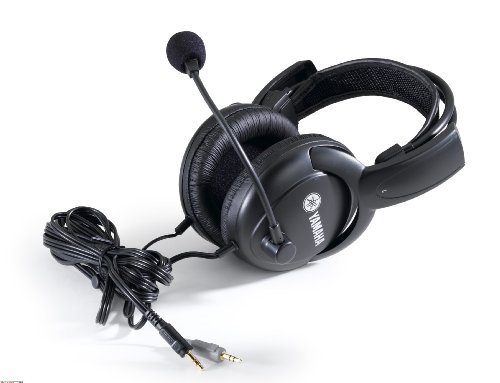
Yamaha CM500 Headset — Best budget workhorse
The CM500’s listing is the shortest in this guide — a headset with a built-in microphone, full stop — and the headset behind it is a standing lesson in how broadcast equipment actually earns reputations. Yamaha’s plain headset has spent years in outside-broadcast trucks, radio remote kits and school studios, recommended engineer to engineer, precisely because it does the essential job without ceremony. When a remote broadcast has one spare headset in the case, it is very often this one, because everyone on the crew already knows what it does.
What it does is cover a commentary or interview position respectably at a cost that lets a programme buy spares. That last word is the professional secret this guide keeps returning to: in broadcast, the backup unit is not a luxury. A headset that fails at airtime with no replacement is a catastrophe; a modest headset with an identical twin in the case is a non-event. The CM500’s economics make the twin affordable, which is a genuine broadcast feature no specification table captures.
Honesty about limits matters more here than anywhere. The listing states no polar pattern, no driver size, no connector detail, and this guide will not dress the headset in specifications it cannot verify. Buyers who need documented specifications for a facility purchase should look at the BPHS1 or the NTH-100M. Buyers who need a working voice at a remote position, a classroom studio that loses equipment to enthusiasm, or a spare that makes the main headset’s failure survivable — that is the CM500’s congregation, and it is a large and satisfied one.
Verify the connector against your mixer from the full listing before ordering, and order the second unit in the same basket. The pair, together, is the actual product this pick recommends.
- Role: headset with built-in microphone, per the listing title
- Microphone pattern: the title is silent on pattern — check the full product page if pattern is decisive
- Connector: the title gives no connector detail — verify it against your mixer or interface before ordering
- Driver size: no figure appears in the listing title
- Positioning: the budget and spare-unit pick of this guide
Strengths
- Years of outside-broadcast and remote-kit service behind an unpretentious design.
- Its cost makes the professional practice of carrying an identical spare realistic.
- Simplicity itself: little to configure, little to break, nothing to update.
Trade-offs
- The listing documents almost nothing, so specification-led buyers must look elsewhere in this guide.
- It will not match the condenser pick for vocal detail or the BPHS1 for documented pedigree.
- Connector homework is entirely the buyer’s responsibility.
Best for: a remote kit, school studio or commentary operation that values a working spare as highly as a headline headset.
Not suited for: a facility purchase that must be justified on documented specifications alone.
Check the CM500 on Amazon, confirm its plug against your mixer, and consider the pair rather than the single unit.

YO-TRONICS YTH-312M Intercom Headset (XLR) — Best intercom value
Crossing into the intercom chain, the YTH-312M is a dual-side headset built around a 4-pin XLR connection, with a dynamic boom microphone and 50 mm drivers, in a rugged design the listing aims at broadcasting, live reporting and stage production. Translate that into production language: this is the headset a stage manager, a followspot operator or a broadcast floor manager wears to stay in conversation with the rest of the crew while the show happens around them.
The 4-pin XLR is the compatibility headline, because it is the intercom world’s standard handshake — one connector carrying headphones and microphone to a beltpack. The dynamic microphone suits the chain: intercom voice needs to punch through venue noise at cue-critical moments, not to seduce an audience, and a dynamic boom at close range does exactly that while shrugging off the knocks of a working production. Dual-side coverage keeps both ears in the intercom conversation and the venue’s roar at bay, and 50 mm drivers give cues the clarity that smaller units can blur.
Now the warning, stated as plainly as this guide can state it: this headset does nothing alone. It needs a beltpack, and the beltpack needs a base station or matrix, and the whole chain needs to be the same intercom family. If your production already runs a 4-pin XLR intercom system, the YTH-312M is a sensibly priced way to add or replace crew positions. If you are starting from zero, price the system first and the headset second — the headset is the cheapest part of intercom, and buying it first is how beginners end up owning a well-built ornament.
For theatres, houses of worship with real production crews, school auditoriums and regional broadcasters running established intercom, it fills the value seat in this guide with the right connector and the right priorities.
- Role: dual-side intercom headset
- Connection: 4-pin XLR, per the listing title — requires a compatible beltpack and base station
- Microphone: dynamic boom microphone, per the listing title
- Drivers: 50 mm, per the listing title
- Design: rugged, per the listing title
- Stated uses in the listing: broadcasting, live reporting, stage production
Strengths
- Standard 4-pin XLR intercom connection fits established production systems.
- Dynamic boom prioritises cue intelligibility over venue noise.
- Rugged dual-side build matches the physical reality of stage and floor work.
Trade-offs
- Useless without a beltpack and base station, which the purchase must include or already own.
- Intercom fidelity is functional, not programme quality — it is not a commentary headset.
- Single-connector design ties it to intercom chains; it will not plug into a mixer as a programme headset.
Best for: a production crew adding positions to an existing 4-pin XLR intercom system in theatre, worship or broadcast.
Not suited for: a solo creator, a podcaster, or anyone without an intercom system already in place.
Check the YTH-312M’s price on Amazon after confirming your beltpacks take the same 4-pin standard.
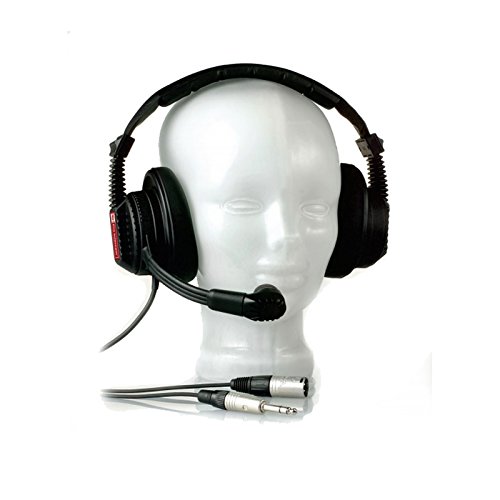
Pro Intercom DMH9000 Headset — Best heavy-duty intercom
The DMH9000 closes the guide at the serious end of intercom: a double-muff headset whose listing specifies 2×400 ohm earspeakers and a 600 ohm condenser microphone. Those impedance figures are the most technical numbers in this article and they carry a clear message — this headset is engineered for proper intercom systems that drive high-impedance loads, the infrastructure of theatres, broadcast facilities and large venues, not for adaptation to consumer jacks. Double muffs seal both ears against venue noise so a director’s cue arrives intact in the middle of a finale.
A condenser microphone on an intercom headset is the refinement to note. Where dynamic booms shout through noise, a condenser at the end of a well-designed chain offers clearer, more natural crew communication across a long show — the difference between understanding a tired stage manager at hour three and asking for a repeat. The trade is system dependence: condenser elements need the power and the input characteristics the intercom chain provides, which is another way of saying this headset belongs entirely to its ecosystem.
Pro Intercom is a specialist name in production communication rather than a consumer brand, and the DMH9000 reads like it: no lifestyle claims, no streaming vocabulary, just muff configuration and impedance figures addressed to the people who spec venue systems. If you are equipping a facility and those figures match your matrix’s expectations, this is the heavy-duty end of the shortlist. If the figures mean nothing to you, that is useful information too — your purchase is probably one of the programme headsets above, or the YTH-312M on an established simpler system.
As with every intercom pick, verify the full chain — connector variant, beltpack compatibility, system family — against the full listing and your venue’s documentation before money moves. Intercom mistakes are system mistakes, and they are priced accordingly.
- Role: double-muff production intercom headset
- Earspeakers: 2×400 ohm, per the listing title
- Microphone: 600 ohm condenser, per the listing title
- Form: double muff, both ears sealed
- System requirement: a compatible intercom beltpack and base — the headset is a component, not a standalone device
- Connector detail: confirm the exact variant on the full listing against your venue’s system before ordering
Strengths
- Double-muff isolation protects cue intelligibility in genuinely loud venues.
- Condenser microphone offers clearer crew communication on a properly matched chain.
- Published impedance figures let facility engineers verify system fit before purchase.
Trade-offs
- High-impedance design expects professional intercom drive; consumer adapters are not a plan.
- Total dependence on its intercom ecosystem — beltpack, base and family all must match.
- Overkill, in cost and complexity, for small crews on simple systems.
Best for: a theatre, venue or broadcast facility equipping crew positions on a professional intercom matrix.
Not suited for: a buyer without an existing intercom system, or one shopping for programme-quality voice.
Check the DMH9000 on Amazon with your venue’s intercom documentation open beside the listing.
XLR or USB: Where Does Your Headset Join the Chain?
The connector question decides a broadcast headset’s working life. XLR joins the professional chain at the microphone input, where gain is set by an engineer or an interface, where phantom power lives, and where the same headset can serve a studio desk on Monday and a field mixer on Friday. That is why five of this guide’s six picks live in the analogue world, and why the M50xSTS is represented by its XLR version. USB headsets collapse the chain into the cable: convenient for a single streaming desk, and a dead end the day a second microphone, a hardware mixer or a real broadcast position enters the picture. Neither answer is wrong — but they are answers to different futures, and the time to choose between them is before the purchase, not during the first outside broadcast.
Intercom adds its own connector logic. The 4-pin XLR of the YTH-312M carries both directions of a crew conversation in one plug, keyed to a beltpack ecosystem. It shares a silhouette with programme connectors and nothing else; the wiring, the levels and the purpose all differ. Facility buyers keep the two families in separate drawers for a reason, and this guide’s comparison table keeps them in separate rows for the same one.
How Do You Set Up a Commentary Position That Sounds Professional?
Begin with the microphone’s distance, because no processing rescues a badly placed boom. The capsule should sit just off the corner of the mouth, close enough that your voice dominates its world, far enough that breath and plosives pass beside it rather than into it. Set the interface gain while speaking at genuine commentary volume — not the polite level of a soundcheck in an empty room — and leave headroom for the moment the crowd erupts and your voice rises with it. Then listen to yourself the way the audience will: through the programme feed, in the actual earcups, at the actual venue noise level if you can rehearse in it.
Talkback discipline completes the position. Know which ear carries the director, agree the words that mean stop talking now, and rehearse the handover to your co-commentator until it is boring. Audiences forgive a modest microphone; they do not forgive two voices colliding while a producer shouts into a feed nobody rehearsed. The headset is the smallest part of a commentary position — it is the rehearsals around it that make a broadcast sound calm.
Dynamic or Condenser: What Is the Working Broadcaster’s Rule?
The rule most engineers teach is environmental, not hierarchical: match the capsule to the room’s behaviour, not to the budget’s ambition. A dynamic cardioid boom thrives where the environment is hostile and uncontrolled — wind, crowd surge, public address spill, a gantry vibrating underfoot. Its relative insensitivity is a filter that never needs configuring, and its output stays composed when the commentator shouts over a goal. A condenser cardioid thrives where the environment is already managed — a treated studio, a quiet streaming room, a commentary position with proper screening — and repays that management with detail: breath, nuance, the low conversational register that modern audiences associate with intimacy.
The mistake is reading the condenser as the upgrade in all directions. Detail is only a virtue when what gets detailed is the voice. Put the StreamSet’s capsule in an untreated bedroom with a hard wall behind the monitor and it will faithfully detail the wall’s reflections too; the BPHS1 in the same room sounds drier and more professional precisely because it hears less. Experienced voices therefore often own the dynamic as the default and treat the condenser as the studio instrument, brought out when the room deserves it. This guide’s ordering follows that logic: the dynamic classic first, the condenser as a specialist pick with its conditions stated in the open.
There is a maintenance corollary. Dynamic capsules tolerate the cleaning, transport and storage habits of real production life. Condensers ask for drier storage and gentler handling, and a kit manager equipping a school or a community station should price that care honestly — a microphone that needs a protocol is a microphone that will, eventually, meet someone who skips it.
What Should a Venue Check Before Buying Intercom Headsets?
Intercom purchasing begins with paperwork, not products. Identify the system family already installed — its base station or matrix, its beltpack models, the connector standard wired through the building — because every headset decision is downstream of those facts. A venue running 4-pin XLR beltpacks can shop the YTH-312M’s row of the table with confidence. A facility whose matrix expects high-impedance loads of the kind the DMH9000 publishes can verify fit from figures rather than folklore. A venue with no system at all should price the base and beltpacks first, accept that the headsets are the smaller half of the budget, and only then choose muffs.
Then walk the positions. The stage manager’s desk is stationary and loud; the followspot platform is windy, high and louder; the fly floor adds gloves and movement. Double muffs earn their weight where the venue is loudest and the cues are densest, while lighter dual-side headsets serve mobile crew who also need to hear the room directly at times. Count positions, add a spare per position type, and check how the headset’s cable will survive the specific journey from beltpack to ear — across a lighting desk, up a ladder, around a prompt corner. Intercom fails physically before it fails electronically, in almost every venue, almost every time.
Finally, rehearse the purchase. Borrow or buy one unit per position type and run a full technical rehearsal on them. Crew who cannot hear cues clearly at show volume will tell you within one act, and that information is cheapest before the fleet order, not after it.
How Do You Care for a Broadcast Headset Between Productions?
Broadcast headsets live in cases, and cases are where good habits compound. Coil cables loosely — tight wraps around a fist work-harden conductors and store the kinks that become crackles mid-programme. Let a rain-soaked headset dry fully before the case closes, especially around the boom pivot where moisture lingers. Foam windscreens and ear cushions are consumables with a service life; a kit that replaces them on schedule keeps both hygiene and acoustic behaviour close to new, and a commentator handed a fresh windscreen stops thinking about the previous user’s voice, which is worth more than the foam costs.
Labelling is the other quiet discipline. Programme headsets and intercom headsets can share a silhouette at a glance in a dark truck, and the cost of grabbing the wrong family at load-in is measured in panic. A strip of coloured tape per chain — one colour for programme, another for intercom — plus the position’s name on the case, turns identification into a reflex. Test every headset into its real chain during the rig, not at the position: a boom that crackles when flexed is a workshop job on rig day and a broadcast failure on show day, and the only difference between those outcomes is when somebody bothered to wiggle the cable.
Why Is a Broadcast Headset Not Just an Expensive Office Headset?
Buyers arriving from office equipment often ask what the extra money buys, since a call-centre headset also has a boom and two earcups. The differences are in tolerances. A broadcast microphone is expected to hold its character at commentary volume, inches from a shouting voice, for the length of a match, and to reject a stadium while doing it; an office microphone is expected to make a normal voice intelligible to a noise-cancelling algorithm. Broadcast earcups are expected to deliver a programme feed at a level that lets a commentator speak naturally over crowd noise without the feed itself distorting. And broadcast cabling is expected to survive being coiled by tired hands at midnight in the rain, then work perfectly at the next venue. None of these requirements appears on an office headset’s design brief, and all of them are priced into the six products above.
The reverse comparison also holds, and fairness requires it: a broadcast headset makes a poor office tool. It has no Bluetooth for the laptop, no certification stamps for meeting platforms, no dongle, no mute button culture. The categories share a shape because heads share a shape; the engineering inside answers to different examiners. Choosing between them is not a matter of budget tiers but of which chain — programme, intercom, or office platform — the headset must satisfy, which is the question this guide has asked from its first paragraph.
What Else Belongs in the Case Around the Headset?
A broadcast headset travels with a small court of supporting equipment, and productions run smoother when the case is packed as a system. A spare windscreen per position, because foam tears and rain happens. A short extension or adapter set matched to the venue’s likely inputs, chosen after checking the rig list rather than from habit. Gaffer tape and a marker, because labelling a cable at rig time prevents the unplugging archaeology that otherwise happens at the worst possible moment. For condenser positions, a note of which inputs on the house mixer carry phantom power, taped inside the case lid, saves the silent-microphone minute that every young engineer serves once.
The case should also carry the position’s paperwork: the running order, the talkback conventions agreed with the director, and the contact number of whoever owns the intercom base station. None of this is audio equipment, and all of it decides whether the audio equipment gets to do its job. Productions are remembered for their failures of coordination far more than for their failures of frequency response, and a headset kit packed with its paperwork is a small, cheap vote for the boring, successful outcome.
Finally, pack the headset you hope not to use. The spare — in this guide’s economy, most often the CM500 — rides in the same case as the main position’s headset, tested at the same rig check, with its own fresh windscreen fitted. A spare left at the studio is not a spare; it is a story the commentator tells later about the day the main headset died at airtime. The discipline sounds excessive exactly until the first time it saves a programme, after which no crew will travel without it.
How Do the Six Broadcast Headsets Compare Side by Side?
| Headset | Chain | Microphone | Connection |
|---|---|---|---|
| Audio-Technica BPHS1 | Programme | Dynamic cardioid boom | Analogue broadcast cabling |
| RODE NTH-100M | Programme | Boom — pattern not stated in title | Verify on full listing |
| ATH-M50xSTS XLR | Programme | Cardioid condenser | XLR |
| Yamaha CM500 | Programme | Built-in — pattern not stated in title | Verify on full listing |
| YO-TRONICS YTH-312M | Intercom | Dynamic boom | 4-pin XLR to beltpack |
| Pro Intercom DMH9000 | Intercom | 600 ohm condenser | Intercom system chain |
The chain column is the one to read first. Programme and intercom headsets share a noun and nothing else; a buyer who sorts by that column before comparing microphones will avoid the category’s most expensive confusion. Within the programme rows, the microphone column then separates the venue-proof dynamic designs from the condenser built for controlled rooms.
How Should a Small Production Build Its Headset Kit Over Time?
Start with the position that faces the audience. One proper programme headset — the BPHS1 for venue work, the StreamSet for a studio desk — plus a CM500 as its spare covers a single-commentator operation with the redundancy broadcast discipline demands. Add the second commentary position before adding luxury anywhere else, because two matched voices sound more professional than one exquisite voice and one borrowed headset. Intercom comes when the crew outgrows hand signals and shouting: one base station, beltpacks for the roles that truly coordinate — stage manager, director, lead camera — and headsets matched to that system, chosen from the intercom rows of this guide rather than adapted from programme stock.
Grow the kit in that order and every purchase compounds. Grow it in the wrong order — intercom headsets with no base station, a condenser flagship with no treated room to honour it — and the cupboard fills with excellent equipment waiting for the purchases that make it useful.
Keep a written inventory as the kit grows, with purchase dates and the chain each headset belongs to. It sounds like administration and behaves like insurance: when a headset fails, the inventory tells you instantly whether a compatible spare exists; when a venue asks what your intercom expects, the answer is in the book rather than in someone’s memory; and when the kit is eventually renewed, the record of what actually wore out — cushions, cables, booms — tells you which of this guide’s trade-offs mattered in your service, so the next purchase argues from evidence instead of anecdote.
What Mistakes Do Broadcast Headset Buyers Keep Making?
The first is buying intercom headsets as if they were headphones with a microphone, discovering at load-in that a beltpack and base station stand between the purchase and any sound at all. The second is ordering the wrong StreamSet: the USB and XLR versions share a name and a silhouette, and the wrong one arrives with the wrong cable for the chain it must join. Third, buyers chase condenser detail for venues that punish it, putting a sensitive capsule in a windy stadium where a dynamic boom would have sounded like the voice of authority. Fourth, they equip one position with no spare, forgetting that broadcast’s unforgiving hour is live and singular. And fifth, they shop the commentary keyword into the novelty aisle — headsets shaped like broadcast gear and built like toys — which is why this guide admits only equipment with a professional chain to belong to.
Final Recommendation
Choose by chain and the rest resolves itself. For programme work in real venues, the BPHS1 remains the reference — a dynamic cardioid recipe that has carried more commentary than any newcomer can claim. For the modern mixed workload, the NTH-100M is the contemporary all-rounder, and for a controlled studio desk the XLR StreamSet delivers the most polished voice here, provided phantom power and a treated room stand behind it. The CM500 is the spare that makes the whole kit professional. On the intercom side, the YTH-312M adds crew positions to established 4-pin systems at a sane cost, while the DMH9000 serves facilities whose matrices expect exactly its kind of load. Broadcast rewards the buyer who thinks in chains and spares — buy the system, rehearse the position, and the voice takes care of itself.
Frequently Asked Questions
Can I use an intercom headset for podcasting?
Not sensibly. Intercom headsets like the YTH-312M and DMH9000 are components that expect a beltpack and base station, and their audio is engineered for cue intelligibility rather than programme quality. A programme headset — the BPHS1 or NTH-100M — is the podcasting tool.
What is the difference between the two StreamSet versions?
Connection and chain. The XLR version reviewed here plugs into interfaces and mixers and uses a cardioid condenser capsule fed by phantom power. The USB version carries its own conversion for direct computer connection. They share a name; they are different products for different desks.
Do dynamic microphones need phantom power?
No. Dynamic capsules such as the BPHS1’s and the YTH-312M’s generate their signal without external power, which is part of their field appeal. Condenser capsules — the StreamSet’s and the DMH9000’s — require power from the chain they join.
Why do commentary headsets use cardioid microphones?
Because a commentator sits inside the noise they describe. A cardioid pattern rejects sound arriving from the sides and rear — crowd, public address, venue wash — while the boom’s closeness gives the voice a level advantage over everything the pattern lets through.
How many headsets should a small broadcast operation own?
One more than it fields. A spare at the commentary position — the CM500 exists in this guide largely for that role — converts a live failure from a crisis into a thirty-second swap. Intercom positions follow the same rule once the system exists.
Can a gaming headset substitute for a broadcast headset?
For a hobby stream, sometimes. For broadcast work, the chains diverge: gaming headsets assume a computer, while programme headsets assume mixers and interfaces, and intercom assumes a beltpack system. The listings in this guide were chosen because their makers aim them at the professional chains.
How do I stop my voice sounding boxy on a commentary headset?
Boxiness is usually placement and gain rather than equipment. Move the capsule slightly off the mouth’s corner so breath passes beside it, lower the input gain and speak closer rather than louder, and check whether a tired foam windscreen has collapsed against the capsule. If the recording still sounds enclosed, test the same voice through the spare headset — the comparison isolates the equipment from the technique in one take.
Related Guides
The wired discipline continues in Best Lan Headsets, where tournament headsets make their own case against batteries and latency. Younger voices need gentler equipment, and Best Gaming Headsets For Children keeps manufacturer-stated volume limits at the centre of the decision. For the wireless route through professional life, Best Wireless Business Headsets weighs DECT against Bluetooth for people whose meetings travel with them.
Related guide: Best Corded Headsets for Online Meetings
Related guide: Best Headsets for Voice Acting


