Our Top Picks


What's inside
- Why small speakers are a physics negotiation
- Driver size and the honest limits of bass
- Battery claims and how to read them sceptically
- Waterproof ratings decoded properly
- Stereo pairing and multi-speaker behaviour
- Bluetooth versions, codecs and latency
- Microphones and speakerphone duty
- Weight, size classes and genuine portability
- Desk, bathroom and travel: three different briefs
- Controls, apps and firmware realities
- How to interpret specifications and reviews together
- Durability, repairability and lifecycle honesty
- Common disappointments and their real causes
- Matching output to room and audience size
- Amplifier power, sensitivity and what loudness figures hide
- Tuning philosophies: warmth, clarity and the loudness curve
- Radio behaviour in real homes and crowded airwaves
- Voice assistants and smart features in small enclosures
- Materials, construction and the feel of quality
- Charging ecosystems and cable discipline
- Use cases that reveal hidden requirements
- Safety, heat and unattended operation
- Second-hand buying and what to verify
- Environmental footprint and packaging realism
- A short glossary for reading any listing
- Placement experiments that cost nothing
- How the category evolved and where it is heading
- Questions to ask before any purchase
- Gift buying and household second speakers
- When a small speaker is the wrong tool entirely
- A note on listening fatigue and everyday volume habits
- Check prices on Amazon
- Final decision framework for small wireless speakers
As an Amazon Associate I earn from qualifying purchases. This post may contain affiliate links at no extra cost to you.
Affiliate disclosure: this guide contains affiliate links, and if you purchase through one of them the site may receive a small commission that supports its publishing, with no change to the price you pay. The analysis below is built from manufacturer datasheets, published standards and recurring themes in owner feedback, not from any in-house listening programme, so every claim can be traced back to documentation you can inspect yourself before deciding.
Why small speakers are a physics negotiation
A small wireless speaker is a compromise sealed inside a plastic or fabric-wrapped box. Inside that enclosure sit a tiny loudspeaker driver, a battery, an amplifier, a Bluetooth radio and often one or more passive radiators, all competing for the same few hundred cubic centimetres. Every design decision steals from another: a bigger battery shortens the air volume the driver needs, a larger driver leaves less room for cells, and a tougher waterproof shell restricts how freely air can move. Understanding this negotiation matters more than memorising model names, because the same trade-offs govern every product in the category regardless of branding.
Buyers approaching the segment for the first time often expect a miniature version of a home hi-fi loudspeaker. What physics actually permits is a cleverly equalised nearfield device that sounds convincing at arm’s length, fills a bathroom or hotel room pleasantly, and gives up gracefully on the lowest musical octaves. Judged on those terms, the best designs are genuinely impressive. Judged as party systems for open gardens, they disappoint predictably. This guide works through driver dimensions, battery claims, waterproof standards, pairing behaviour, latency, microphones and portability, building a specification literacy that survives any particular year’s product cycle.
Driver size and the honest limits of bass
Moving air is the whole job of a loudspeaker, and air displacement scales with cone area multiplied by excursion. Compact drivers, commonly in the range associated with pocket and desktop models, simply cannot displace much air per stroke. Manufacturers compensate with long-throw suspensions that let a small cone travel farther, and with passive radiators: unpowered diaphragms that resonate with internal pressure, extending low-frequency output below what the active driver manages alone. Radiators add weight and cost, and their tuning frequency sets a floor below which output collapses quickly rather than fading gradually.
Digital signal processing completes the illusion. Engineers boost bass at moderate volumes, then progressively withdraw that boost as volume rises, protecting the driver from over-excursion. This loudness-dependent equalisation explains a pattern repeated across owner feedback: a speaker that sounds rich at breakfast-table level turns thin and shouty near maximum. It also explains why published frequency-response figures need context. A response claim extending surprisingly low for the enclosure size usually reflects measurement at low output or a generous tolerance window, not party-level performance. Readers who understand that distinction stop chasing impossible numbers and start comparing how gracefully each design manages its limits.
Passive radiators, ports and sealed boxes
Three acoustic architectures dominate the segment. Sealed enclosures are simplest and most waterproof-friendly, but they waste the driver’s rear energy. Ported designs vent that energy through a tuned opening, gaining efficiency while risking chuffing noises and water ingress. Passive-radiator layouts, the current mainstream for quality compacts, recover rear energy through a sealed diaphragm, preserving weather resistance while extending bass. Radiator placement matters: dual opposed radiators cancel cabinet vibration, keeping the speaker planted on a desk instead of walking across it during bass-heavy passages, a small behaviour that owner reviews mention with surprising affection when it works and irritation when it does not.
Battery claims and how to read them sceptically
Published playtime figures in this category describe a laboratory scenario, typically moderate volume, a specific test signal and a fresh cell at room temperature. Real listening at higher volumes, in cold weather, over Bluetooth connections working harder at range, drains cells noticeably faster. Datasheets sometimes disclose battery capacity in milliamp-hours or watt-hours, which allows rough comparison between models, whereas marketing pages that quote hours alone conceal whether a long runtime comes from a big cell or merely from a quiet test. Watt-hours are the fairer currency, since they account for cell voltage differences between designs.
Charging behaviour deserves equal scrutiny. Universal serial bus charging has largely replaced proprietary barrels, simplifying travel, yet charge times still vary widely and fast-charge claims may describe only an initial burst delivering a short playback top-up. Some speakers operate while charging, others restrict volume or disable playback, a detail buried in manuals that desk users discover unhappily. Battery longevity across years depends on chemistry and thermal design; cells sealed inside waterproof housings cannot be replaced by owners, so a speaker is ultimately a consumable with a multi-year horizon. Feedback spanning several years often praises models whose runtime declined gracefully rather than collapsing after one winter of storage.
Volume, temperature and the real-world discount
Experienced owners develop a personal discount factor for headline runtimes, shaped by their habits. Background listening at low volume in a kitchen can approach published figures, while outdoor use at high volume in summer heat may halve them. Cold is equally unkind: lithium cells deliver less energy at low temperatures, so a speaker carried on winter walks fades earlier than its summer performance suggests. None of this indicates dishonesty by makers; it reflects test conditions standardised for comparison rather than prediction. The skill lies in translating a laboratory number into your own scenario, then choosing capacity with margin rather than arithmetic optimism. For readers juggling chargers for several gadgets, our comparison of best 20 dollar portable chargers covers pocket power banks that pair naturally with a travel speaker.
Waterproof ratings decoded properly
Ingress protection codes, defined under the international standard administered for enclosures, pair a dust digit with a water digit. In this category the water digit carries the practical meaning: lower levels resist splashes, middle levels survive rain and jets, and the highest common consumer level certifies immersion at a stated depth for a stated duration in controlled fresh water. Dust-tight ratings matter for beach and workshop use, where fine sand infiltrates grilles and abrades driver surrounds. A rating applies to a new product with ports closed as instructed; it is not a lifetime guarantee, and it excludes salt water, chlorinated pools and high-pressure jets unless the maker states otherwise.
Owner behaviour after water exposure decides real longevity. Rinsing salt or chlorine residue with fresh water, drying the charging port fully before connecting a cable, and keeping gaskets free of grit all appear in manufacturer care pages and in the routines of users whose speakers survive multiple summers. Some designs add audible or app-based warnings when moisture is detected at the port. Others float, a genuinely useful trait for pool and boating use that also tends to orient the driver upward in water. Bathroom listeners, the largest audience for waterproofing, actually need only splash resistance plus humidity tolerance, so paying for deep-immersion certification may be optional for a shower shelf speaker that never travels.
Stereo pairing and multi-speaker behaviour
Two identical small speakers, wirelessly linked as a stereo pair, solve the category’s oldest weakness: a single compact box produces mono sound with no spatial width. Pairing separates left and right channels across a desk or picnic blanket, restoring imaging that one enclosure cannot fake. Implementation details separate satisfying systems from flaky ones. Pairing usually demands two units of the same model, sometimes the same generation, and the link may rely on a proprietary radio channel distinct from the Bluetooth connection to your phone. Range between the pair, reconnection behaviour after power cycles, and whether volume stays synchronised all surface repeatedly in owner commentary.
Party-style broadcast modes take the opposite philosophy, chaining many speakers in mono for coverage rather than imaging. Latency and synchronisation tolerances loosen in that mode, which is fine for background music across rooms. Compatibility walls frustrate buyers, though: pairing ecosystems rarely interoperate between brands, and occasionally not even across one brand’s generations. Anyone planning to buy a second unit later should verify that the pairing promise applies to their exact model and that the model is likely to remain available. A single slightly larger speaker sometimes outperforms a theoretical pair that budget or availability never completes, a calculation worth making honestly at purchase time. Readers comparing desk setups may also enjoy our guide to best bookshelf speakers for a desk, where wired alternatives remove pairing questions entirely.
Bluetooth versions, codecs and latency
Bluetooth version numbers on a datasheet predict connection behaviour more than sound quality. Recent versions improve range stability, power efficiency and multipoint handling, letting a speaker stay connected to a phone and a laptop simultaneously and switch sensibly when one starts playing. Codec support shapes the audio path: the baseline codec every device speaks is serviceable, while optional higher-quality codecs can reduce compression artefacts when both ends support them and the radio environment is clean. In practice, driver quality and tuning dominate codec differences at this size, a hierarchy that measurement-focused reviewers restate consistently.
Latency, the delay between screen action and audible sound, matters once video enters the picture. Music listeners never notice a fraction of a second; film watchers notice dialogue drifting from lips, and mobile gamers notice effects lagging behind touches. Standard Bluetooth audio paths carry noticeable delay, while low-latency modes and newer broadcast audio technologies reduce it substantially when the source device cooperates. Speaker manuals sometimes publish delay figures or advertise a gaming mode that trades range for speed. Anyone planning desk duty beside a monitor should check for a wired auxiliary input as insurance, because a cable erases latency, pairing friction and battery anxiety in one stroke, even if it never gets used on the road.
Multipoint and connection memory
Connection memory, the list of previously paired devices a speaker recalls, quietly governs daily satisfaction. Generous memory plus sensible priority logic means the speaker reconnects to your phone in the morning without a settings expedition. Poor logic produces the familiar household comedy of a bathroom speaker hijacking a call from a tablet in another room. Physical buttons for pairing and device switching beat app-only controls when hands are wet or gloved. Feedback threads praise speakers that announce connections clearly and criticise those whose beeps require manual translation, small interface details that compound across hundreds of mornings.
Microphones and speakerphone duty
Many compact speakers include a microphone for hands-free calls, voice-assistant queries or meeting participation. Microphone quality in a small sealed box faces structural headwinds: the capsule sits close to a vibrating driver, inside a housing engineered to keep water out, which means membranes that muffle speech frequencies. Beamforming with multiple capsules helps on premium models, isolating a voice from room noise algorithmically. Realistic expectations matter. A speakerphone that serves a quiet kitchen call admirably may collapse in a windy garden, and owner reviews reliably distinguish those scenarios when read carefully.
Echo cancellation determines whether the person at the other end hears themselves reflected, the fastest route to an abandoned call. Desk workers using a speaker for video meetings should prioritise models whose documentation discusses call performance explicitly, and should keep the unit within a short distance, since inverse-square physics thins voice pickup quickly. Privacy behaviour also deserves a glance: always-listening assistant features, where offered, should have a physical microphone mute that owners can verify at a glance. A speaker that respects a hard mute earns a place in bedrooms and home offices that a permanently attentive one may not.
Weight, size classes and genuine portability
Portability claims collapse into grams and litres when scrutinised. Pocket-class speakers slip into a jacket and serve one listener closely; they sacrifice bass and battery most severely. Hand-sized models balance output against bag weight for travel, while the largest compacts approach shoebox territory and stay home despite their handles. Published weights sometimes exclude cables and straps, and dimensions may omit protruding controls or carabiner loops. Travellers counting airline baggage allowances should weigh the full kit, because a speaker plus its charger and cable can nudge a carefully packed bag over a limit that matters.
Attachment design shapes real-world carrying more than raw mass. Integrated straps, carabiner points and flat faces that pack against books or laptops all reduce the friction of bringing a speaker along, which is the true portability metric: the best travel speaker is the one actually in the bag. Drop resistance, sometimes certified against military test methods by makers, protects that investment on trails and building sites. Rubberised corners and recessed controls survive knocks that crack glossy shells, and feedback from tradespeople and hikers consistently values boring toughness over showroom elegance. Our roundup of best battery powered bluetooth speakers explores longer-runtime designs for readers whose trips stretch beyond a weekend.
Desk, bathroom and travel: three different briefs
A desk speaker lives near power, plays for long hours at modest volume and doubles for calls and video. It rewards wired input options, multipoint connections, stable footing that resists radiator-driven wandering, and a footprint that coexists with monitors and notebooks. Battery size matters least here, yet a modest cell still helps during power cuts or when the desk migrates to a balcony for an afternoon. Stereo pairing shines in this setting, because a desk offers the fixed geometry imaging needs, with the listener reliably in the sweet spot.
A bathroom speaker faces humidity, splashes, tiled-room echo and wet-handed operation. Large tactile buttons, a suction or hanging mount, splash certification and a voice that cuts through shower noise define success. Tile and glass reflect sound energetically, so a slightly warmer tuning reads as clarity in situ while a bright tuning turns harsh. Morning routines also favour instant reconnection and a battery that survives weeks of short sessions between charges, reducing how often a damp device meets a charging cable. Volume ceiling matters less than intelligibility at moderate levels, because nobody needs concert output beside a toothbrush.
Travel inverts priorities again. Weight, crush resistance, universal charging and dependable runtime dominate, with sound quality judged against hotel-room silence rather than hi-fi standards. A speaker that doubles as a phone top-up battery earns its grams twice, though that feature drains listening time when used carelessly. Security and discretion play minor roles: a compact unit left in a rental car or beach bag represents a smaller loss than flagship hardware, and some travellers deliberately choose modest models for exactly that reason. Across all three briefs, the recurring lesson from owner feedback is that fit for a specific routine beats abstract superiority. Poolside readers should cross-check our notes on best bluetooth outdoor speakers for pool before assuming any compact handles that environment equally well.
Controls, apps and firmware realities
Physical controls remain the fastest interface a speaker offers. Play, volume, pairing and power buttons that can be identified by touch keep eyes on the road, the trail or the shower wall. Waterproof membranes make buttons stiffer, a trade-off reviewers note but generally accept. App companions add equaliser adjustments, pairing management, firmware updates and battery readouts, yet they introduce account prompts, permissions and the long-term risk that a maker abandons the software while the hardware still works. A speaker whose core functions survive without its app ages more gracefully than one bricked by a delisted download.
Firmware updates occasionally fix pairing bugs or add features, and the update process itself reveals engineering care: clear progress indication, recovery from interruption and changelogs written in plain language. Equaliser presets deserve scepticism when they promise to defeat physics, but a simple bass and treble adjustment genuinely helps adapt one speaker to a tiled bathroom and a carpeted study on different days. Voice prompts versus tones is a small preference with accessibility implications, since spoken battery warnings serve users who cannot see a tiny indicator light. These interface details rarely headline a product page, yet they dominate the texture of ownership after the first week.
How to interpret specifications and reviews together
A disciplined reading method protects buyers in this category. Start with physical facts: driver diameter, enclosure volume implied by dimensions, battery watt-hours, weight and ingress rating. Continue with behavioural facts: pairing requirements, codec list, input options, microphone claims and charging time. Only then consult subjective reviews, searching for scenario matches rather than verdicts. A reviewer praising bass at a desk tells you little about poolside performance; a hiker criticising weight may be describing your perfect bathroom speaker. Pattern clusters around dropouts, pairing failures or port corrosion deserve more weight than isolated enthusiasm or outrage.
Manufacturer frequency graphs, where published, reward a sceptical eye. Wide tolerance bands and heavy smoothing can make a jagged response look serene, and low-frequency extensions measured at whisper levels flatter small enclosures. Sensitivity and maximum output figures, though rarer in consumer listings, translate more directly into how a speaker handles a garden gathering. Distortion behaviour near maximum volume separates careful engineering from optimistic amplification: designs that limit cleanly sound merely quieter when pushed, while careless ones rasp. Owner videos recorded at realistic distances, for all their microphone limitations, at least reveal whether a unit walks, buzzes or distorts in ordinary rooms.
Durability, repairability and lifecycle honesty
Sealed waterproof construction conflicts with repairability by design. Batteries wear chemically whether used or not, so every sealed speaker carries an expiry horizon that careful owners acknowledge when judging value. Some makers publish expected battery service life or offer paid replacement programmes; most stay silent, leaving the second-hand market to price the risk. Fabric wraps fray, rubber coatings grow tacky in hot climates, and ultraviolet exposure bleaches colours on units living outdoors. Feedback from owners in tropical and desert regions is therefore especially valuable for anyone planning similar duty.
Buying with lifecycle in mind changes the shortlist. A slightly larger speaker with a replaceable cable, standard charging and a maker that stocks parts may outlast two generations of sealed fashion items. Conversely, a cheap sacrificial speaker for genuinely hazardous environments, building sites or children’s dens, is a rational strategy rather than a compromise. The category rewards honesty about expected lifespan more than most electronics, because the battery clock ticks regardless of how carefully the enclosure is treated. Disposal through electronic waste channels, and removing batteries where designs permit, closes the loop responsibly.
Common disappointments and their real causes
Certain complaints recur across brands with instructive regularity. Bass that vanishes outdoors reflects physics, not defect: open air offers no walls to reinforce low frequencies, so indoor impressions flatter every compact. Dropouts at range often trace to the human body blocking signal between phone and speaker at gatherings, or to congested radio environments in apartment blocks, rather than a broken unit. Pairing that fails after a phone update usually needs a forgotten-device reset on both ends. Charging ports corroding after beach trips implicate salt residue left undried, a maintenance miss that care pages warn about explicitly.
Maximum volume disappointing a large group is a brief mismatch, the acoustic equivalent of expecting a hatchback to tow a caravan. Distortion when a bass-heavy track meets full volume is the protection limiter negotiating with physics in real time. Understanding these causes converts many would-be returns into adjusted expectations or a better-matched second purchase. It also sharpens review reading: complaints describing universal physical limits can be discounted, while complaints about buttons, apps, hinges and ports identify the specific model weaknesses that specifications never confess.
Matching output to room and audience size
Room volume and listener count predict satisfaction more reliably than any single specification. A compact speaker serving one or two people within a couple of metres operates in its comfort zone almost regardless of model. Doubling distance quarters the sound energy arriving at the ear, so background music for a dinner party of eight in a large room asks far more than the same playlist at a desk. Ceiling height, soft furnishings and open-plan layouts all absorb or dissipate energy differently, which is why identical hardware earns contradictory reviews from a studio flat and a warehouse-style loft.
Outdoor settings remove every boundary that helps small speakers indoors. Without walls or ceiling, sound disperses into the environment, and wind adds masking noise that tempts listeners to raise volume into distortion. Positioning helps: placing a speaker near a wall, corner or even a large cool-box recovers some low-frequency reinforcement and projection. Elevation matters too, since a unit on the ground fires into legs and grass while one at table height reaches ears directly. These placement lessons, repeated across camping and garden feedback, cost nothing and routinely outperform an upgrade purchased in frustration.
Amplifier power, sensitivity and what loudness figures hide
Wattage headlines in this segment invite misreading. Amplifier power is quoted under varying distortion thresholds and load conditions, so identical numbers from different makers rarely describe identical loudness. Loudness at the ear depends jointly on amplifier output, driver sensitivity and enclosure efficiency, then collapses with distance according to predictable physical law. A sensitive driver on modest power can outplay an insensitive one on double the watts, while also draining its battery more slowly. Datasheets that publish sensitivity or maximum sound pressure level give buyers a firmer grip than wattage alone, and their absence tells its own story about which numbers a maker prefers to advertise.
Distortion thresholds explain much of the gap between paper and perception. Power measured at high distortion describes a speaker already audibly straining, whereas conservative ratings at low distortion predict clean output. Small enclosures reach their limits abruptly on bass-heavy material because the driver runs out of travel, and protection limiters then choose between clipping, compression and reduced low end. Owners describe the audible result as a speaker that goes loud but not full, or full but not loud, depending on how its engineers tuned that negotiation. Neither behaviour is a fault; both are signatures to match against your listening habits before purchase.
Tuning philosophies: warmth, clarity and the loudness curve
Every compact speaker carries a voicing decision made by its engineers. Some favour warmth, tilting energy toward the upper bass and lower midrange so voices sound full at low volume in quiet rooms. Others chase clarity, emphasising presence frequencies that cut through shower noise, kitchen clatter and street sound at the cost of fatigue during long, quiet listening. Neither tuning is objectively superior; each encodes an assumption about where the product will live. Marketing language rarely names the assumption, but frequency graphs and reviewer vocabulary, words like thick, crisp, relaxed or forward, leak the truth to readers who collect several opinions.
Human hearing itself shifts with volume, perceiving bass and treble as weaker at low levels, a phenomenon described by equal-loudness research stretching back decades. Clever speakers compensate by applying more low-end lift when quiet and withdrawing it as volume climbs, which is why a unit can sound balanced at both ends of its dial while a simpler design sounds thin when soft and bloated when loud. This dynamic processing also interacts with battery life, because bass boost is energetically expensive. A speaker voiced for drama at showroom volume may therefore post shorter real-world runtimes than a calmer rival with identical cells.
Radio behaviour in real homes and crowded airwaves
Bluetooth range figures assume clear air between devices. Walls, floors, metal appliances and human bodies all absorb or reflect the signal, and the crowded licence-free band it shares with wireless networking, microwave ovens and neighbouring gadgets adds interference that varies by hour. A speaker stable in a detached house may stutter in a dense apartment block at evening peak, through no defect of its own. Antenna placement inside a compact, waterproof enclosure is an engineering art, and models differ measurably in how gracefully they degrade: the best hold a thinning connection with brief artefacts, the worst drop the link entirely and demand manual reconnection.
Source devices share responsibility for connection quality. Older phones with weaker radios, laptops whose antennas hide behind metal lids, and televisions with afterthought Bluetooth implementations all produce dropouts that owners initially blame on the speaker. Feedback that specifies the source hardware is therefore far more diagnostic than bare complaints about range. Multipoint connections add another variable, since a speaker juggling two sources must arbitrate interruptions, and its manners during that arbitration, pausing cleanly or mixing notification pings over music, shape household peace as surely as sound quality does.
Voice assistants and smart features in small enclosures
Some compact speakers integrate voice assistants directly, adding far-field microphones, network connectivity over wireless networking and a dependence on the maker’s cloud services. The convenience is real: timers while cooking, weather while dressing, music requests with wet hands. The costs are equally real, including a microphone that listens by design, standby power draw that shortens shelf life between charges, and features that may vanish if a service is discontinued. Documentation should state plainly what the device does offline, because a speaker that cannot play local radio or take a wired input without network access is a different product from its portable appearance.
Privacy controls separate thoughtful implementations from careless ones. A physical switch that disconnects the microphone electrically, an indicator that cannot be disabled in software, and a clear retention policy for voice recordings all signal respect for the household. Guest use raises further questions in homes where a speaker serves visitors who never consented to its listening features. Many buyers ultimately prefer a dumb speaker driven by a phone assistant they already manage, accepting one extra step in exchange for a device whose behaviour stays constant for its whole service life, immune to cloud sunsets and account migrations.
Materials, construction and the feel of quality
Enclosure materials influence sound, durability and grip simultaneously. Rigid polymer shells resist water and knocks but can resonate if walls are thin, adding a boxy colouration that internal bracing and damping reduce. Metal grilles protect drivers elegantly yet dent and transmit cold in winter travel; fabric wraps feel warm and hide scuffs while absorbing moisture and odours in steamy rooms. Silicone skins shrug off drops and rinse clean after beach days, though they attract lint and can grow slippery with sunscreen. Seams, button membranes and port covers are where waterproof promises live or die, and close product photography of those junctions tells buyers more than any lifestyle image.
Weight distribution and balance reveal engineering maturity in the hand. A speaker that sits flat without rocking, whose centre of mass keeps it stable when a cable tugs, and whose controls fall under the thumb naturally will be used more often than a nominally superior rival that wobbles and slides. Passive radiators firing sideways demand clearance in a packed bag, while downward-firing designs need a hard surface to sound right and disappoint on grass or bedding. Owners who describe a speaker as simply easy to live with are usually praising this layer of decisions, accumulated quietly beneath the headline specifications.
Charging ecosystems and cable discipline
Universal charging has simplified travel, but details still separate considerate designs from careless ones. Port placement decides whether a speaker stands upright while charging or lies on its grille collecting dust. Cable stiffness interacts with lightweight enclosures: a heavy braided lead can drag a small speaker off a shelf edge, an accident category that appears in feedback with rueful regularity. Charge-rate honesty matters too, since a unit that needs most of a day to refill punishes forgetful owners, while rapid top-up behaviour rescues a forgotten speaker shortly before guests arrive or a train departs.
Battery indicators range from precise percentage readouts in companion apps to a single light that changes colour near empty. The latter encourages the deep discharges that shorten lithium cell life when they happen routinely, whereas clearer reporting helps owners keep charge in the gentle middle band during storage. Leaving a speaker plugged in permanently as a desk fixture raises its own questions, because cells held at full charge in warm rooms age faster; makers who include a battery-care or desk mode acknowledge the pattern honestly. Storage guidance, charge before shelving, revisit every few months, appears in better manuals and explains why identical models age differently in different drawers.
Use cases that reveal hidden requirements
Podcasts and spoken word expose tuning flaws that music conceals. Voices sit in the midrange where small drivers are most honest, yet excessive bass emphasis muddies consonants and forces listeners to raise volume, after which sibilance turns harsh. A speaker that renders a newsreader clearly at low volume in a kitchen has passed a sterner test than one impressing with a bass showcase track. Audiobooks during travel add another requirement: pause and resume controls that work reliably without opening an app, plus a sleep-friendly minimum volume, because the step between silence and the lowest setting on some models is startlingly large in a dark hotel room.
Children’s listening introduces durability and content considerations together. A speaker destined for a playroom needs volume limiting options, simple controls a small hand can operate, and construction that tolerates being carried by its strap, dropped onto carpet and wiped clean after sticky encounters. School and study use shifts emphasis toward speech intelligibility, dependable pairing with laptops and Chromebooks, and a microphone adequate for remote lessons. Gardeners and workshop listeners value glove-friendly buttons, dust sealing and a cabinet that rinses under a tap, priorities invisible in a showroom yet decisive outdoors. Each scenario writes its own specification, and the product pages that acknowledge scenarios honestly help buyers self-select far better than generic excellence claims.
Safety, heat and unattended operation
Lithium batteries inside sealed speakers demand a baseline of respect. Manufacturer guidance consistently warns against leaving charging units on soft furnishings, exposing them to prolonged direct sun in parked cars, or using damaged cables and swollen enclosures. Heat during fast charging is normal within limits; a cabinet too hot to hold comfortably is a stop signal, not a quirk. Speakers used as permanent bathroom fixtures should charge outside the steamy room where possible, both for battery health and for basic electrical prudence around water, whatever the enclosure rating promises about the device itself.
Volume safety deserves a sentence in any household with children or shared walls. Compact speakers can produce levels at close range that are unwise for young ears over long periods, and several platforms now offer volume caps at the source device. Night listening in hotels and hospital rooms benefits from models whose lowest volume steps are genuinely fine-grained. These are small features, rarely advertised, that separate products designed by people who imagined real households from those designed only to win a specification table in a shop.
Second-hand buying and what to verify
The used market for compact speakers is active, and its risks concentrate in the battery. A cell with hundreds of cycles may hold a fraction of its original charge while the enclosure looks pristine, so buyers should ask about runtime behaviour and purchase with a return route where possible. Pairing history can be cleared with a factory reset, a procedure worth performing on any second-hand unit for both function and privacy, especially on assistant-equipped models that may retain account links. Water resistance should be assumed diminished on used units, because gasket ageing and invisible drops compromise seals without leaving marks.
Accessories complete the value calculation. Missing proprietary cables, straps or mounts erode the saving quickly, while a missing standard cable costs almost nothing to replace, one more argument for favouring universal charging when buying new with resale in mind. Firmware versions matter on app-dependent models, since an unmaintained app may strand a used bargain. Cosmetic wear on fabric and rubber predicts little about acoustic health, but a rattling cabinet at moderate bass suggests a loosened radiator or damaged surround that no reset will cure. Patient verification turns the second-hand route into a sensible strategy rather than a lottery.
Environmental footprint and packaging realism
Small speakers concentrate several material streams into one sealed object: mixed plastics, fabric, metal, electronics and a lithium cell. That integration complicates recycling and places weight on longevity as the primary environmental virtue. A speaker used daily for five years justifies its footprint far better than a fashionable unit discarded after one battery decline, which is why repairable designs, published battery expectations and spare-part availability keep resurfacing in this analysis as ethical features, not merely practical ones. Packaging has improved across the category, with moulded fibre replacing plastic trays at several makers, though cable inclusion policies now cut both ways, reducing waste for households already full of chargers while inconveniencing first-time buyers.
Energy consumption in use is modest, yet standby behaviour varies. Assistant-equipped models drawing power continuously to listen can consume more electricity across a year of idleness than during their actual playback, a pattern worth checking in datasheets for always-plugged installations. Simple speakers with hard power switches approach zero standby draw and suit cabins, boats and off-grid setups where every watt-hour is budgeted. These details rarely decide a mainstream purchase, but they complete an honest picture of ownership costs that headline specifications omit.
A short glossary for reading any listing
Driver: the powered diaphragm that moves air and makes sound, measured by diameter. Passive radiator: an unpowered diaphragm driven by internal air pressure, extending bass without a port. Excursion: how far a driver travels in and out, central to how much air it can move. Sensitivity: how loud a speaker plays for a given input, the quiet determinant of both volume and battery drain. Ingress protection: the standardised code rating dust and water resistance under test conditions. Codec: the scheme compressing audio for wireless transmission between devices. Latency: the delay between a source action and the corresponding sound reaching your ears. Multipoint: simultaneous connection to two source devices with managed switching between them. Watt-hours: battery energy accounting for voltage, the fairest capacity comparison across models. Limiting: protective processing that restrains output before distortion or damage occurs, shaping how a speaker behaves at its ceiling.
Armed with those ten definitions, a buyer can translate nearly any product page in this category into plain claims and test each one: how much air can it move, how long can it move it, what environments can it survive while doing so, and how gracefully does it behave when asked for more than physics allows. Listings that answer those questions with numbers deserve attention; listings that answer with adjectives deserve a discount on their promises, applied mentally before any money follows.
Placement experiments that cost nothing
Before concluding that a speaker underperforms, placement deserves a systematic trial, because small enclosures interact dramatically with their surroundings. A unit pushed against a wall gains low-frequency reinforcement from the boundary; moving it into a corner adds a second and third boundary, sometimes transforming a thin presentation into something almost excessive. Bookshelves act as partial horns, projecting midrange toward the listener while trapping bass behind the cabinet if the speaker sits too deep. Raising a speaker from floor to ear height clarifies voices more than any equaliser preset, simply by giving the direct sound an unobstructed path.
Surface material matters as well. Glass and stone tabletops reflect energy and can excite rattles from loose objects nearby, while wood softens the presentation slightly and cork or rubber mats tame both vibration and the walking behaviour of radiator-heavy designs at high volume. Outdoors, the ground plane is the only boundary available, so elevating a speaker onto a box or stool recovers presence that grass absorbs. Owners who experiment methodically, changing one variable and listening to the same familiar passage, routinely report improvements they had planned to buy their way toward, which is why experienced reviewers treat placement advice as a genuine feature of a good buying guide.
How the category evolved and where it is heading
Compact wireless speakers began as novelty accessories with tinny output and fragile connections. Successive Bluetooth revisions stabilised pairing, lithium cell energy density improved quietly year by year, and signal processing grew powerful enough to mask small-driver limitations at domestic volumes. Waterproofing moved from flagship flourish to mainstream expectation, and universal charging eliminated the drawer of proprietary bricks that early adopters remember. Each generation’s genuine progress has been incremental rather than theatrical, which is precisely why specification literacy outlives any single product cycle: the physics negotiated by designers has not changed, only the elegance of the negotiation.
Emerging broadcast audio standards promise lower latency, better efficiency and public listening modes in venues, while modular and repairable designs are gaining advocates as battery waste becomes harder to ignore. Voice features are consolidating around fewer platforms, making long-term software support a brand-level question rather than a model-level one. Buyers today should therefore weight a maker’s update history and parts policy alongside acoustic virtues, because the speaker purchased this year will live most of its life in a software ecosystem that will change around it. The enclosures that age best will be those needing the least from that ecosystem to keep doing their simple, physical job.
Questions to ask before any purchase
Where will this speaker spend most of its hours, and which single failure would annoy me most in that place: a flat battery, a dropped connection, a cracked shell or a voice I cannot understand over running water? Does its pairing promise cover the second unit I might add, in writing, for this exact model? Are its runtime figures quoted at a volume resembling mine, and does its capacity in watt-hours leave margin after my personal discount? Can every essential function be reached from physical buttons if the companion app disappears tomorrow? Would I still choose it knowing the battery is a countdown, and does its maker acknowledge that countdown with a service path or an honest expected lifespan?
Working through those questions takes minutes and prevents the mismatches that fill review sections with one-star frustration aimed at products that were simply bought for the wrong room. A speaker is a long-lived household object disguised as a gadget; treating its selection with the same care given to a kettle or a desk lamp, by matching documented behaviour to daily routine, produces the quiet satisfaction that specification fireworks rarely deliver.
Gift buying and household second speakers
As a gift, a compact speaker succeeds when the giver matches it to a routine they have actually observed: the cook who listens to radio through a phone’s strained speaker, the student whose desk lacks any audio, the grandparent whose tablet volume never quite suffices for video calls. Unknown preferences argue for neutral tuning, simple controls and forgiving pairing over exotic features, because a gift that demands an account, an app and a firmware update before making sound tests the recipient’s gratitude. Including the charging cable the box omitted, and pairing the device during the visit if welcome, converts a gadget into an immediately working pleasure.
Households often discover that one speaker migrates constantly and serves nobody well, which is the economic case for a modest second unit dedicated to the bathroom or kitchen. Two specialised speakers, each chosen for its room, routinely outperform one premium traveller dragged between steam, grease and desk duty, and they spare the battery the deep daily cycling that shortens its life. Colour or labelling discipline prevents pairing confusion when identical models multiply, a small organisational detail that multi-speaker households mention with feeling. The category’s modest prices make this specialisation strategy realistic in a way that larger audio equipment never permitted.
When a small speaker is the wrong tool entirely
Honest guidance includes recognising the briefs this category cannot serve. Home cinema demands channel separation, dialogue anchoring to the screen and low-frequency effects that no compact mono box approximates; a soundbar or dedicated television speakers answer that need properly. Dance parties in halls, fitness instruction to large classes and outdoor cinema all exceed the acoustic budget of pocket hardware by orders of magnitude, and forcing a small speaker into those roles produces distortion, overheating protection shutdowns and an audience straining to hear. Critical music listening, where tonal accuracy and stereo imaging are the entire point, belongs to larger systems in treated positions, however charming a compact proves for casual playlists.
Recognising those boundaries protects the category’s reputation rather than diminishing it. Most disappointment in owner feedback traces to a speaker asked to perform a job its enclosure never promised on paper, only in a buyer’s hopeful imagination. Keeping a compact for the intimate, mobile, splash-prone duties it genuinely masters, and letting bigger hardware handle the rest, is the arrangement satisfied long-term owners converge on. Their reviews read calmly for a reason: the tool and the task finally match, and the modest box is free to be excellent at the scale physics intended for it.
A note on listening fatigue and everyday volume habits
Long background listening rewards restraint that showroom demonstrations never reveal. A tuning that thrills for ninety seconds with elevated treble and punched-up bass can tire ears across a working day, while a plainer balance disappears pleasantly beneath conversation, cooking and reading. Owners who keep a speaker playing for entire afternoons consistently migrate toward calmer voicings, lower volumes and placement that blends the device into the room rather than spotlighting it. Hearing health reinforces the same direction: moderate levels sustained comfortably protect both ears and neighbourly relations, and a speaker that sounds complete at those levels, thanks to thoughtful loudness compensation, serves daily life better than one needing volume to wake up. Judging candidates by the quiet end of their dial, unfashionable as that sounds, predicts years of contentment more reliably than any maximum-volume contest.
Check prices on Amazon
Live listings for the shortlist in this guide are pulled from Amazon below, so prices and availability are always current at the moment you look.

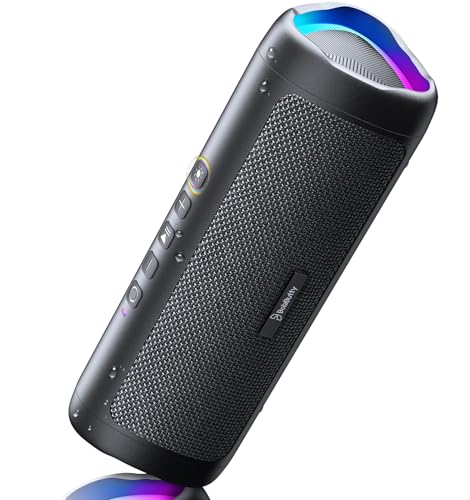


Final decision framework for small wireless speakers
Begin with the room and routine the speaker will actually serve, then rank the physical facts in that order of importance, writing the ranking down before opening any product page so that marketing order cannot quietly rearrange your own priorities while you browse. Bathroom duty elevates ingress protection and instant reconnection; desk duty elevates multipoint, latency and call quality; travel elevates grams, charging universality and runtime margin. Verify pairing promises against your exact phone and any second unit you plan to add, read battery figures as laboratory ceilings to be discounted by your habits, and treat bass specifications as descriptions of clever management rather than defiance of physics. Scan long-term owner feedback for corrosion, battery decline and app abandonment, the three slow failures that short reviews cannot see.
The right small wireless speaker disappears into a routine: it reconnects before you ask, survives the splash it was rated for, plays a podcast intelligibly over shower noise and packs without negotiation when a trip appears. Those virtues come from matching documented specifications to a specific life, not from chasing the longest feature list in the category. Choose the design whose compromises align honestly with your rooms, your weather, your listening habits and your patience for small daily frictions, because those frictions, repeated across hundreds of ordinary mornings and evenings, are what ownership actually feels like from the inside, and its modest enclosure will keep earning its place long after larger, louder ambitions have been quietly returned to their boxes.


