What's inside
- Where to Buy
- Key Takeaways
- Quick Picks
- How We Chose These Picks
- Comparison
- How to Choose a Smart TV for Movies
- What Does Filmmaker Mode Actually Change?
- Is OLED Always Better Than LED for Films?
- How Much Does Size Matter for Cinema at Home?
- What Should a Movie Household Plan Around the Screen?
- Common Mistakes
- Final Recommendation
- Frequently Asked Questions
- Related Guides
As an Amazon Associate I earn from qualifying purchases. This post may contain affiliate links at no extra cost to you.
[SITE_DOMAIN] is reader-supported. When you buy through links on our site, we may earn an affiliate commission.
Where to Buy
Six cinema-first televisions are compared below, and each linked name opens its Amazon page. LG’s OLED line leads with the LG 65 inch Class OLED evo AI C6, whose listing covers its Brightness Booster and Perfect Black claims. Its predecessor, the LG 65-Inch OLED evo AI 4K C5 Series, remains in the range and its page sets out its filmmaker credentials. The gallery-tier step is the LG 55-Inch OLED evo AI 4K G5 Series, the set in this guide whose title names Filmmaker Mode outright. Sony’s entry arrives as a bundle, the Sony K55XR80M2 55 Inch Bravia 8 QD-OLED with a premium HDMI cable included, detailed on its page. Roku’s own flagship, the Roku 65-Inch Pro Series LX, brings an OLED panel to the calmest interface in the guide. And the value door into this company is the Sony 55 Inch BRAVIA 3 II, an LED set whose listing includes movie credits and PlayStation features.
The best smart tvs for movies are judged in the dark, on the hardest material a screen ever shows: a night scene in a serious film, where the difference between true black and expensive grey is the difference between cinema and television. Five of the six sets here are OLED panels, whose pixels switch off entirely for black, and the sixth is an LED Sony that earns its place on processing, formats and value rather than on black level. Around that panel divide, the picks separate by ecosystem and intent — three LGs climbing from the C5 through the C6 to the gallery-class G5, two Sonys at opposite ends of the price logic, and a Roku flagship for the household that wants OLED depth behind the simplest interface in the business.
Format support is the second axis, and it is stated with care throughout this guide. Dolby Vision and Dolby Atmos recur across the titles, HDR10 appears where a maker prints it, and one feature gets special discipline: Filmmaker Mode, the picture setting that presents a film as its makers intended, is claimed in this guide only where a listing title actually names it. On the evidence of the titles, that is the LG G5 — whose listing prints the words — and the LG C5 and C6, whose titles reference the mode in their own wording. Where a title is silent, the review says so and rests the set’s case on what is printed. Movie buyers deserve that precision, because cinema features are exactly the ones marketing language loves to blur.
Size divides the field into two cinemas. The 65-inch sets — LG’s C6 and C5 and Roku’s Pro Series LX — are main-room screens for seating that sits back and watches at scale. The 55-inch sets — LG’s G5, Sony’s Bravia 8 and Sony’s BRAVIA 3 II — serve the smaller film room, the dedicated den, the household whose cinema is intimate rather than grand. Neither size is a compromise; they are different rooms with different rituals, and the reviews below treat them that way, scoring each set against the evenings it will actually host.
Key Takeaways
- Five of the six picks are OLED panels; the Sony BRAVIA 3 II is the LED value route with Dolby Vision and Atmos on board.
- LG’s C6 leads the range with Brightness Booster, Perfect Black and Perfect Color, and a VRR 165Hz provision for gaming households.
- Filmmaker Mode is credited only where a title names it — the LG G5 prints it outright, and the C5 and C6 reference it in their listings.
- Sony’s Bravia 8 brings QD-OLED colour to a 55-inch Google TV, bundled with a premium 8K-10K HDMI cable.
- Roku’s Pro Series LX pairs a 65-inch OLED panel at 144Hz VRR with the platform’s voice-remote calm.
- The BRAVIA 3 II adds a practical bundle of its own: movie credits included and four HDMI 2.1 ports with PS5 features.
Quick Picks
| Pick | Badge | Why it makes the cut |
|---|---|---|
| LG 65 inch Class OLED evo AI C6 | Range leader | OLED evo with Brightness Booster, Perfect Black and Perfect Color, Dolby Vision and Atmos, VRR 165Hz. |
| LG 65-Inch OLED evo AI 4K C5 Series | The proven generation | OLED evo with Dolby Vision, Atmos and HDR10, AI Super Upscaling and Filmmaker Mode in its listing. |
| LG 55-Inch OLED evo AI 4K G5 Series | Gallery-tier cinema | OLED evo with Filmmaker Mode named in the title, Dolby Vision and Atmos, and Wow Orchestra audio. |
| Sony K55XR80M2 55 Inch Bravia 8 QD-OLED | QD-OLED colour | Bravia 8 QD-OLED on Google TV, bundled with an AudioQuest Cinnamon 48 HDMI cable. |
| Roku 65-Inch Pro Series LX | OLED behind Roku calm | 65-inch OLED at 144Hz VRR with Dolby Vision and a Voice Remote Pro on Roku’s flagship line. |
| Sony 55 Inch BRAVIA 3 II | Value cinema door | LED 4K with XR processing, Dolby Vision and Atmos, 120Hz, four HDMI 2.1 ports and movie credits included. |
How We Chose These Picks
The filter was cinema behaviour, verified at the level of the listing title. Candidates needed a panel and a format story a film viewer could hold onto — OLED-class black performance or, in the LED case, a named picture processor with Dolby Vision and Atmos — and every feature discussed in the reviews had to be traceable to the manufacturer’s own title for that model. Sets whose movie credentials existed only in surrounding marketing were passed over in favour of sets that print them.
The six were arranged to cover the real forks in a film household’s decision. Panel first: OLED in five cases, with QD-OLED’s colour variant represented by Sony, and one LED set kept deliberately as the value and brightness counterpoint. Ecosystem second: LG’s platform carries three, Google TV carries both Sonys, and Roku carries its own flagship, so a household can hold its interface constant and compare panels, or hold the panel class constant and compare interfaces. Generation third: LG’s C5 and C6 sit side by side so the buyer can see what a model year buys and decide whether the newer set’s additions are worth it in their room.
Filmmaker Mode received the guide’s strictest rule, stated here so readers can audit it. The mode is a specific, named picture setting. This guide credits it to a set only when that set’s listing title names it — the G5 prints Filmmaker Mode, and the C5 and C6 listings reference FILMMAKER Mode in their own capitalisation. The Sonys and the Roku, whatever their cinema virtues, are not credited with the mode, because their titles do not print it. Readers who value the setting should buy on that printed evidence; readers who do not can weigh the panels on their other stated merits.

LG 65 inch Class OLED evo AI C6 — Range leader
The C6 is the current summit of the most successful OLED line in the business, and its title reads like a checklist of what the technology has been refining toward: Brightness Booster to lift OLED’s historical weakness, Perfect Black and Perfect Color as the panel’s twin promises, an a11 AI Processor Gen3 running the picture, Dolby Vision and Atmos for the formats, and VRR up to 165Hz for the household whose cinema shares its screen with a console. At 65 inches, it is a main-room set that asks to be the house’s best screen and has the specification to defend the claim.
Perfect Black is the phrase to understand, because it describes OLED’s structural advantage rather than a tuning trick. Each pixel makes its own light and can switch off entirely, so a film’s night is not a backlight dimmed hopefully behind a dark scene but a genuine absence of light where the film is black — and a presence of exact light where a candle, a starfield or a face emerges from it. Brightness Booster matters precisely because it addresses the other end: highlights that hold their intensity without washing the blacks around them. A cinema panel lives or dies at those two extremes simultaneously, and the C6’s title claims both ends of the bargain.
The gaming provision deserves its sentence because film households increasingly share their best screen with a console, and a VRR figure of 165Hz is a serious provision that most cinema-first sets do not print. Filmmaker Mode’s status on this model follows the guide’s rule: the C6’s listing references the mode in its wording, and the review credits it on that basis — readers for whom the setting is decisive can confirm its presentation on the listing itself. Against its own C5 predecessor below, the C6 argues from its newer processor generation and its booster claim; against the G5, from size and the gaming figure. A household buying one main cinema screen for the long term should begin its comparison at the C6 listing and make the others argue downward.
There is a maturity argument for the range leader that specifications understate. The C line’s generations have built a deep ecosystem of knowledge — settings guidance, calibration discussion, accessory fit — that a buyer inherits free. A flagship from a long line is the easiest premium set to live with well, because every question its owner will ever ask has been asked and answered in public. For a screen bought to anchor a room for a decade, that inheritance is worth real money.
Installation at 65 inches follows the flagship pattern: a planned hang or a stand with genuine width, seating placed for scale, and a first evening spent setting the film picture mode under the room’s real darkness rather than accepting defaults. The C6 rewards that evening more visibly than most sets, because its panel’s range is exactly what picture settings exist to aim.
The C6’s buyer should also think about what the set replaces. Households upgrading from an LED main screen will experience the change most at the extremes of the evening: the opening darkness of a film, the candlelit scene, the credits rolling over true black rather than grey. Households upgrading from an older OLED will experience it as refinement — brighter highlights, a newer processor’s hand, a gaming provision their old set lacked. Both upgrades are real, but they are different purchases wearing the same box, and naming which one you are making keeps the tier honest against the C5’s value below.
- Screen size: 65-inch class
- Panel and resolution: OLED evo, 4K
- Picture claims: Brightness Booster, Perfect Black, Perfect Color
- Processor: a11 AI Processor Gen3
- Formats: Dolby Vision and Atmos
- Gaming: VRR 165Hz
- Filmmaker Mode: Referenced in the listing title
- Model: 65C6, 2026 model
Strengths
- Perfect Black OLED depth with a Brightness Booster answering the highlights end.
- Dolby Vision and Atmos complete the cinema format pairing.
- VRR 165Hz gives the film screen a serious gaming second life.
Trade-offs
- Its flagship tier prices against the C5 below, which shares the panel class.
- A 65-inch panel needs a main room’s wall and seating distance to justify it.
- OLED’s dark-room virtues are least visible in a permanently bright room.
Best for: a main room buying one long-term cinema screen, with a console sharing the wall.
Not suited for: a small film den, where its 65-inch canvas would crowd the seating it is meant to serve.

LG 65-Inch OLED evo AI 4K C5 Series — The proven generation
The C5 is the C6’s immediate predecessor and, in the way of mature product lines, a complete cinema television in its own right rather than a discounted apology: OLED evo at 65 inches, Dolby Vision and Atmos with HDR10, AI Super Upscaling 4K, and FILMMAKER Mode printed in its listing in the maker’s own capitals. A buyer choosing between the two generations is not choosing between a cinema set and a lesser one; they are choosing between the current summit and the same mountain one season earlier, and the right answer depends on how the household values the newest processor and booster claims against the older set’s established value.
Everything said about OLED’s black applies here undiluted, because it is a property of the panel technology rather than of a model year. Night scenes resolve into true darkness, highlights sit inside that darkness without a backlight’s haze, and the 65-inch scale gives the effect the canvas it deserves. AI Super Upscaling earns its mention for the film library’s reality: much of what a household watches — older films, broadcast cinema, standard-definition extras — arrives below 4K, and a set that lifts it gracefully serves more evenings than one that only shines on pristine sources.
Filmmaker Mode’s presence in this listing, stated plainly by the maker, makes the C5 the guide’s clearest value route to that specific feature at 65 inches: the setting that strips processing away and presents the film at its intended cadence and colour is printed in the title, not inferred. Film purists shopping the generations should weigh that printed certainty alongside the C6’s newer hardware claims and decide which kind of assurance their evenings need. Either way, the C5’s listing makes its cinema case in the open, and households that buy the proven generation rarely regret the season they saved.
There is also a knowledge dividend to the older generation. A year of public ownership means the C5’s behaviour — its settings, its habits, its pairing with soundbars and consoles — is documented more thoroughly than any new model’s can be. Buyers who value being able to research every question before the set arrives will find the C5 the most knowable set in this guide, and knowability is a genuine ownership virtue.
Position the C5 honestly against the Roku flagship as well: same size class, same OLED family, different philosophies — LG’s cinema-led platform and processing against Roku’s calm and its voice remote. A household can therefore choose its generation and its interface almost independently, which is a luxury this category did not offer a few years ago.
A word about the C5’s place in a household’s longer plan. A proven-generation flagship bought at its mature value tends to be the set that stays: its performance has no obvious successor itch, its behaviour is fully documented, and its panel class will not embarrass it beside newer arrivals for years. The household that buys the C5 is often the household that has stopped chasing generations and started keeping televisions, and there is a particular satisfaction in that purchase — the cinema is finished, and the evenings can simply begin.
- Screen size: 65-inch
- Panel and resolution: OLED evo AI, 4K
- Formats: Dolby Vision, Dolby Atmos, HDR10
- Upscaling: AI Super Upscaling 4K
- Filmmaker Mode: Named in the listing title
- Model: OLED65C5PUA, 2025
Strengths
- Full OLED evo cinema performance at the proven generation’s value.
- Filmmaker Mode is printed in its own listing title.
- AI Super Upscaling serves the older and broadcast parts of a film library.
Trade-offs
- A generation behind the C6’s processor and booster claims.
- No gaming VRR figure is stated in its title.
- At 65 inches it shares the flagship size’s installation demands.
Best for: a film-first main room that values the proven generation and a printed Filmmaker Mode at 65 inches.
Not suited for: rooms chasing the newest processor generation and the C6’s stated VRR 165Hz gaming provision.

LG 55-Inch OLED evo AI 4K G5 Series — Gallery-tier cinema
The G5 is LG’s gallery tier brought to cinema duty: a 55-inch OLED evo panel with Dolby Vision and Atmos, HDR10, Alexa built in, Wow Orchestra audio — and the distinction this guide has been careful about from its first page. Its listing title names Filmmaker Mode in plain words. Among the six sets here, the G5’s printed claim to that setting is the most direct, and for the film viewer who regards the mode as the difference between a television presenting a film and a television interpreting one, that printed line is the review’s headline and the set’s reason to exist in this company.
Understand what the mode promises and the G5’s identity sharpens. Filmmaker Mode exists to disable the processing layers — the motion smoothing, the sharpening, the colour reinterpretation — that televisions apply by default, and to present the film at its original frame cadence and colour temperature. On an OLED panel, where the black and colour foundations are already exact, that restraint produces the most faithful domestic presentation of a film this guide can point to. Wow Orchestra, LG’s system for playing the television’s speakers in concert with compatible LG soundbars, addresses the audio half of the same evenings for households building sound in stages.
The 55-inch size places the G5 in the dedicated film room rather than the grand main room, and that placement flatters it: at den distances, OLED’s perfection is at its most legible, and a gallery-tier set’s finish and presence suit a room arranged around the screen. Against the C6, it trades scale and the stated gaming figure for tier, finish and the mode’s clearest claim; against the Sony Bravia 8 at the same size, it trades QD-OLED colour and Google TV for LG’s ecosystem and that printed Filmmaker Mode. A purist building a smaller cinema should read the G5 listing first and let the others argue against its central claim.
The gallery heritage deserves one more sentence. G-series sets are built to hang as the room’s picture, flush and finished, which in a film den means the screen is beautiful in the hours it is not performing — and a cinema room, like any room, spends most of its life in those hours. A set that serves both the film and the wall is serving the whole room, and the G5 is the only pick here designed from that double brief.
Practical counsel for its buyer: the G5’s virtues are evening virtues, and the room should be able to go dark. A film den that cannot darken wastes the panel’s foundation; curtains are this set’s cheapest accessory and its most important one.
The G5 also asks something of its owner that the other sets do not: taste. A gallery-tier cinema set is a deliberate object, bought by a household that has decided how its film room should look and feel, and its rewards are partly aesthetic in a way specification cannot capture. That is not a soft consideration in a room dedicated to an art form. The den that has been arranged — seating, darkness, sound, and a screen that hangs like a picture between films — changes how often the household uses it, and a set that invites the room’s ritual is earning its tier in attendance as much as in picture.
- Screen size: 55-inch
- Panel and resolution: OLED evo AI, 4K
- Formats: Dolby Vision and Atmos, HDR10
- Filmmaker Mode: Named in the listing title
- Audio: Wow Orchestra
- Voice: Alexa built-in
- Model: OLED55G5WUA, 2025
Strengths
- Filmmaker Mode is named outright in its listing title.
- Gallery-tier OLED finish suits a dedicated film room’s wall.
- Wow Orchestra lets LG soundbars join the set’s own speakers in concert.
Trade-offs
- At 55 inches it concedes main-room scale to the 65-inch picks.
- No gaming VRR figure is stated in its title.
- Its gallery tier prices above the C-line sets at comparable panel class.
Best for: a dedicated film room or den whose owner wants Filmmaker Mode claimed in print, on a gallery-tier OLED.
Not suited for: a large main room needing a 65-inch canvas for its seating distance.

Sony K55XR80M2 55 Inch Bravia 8 QD-OLED — QD-OLED colour
Sony’s Bravia 8 enters through colour. Its panel is QD-OLED — quantum-dot colour married to OLED’s self-lit blacks — in a 55-inch 4K HDR Google TV, and the bundle completes the proposition with an AudioQuest Cinnamon 48 HDMI cable, a 2.25-metre, 48Gbps, 8K-10K rated lead, in the box. That cable is a tell about the intended buyer: a household that cares about the signal path as well as the panel, and that would rather receive one correct premium cable than buy the wrong cheap one twice. Sony’s cinema heritage — the Bravia line’s long association with film presentation — is the context the set is purchased into.
QD-OLED’s argument against conventional OLED is colour volume at the extremes: saturated colour that holds its richness in bright highlights where other panels wash toward white. For film, that shows in the places cinema is most itself — neon in rain, a sunset that must stay orange rather than pale, the saturated palette of animation. Combined with OLED’s true black underneath, the Bravia 8’s picture identity is the most colour-forward in this guide, and at 55 inches in a dimmed room it is an identity a viewer sits close enough to appreciate in full.
Google TV carries the platform, with the content-aggregating home screen that suits a film household’s scattered subscriptions, and the bundle’s completeness extends the set’s ownership story: panel, platform and a reference-grade cable arrive together, leaving the buyer to plan sound and seating rather than accessories. What the title does not claim should be recorded with the guide’s usual care — no Filmmaker Mode is printed, so none is credited, and no gaming figure is stated. The Bravia 8’s case rests on its panel technology, its maker and its bundle, and for colour-led film viewers that case is complete without borrowed features. If QD-OLED colour at 55 inches is your cinema’s missing element, the Bravia 8 bundle listing is where to verify the details.
Sony buyers also purchase a particular tuning philosophy. Bravia sets are traditionally tuned toward the reference — toward presenting the film’s own colour decisions rather than the showroom’s — and while this guide credits only what titles print, the maker’s reputation is part of what a buyer reasonably weighs when two panels tie on paper. In this guide the tie at 55 inches is with the G5, and it is broken by exactly such considerations: LG’s printed Filmmaker Mode and gallery tier against Sony’s QD-OLED colour and bundle.
The cable, finally, deserves its practical due. A 48Gbps lead of proper length removes the most common silent failure in a premium setup — the bargain cable that cannot carry the full signal between a modern source and a modern panel — and it removes it on day one, in the box. Bundles are usually padding; this one is a diagnosis of a real failure mode, included by a maker that knows where premium pictures go to die.
Buyers weighing the Bravia 8 against the G5 should also weigh the households behind the badges. Sony’s Google TV sets live in the Android-centred home, where casting from phones and the household’s Google accounts are daily habits; LG’s G5 lives in the household that has chosen LG’s platform and, potentially, its soundbars for the Wow Orchestra pairing. The panels will both delight their owners nightly; the ecosystems will be touched hourly. In a tie between two cinema-class panels at the same size, the hourly consideration should break it, and this guide’s comparison table exists to make that tie — and its terms — visible.
- Screen size: 55-inch
- Panel and resolution: QD-OLED, 4K HDR
- Platform: Google TV
- Bundled: AudioQuest Cinnamon 48 HDMI cable, 2.25M, 8K-10K 48Gbps
- Filmmaker Mode: Not stated in the listing title — verify with the manufacturer documentation
- Model: K55XR80M2, 2025
Strengths
- QD-OLED colour volume gives highlights and saturated scenes unusual richness.
- A premium 48Gbps HDMI cable is bundled, removing a classic setup failure.
- Google TV aggregates a film household’s scattered services calmly.
Trade-offs
- No Filmmaker Mode is printed in its title, unlike the LG G5.
- At 55 inches it serves a den or smaller main room, not a grand one.
- Bundle value depends on the buyer needing the included premium cable.
Best for: a colour-led film viewer in a smaller room, on Google TV, who values a complete premium bundle.
Not suited for: buyers for whom a printed Filmmaker Mode is a condition of purchase, which the G5 satisfies and this title does not.

Roku 65-Inch Pro Series LX — OLED behind Roku calm
Roku’s Pro Series LX is the guide’s interface argument made physical: a 65-inch OLED panel at 144Hz with VRR, Dolby Vision, an ultra-thin flat design and a Voice Remote Pro, running the platform whose entire reputation is calm. For years, the OLED buyer accepted a cinema-brand interface as the price of the panel; Roku’s flagship removes that tax. The household that wants true black and true simplicity in the same purchase — and there are many such households, often the ones where one partner loves film and the other refuses to learn a television — has exactly one address in this guide, and it is this one.
The panel specification is more serious than the platform’s friendly reputation might suggest. A 144Hz OLED with VRR is a gaming-capable specification as well as a cinema one, and Dolby Vision covers the film format that matters most across the streaming services. The ultra-thin profile suits a main room that wants its cinema screen to disappear into the wall’s plane when idle. Nothing in the title claims Filmmaker Mode, and none is credited; Roku’s cinema case rests on the panel, the Vision format and the experience of reaching a film in two presses from a home screen that never argues.
That experience deserves its full weight in a movie guide, because films are chosen in the evening, often by tired people, and the distance between sitting down and the opening frame is a real component of how often a household watches seriously. Roku’s impartial search — showing where a film can be seen across services rather than steering toward one store — is a film lover’s feature disguised as an interface detail, and the Voice Remote Pro carries it into the hand. Against the LG C5 and C6 at the same size, the Roku trades processing pedigree and printed filmmaker features for that calm and its stated 144Hz figure. Households split on exactly that trade will know which side they live on. If yours is the Roku side, the Pro Series LX listing is the flagship to examine.
There is a support argument for the flagship of a platform this widely owned. Roku’s installed base means its sets are understood everywhere — by relatives setting up a room, by the household’s own future troubleshooting, by the long tail of public knowledge that accumulates around common products. An exotic flagship can strand its owner; this one cannot, and for a main-room screen bought for a decade that safety has value beyond its panel.
The LX also suits the household standardising rooms, as Roku’s own line lets the main room’s flagship share remotes and menus with smaller Roku sets elsewhere in the house. A cinema that behaves like the bedroom television, only vastly better, is a coherent household system rather than a collection of screens.
The Pro Series LX has one more audience worth naming: the household whose film lover has been outvoted on televisions before. Cinema-brand sets have a way of arriving with interfaces the rest of the family tolerates rather than enjoys, and the resentment compounds across years of evenings. A flagship that the whole household operates happily — that a grandparent can run, that a child cannot get lost in, that finds any film in two presses — protects the film lover’s hobby better than any processing feature, because a cinema the household loves is a cinema that gets used. Roku’s flagship understands its household politics as clearly as its panel.
- Screen size: 65-inch
- Panel and resolution: OLED, 4K
- Refresh and gaming: 144Hz, VRR
- Formats: Dolby Vision
- Design: Ultra thin flat screen
- Remote: Voice Remote Pro
- Platform: Roku TV, 2026, Amazon exclusive per listing
Strengths
- A genuine OLED panel behind the calmest interface in the guide.
- 144Hz with VRR gives the cinema screen a real gaming provision.
- Voice Remote Pro and impartial search shorten the distance to any film.
Trade-offs
- No Filmmaker Mode is printed in its title.
- Dolby Atmos is not stated in the title, unlike the LG and Sony picks.
- Its cinema-processing pedigree is younger than LG’s or Sony’s lines.
Best for: a household split between a film lover and an interface refuser, wanting OLED depth without a learning curve.
Not suited for: purists who require a printed Filmmaker Mode, which the LG sets in this guide provide.
Sony 55 Inch BRAVIA 3 II — Value cinema door
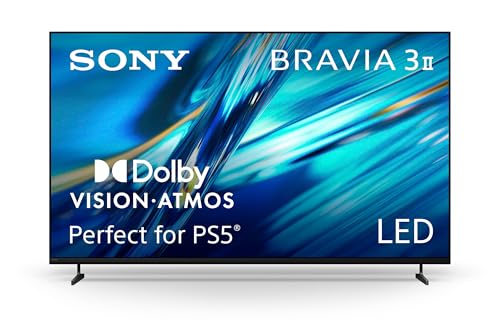
Every guide needs its honest door, and the BRAVIA 3 II is this one’s: a 55-inch LED 4K HDR panel with Sony’s XR Processor and its AI technology, Dolby Vision and Atmos, a 120Hz refresh rate, four HDMI 2.1 ports with PS5 features, Google TV with Gemini — and, in the listing’s most disarming detail, 4K movie credits included. It is the only LED set here and the only one whose cinema case is built from processing, formats and completeness rather than from black level, and it earns its place by being the right purchase for the bright room, the shared room and the budget that has a soundbar to feed as well.
LED’s counter-argument to OLED deserves a fair hearing in a movie guide, because it is the argument of the room most households actually have. An LED panel sustains brightness across a full bright scene in a way that serves the not-fully-dark room — the family room with lamps, the open-plan space, the household that watches films as a social event rather than a ritual. Sony’s XR processing is the maker’s picture intelligence applied to that panel, and Dolby Vision with Atmos means the format side of cinema is not surrendered at this tier: the films arrive in their intended formats even if the blacks are LED blacks.
The completeness around the panel is unusually thoughtful. Four HDMI 2.1 ports is a console household’s specification — multiple modern sources at full bandwidth without a switching ritual — and the PS5 features acknowledge the same household from the maker’s own ecosystem. The included movie credits are a small, honest pleasure: the set arrives with films to watch, which is more aligned with a buyer’s first weekend than most bundle padding ever manages. Google TV with Gemini carries the platform. Against the OLED five, the BRAVIA 3 II concedes the night scene and wins the bright room, the port count and the tier. Households whose cinema is lamplit and social should read its listing as a first candidate rather than a fallback.
There is a staged-ownership case for this set as well. A household building a cinema over time — panel now, sound next year, darkness when the room allows — can start here without buying a dead end: the formats are right, the ports are right, and the set migrates gracefully to a bright second room when an OLED eventually takes the main wall. Doors that open onto a sensible path are worth more than doors that merely open cheaply, and this one opens onto the Sony ecosystem’s whole staircase.
One discipline closes the review: do not buy this set for a dedicated dark cinema and judge it by OLED’s standard. Its blacks are the blacks of a good LED, and in a blacked-out room the difference is the difference this guide opened with. Buy it for the rooms it describes — bright, shared, console-carrying — and it will be judged, correctly, as the most complete set at its tier.
The movie credits in the BRAVIA 3 II’s listing deserve a final, fair reading. They are a small thing, and this guide does not pretend otherwise — but they point at the set’s whole philosophy, which is that a cinema purchase should arrive ready to be a cinema. Ports for the consoles, formats for the films, credits for the first weekend, processing for the picture: the bundle thinks about the buyer’s first month rather than the maker’s specification sheet. Value tiers are usually defined by what they omit; this one is more interestingly defined by what it remembered to include.
- Screen size: 55-inch
- Panel and resolution: LED, 4K HDR
- Processor: XR Processor with AI technology
- Formats: Dolby Vision, Dolby Atmos
- Refresh rate: 120Hz
- Ports and gaming: 4 HDMI 2.1 ports, PS5 features
- Platform: Google TV with Gemini
- Included: 4K movie credits per listing
- Model: K-55XR30M2
Strengths
- Dolby Vision and Atmos keep the cinema formats intact at the value tier.
- Four HDMI 2.1 ports and PS5 features serve a multi-console household.
- LED brightness suits lamplit, social film viewing better than OLED.
Trade-offs
- LED blacks cannot match any OLED in this guide in a darkened room.
- No Filmmaker Mode is printed in its title.
- At 55 inches it shares the smaller class’s seating limits.
Best for: a bright, shared family room with consoles, where film nights are social and the budget has sound to buy too.
Not suited for: a dedicated blacked-out cinema room, where its LED black level would be judged nightly against OLED’s.
Comparison
| Pick | Size | Panel | Filmmaker Mode as titled | Signature extra |
|---|---|---|---|---|
| LG OLED evo C6 | 65-inch | OLED evo | Referenced in the listing | Brightness Booster, VRR 165Hz |
| LG OLED evo C5 | 65-inch | OLED evo | Named in the listing | AI Super Upscaling 4K |
| LG OLED evo G5 | 55-inch | OLED evo | Named in the listing | Wow Orchestra, gallery tier |
| Sony Bravia 8 | 55-inch | QD-OLED | Not stated in the listing title | AudioQuest Cinnamon 48 cable bundled |
| Roku Pro Series LX | 65-inch | OLED | Not stated in the listing title | 144Hz VRR, Voice Remote Pro |
| Sony BRAVIA 3 II | 55-inch | LED | Not stated in the listing title | 4 HDMI 2.1 ports, movie credits included |
How to Choose a Smart TV for Movies
Decide the room’s darkness first, because it chooses the panel family. A room that can go properly dark belongs to OLED — any of the five here — because true black is the foundation every other cinema virtue stands on. A room that stays lamplit and social belongs to the BRAVIA 3 II’s LED brightness and completeness, and buying OLED for it spends money on a virtue the room will rarely reveal. Then decide the scale: 65 inches for the main room’s distance, 55 for the den’s intimacy, measured from the actual seating rather than the showroom’s impression.
Within OLED, let the printed features arbitrate. Filmmaker Mode, where it is a condition, is credited in this guide only to the LGs whose titles name or reference it, with the G5’s claim the most direct. QD-OLED colour argues for the Sony; interface calm argues for the Roku; the newest generation argues for the C6 against its own predecessor. Close with sound: several titles state Dolby Atmos, but a television’s own speakers are a starting point, and the household serious about cinema should plan its soundbar or system alongside the panel, in the same budget conversation.
What Does Filmmaker Mode Actually Change?
It changes the television’s manners. A film arrives with a frame cadence, a colour temperature and a level of processing chosen by its makers; a television’s default picture modes then reinterpret all three — smoothing motion into a soap-opera glide, sharpening edges the cinematographer left soft, warming or cooling the palette. Filmmaker Mode is the industry’s agreed setting for declining that reinterpretation: the film is shown at its intended cadence and colour, with the television’s embellishments stood down. Viewers differ in whether they prefer the result, and the mode can be switched off by anyone who does not — but for the viewer who wants the film itself, it is the single most purposeful setting a cinema television offers, which is why this guide credits it only where a title prints it.
Is OLED Always Better Than LED for Films?
In a dark room, for the reasons this guide opened with, yes — pixel-level black is a structural advantage no backlight can fully imitate, and night scenes are where films test a screen hardest. But the universal claim fails on the room. In a bright or lamplit room, OLED’s advantage narrows to invisibility while LED’s sustained brightness and lower tier keep working, and a household that watches films socially, with people and lamps and conversation, may be served better by the BRAVIA 3 II and a soundbar than by an OLED heard through television speakers. The honest question is never which technology wins, but which room the film nights actually happen in.
How Much Does Size Matter for Cinema at Home?
Cinema is partly a field-of-view experience: the frame should fill enough of your vision that the room recedes, which is a relationship between screen size and seating distance rather than a virtue of size alone. A 65-inch set across a main room and a 55-inch set across a den can deliver the same immersion, which is why this guide carries both sizes without ranking them. What breaks immersion is mismatch — the grand panel watched from a corridor’s distance, or the small panel straining across a hall. Measure the seating, divide honestly, and buy the size that fills the view from where the household actually sits; the panel technology and the formats will do the rest.
What Should a Movie Household Plan Around the Screen?
A cinema is a system wearing a television as its face, and the households that plan the system get the evenings they imagined. Sound comes first: a soundbar or a speaker system matched to the room, placed where the screen’s dialogue can anchor to the picture. Light comes second: a way to take the room to darkness, even if that is one good set of curtains, because every panel in this guide — LED included — performs its best work in a controlled room. Seating comes third, placed at the distance the screen size was bought for, with the screen’s centre at the seated eye line rather than above a mantel’s compromise.
Sources complete the system. A household’s films live scattered across services, discs and downloads, and the platform that gathers them with least friction — Roku’s impartial search, Google TV’s aggregation, LG’s ecosystem — is a cinema feature as surely as the panel is. Plan the sign-ins and the home screen on the first evening, while the set is new and the household is patient, and the system will disappear into the ritual it was built for: lights down, room quiet, film up.
Common Mistakes
Claiming features by association is the movie category’s endemic error, and this guide’s Filmmaker Mode rule exists to refuse it. A set does not gain a named picture mode because its sibling has one, its maker offers it elsewhere, or a review assumes it. Buyers should apply the same rule in every shop: if the feature decides the purchase, find it printed in the model’s own listing, as it is for the LG G5, C5 and C6 here.
Buying the panel and forgetting the sound is the second error. Cinema is half audio, and a household that spends its whole budget on OLED blacks and listens through thin television speakers has built half a cinema. Several picks here state Dolby Atmos, which helps, but a planned soundbar or system — the G5’s Wow Orchestra even anticipates the pairing — belongs in the same budget conversation as the screen.
The third error is judging a cinema set under showroom light. Brightness impresses in a warehouse; black level, colour accuracy and motion manners reveal themselves in a dark room with a serious film. Buyers who can, should audition with the material they will actually watch, at the darkness their room actually reaches — and those who cannot should weight the printed panel and format evidence, as this guide does, over any floor demonstration.
Anniversaries of ownership are the final test any of these sets must pass, and they pass it in different currencies. The LGs will be measured in films presented exactly as intended; the Sony QD-OLED in colour its owner stopped noticing because it simply looked right; the Roku in evenings that began without an argument about the remote; the BRAVIA 3 II in the bright Sunday afternoons when the whole household watched together. A household that can name the currency it spends will find the table above reads less like a ranking and more like a set of addressed envelopes.
Final Recommendation
For the main room buying once and buying well, the LG C6 is the guide’s summit: the newest OLED evo generation, both ends of the picture claimed, and a gaming provision for the shared screen. The C5 serves the same room at the proven generation’s value, with Filmmaker Mode in print. The dedicated film den belongs to the G5 for that mode’s clearest claim, or to Sony’s Bravia 8 where QD-OLED colour and the bundled cable argue louder. The household that wants OLED without an interface argument takes the Roku Pro Series LX, and the bright, social, console-carrying room takes the BRAVIA 3 II and spends the difference on sound.
Whichever set goes on the wall, give it the room it was bought for: darkness it can use, sound that matches its picture, and a first evening spent setting it up with a film you know by heart. A cinema television is the rare appliance that repays ceremony, because its whole purpose is the two hours when the room goes quiet and the frame fills with someone else’s world.
One last ritual separates the households that love their cinema set from those that merely own it: the reference film. Every owner should keep one — the film they know frame by frame, watched on the first night and revisited whenever the room changes. It is the household’s own calibration instrument, more honest than any test pattern, because it measures the set against memory rather than against numbers. Choose it before the delivery arrives, and the first evening becomes what it should be: not an installation with a film attached, but a film night that happens to christen a screen.
Frequently Asked Questions
Which of these TVs actually has Filmmaker Mode?
On the evidence of the listing titles: the LG G5 names Filmmaker Mode outright, and the LG C5 and C6 listings reference the mode in their own wording. The Sony and Roku titles do not print it, so this guide does not credit it to them.
What is the difference between the LG C5 and C6?
A generation. The C6 is the 2026 model with the a11 AI Processor Gen3, Brightness Booster and a stated VRR 165Hz; the C5 is the 2025 OLED evo set with AI Super Upscaling and Filmmaker Mode in its title. Both are 65-inch OLED evo panels with Dolby Vision and Atmos.
Is QD-OLED better than OLED for movies?
QD-OLED, in the Sony Bravia 8, argues from colour volume — saturated colour that holds in bright highlights — over the same true-black foundation. Conventional OLED evo counters with its own colour and brightness claims. In a dark room both are cinema-class; the choice turns on ecosystem and the printed features.
Can an LED TV be a good movie TV?
Yes, in the right room. The Sony BRAVIA 3 II pairs LED brightness with Dolby Vision, Atmos and XR processing, which suits lamplit, social film viewing. In a blacked-out cinema room, OLED’s black level remains the standard it cannot meet.
Which pick is best for a small film room?
One of the 55-inch OLEDs: the G5 for Filmmaker Mode and gallery finish, or the Bravia 8 for QD-OLED colour and its bundled premium cable. At den distances, both panels’ quality is fully legible.
Do I need a soundbar with these TVs?
For full cinema effect, plan one eventually. Several sets state Dolby Atmos and the G5’s Wow Orchestra is designed to pair with LG soundbars, but a dedicated sound system remains the other half of a home cinema at any panel tier.
Related Guides
The wall a cinema screen hangs on has its own guide in our frame TVs round-up, where the gallery-tier idea is explored across makers. And when the film room must also survive the afternoon, the TVs for bright daylight viewing guide covers the finishes and outdoor sets built for the sun.


