What's inside
- Key Takeaways
- Quick Picks
- How Did We Shortlist These 3D Projectors?
- Why Did 3D Survive in Projection After Televisions Gave Up?
- How Do the Six Compare Side by Side?
- How Should You Assemble a Complete 3D Film Setup?
- What Should Collectors Verify Before Spending?
- How Does Crosstalk Happen, and How Do You Minimise It?
- Why Does the Screen Gain Matter More in 3D Than in Flat Viewing?
- How Should You Care for Glasses, Lamps and Lenses Over the Years?
- What Mistakes End Most 3D Film Nights Early?
- How Do You Judge a 3D Projector in the First Fortnight?
- What Does a Sensible Upgrade Path Look Like From Here?
- Final Recommendation
- What Else Should a 3D Collector Ask Before Ordering?
- Frequently Asked Questions
- Related Guides
As an Amazon Associate I earn from qualifying purchases. This post may contain affiliate links at no extra cost to you.
widgetverdict.com is reader-supported. When you buy through links on our site, we may earn an affiliate commission.
Where to buy: All six projectors below are listed on Amazon. Before ordering, open the full specification tab on the listing and confirm the 3D formats and the glasses standard in writing, because marketplace summaries compress exactly the details this category lives on.
Home 3D refuses to die because, done properly, nothing else in the living room does what it does. The best 3d projectors keep faith with the large libraries of Blu-ray 3D discs, broadcast recordings and downloaded features that collectors have assembled over fifteen years, projecting them at a scale where depth becomes architecture rather than gimmick. Television abandoned the format entirely, which leaves projection as its last domestic home — and, happily, its best one, because a two-metre image viewed in darkness is where stereoscopic cinema always wanted to live.
This roundup deliberately spans the technology’s whole modern range: an ultra-short-throw laser flagship that sits beneath the screen, Epson’s three-chip home-cinema heavyweight with motorised optics, BenQ’s 4K all-rounder and its LED flagship, and two bright Optoma workhorses that carry the format to households unwilling to spend cinema money. What unites them is verified stereoscopic support and enough light to survive the glasses. What divides them — throw, contrast philosophy, light source, price of entry — is what the next several thousand words are for.
Key Takeaways
- Projection is now the only big-screen home for 3D film; every pick here supports frame-packed playback for Blu-ray 3D collections.
- Active shutter glasses steal a large share of brightness, so output headroom, not resolution, is the first specification to respect.
- Epson’s 5050UB is the exception that proves DLP’s rule here: a three-chip LCD design with genuine 3D and the deepest blacks on the page.
- Ultra-short-throw laser models remove ceiling mounts and long cable runs, replacing them with a furniture decision and a screen decision.
- Buy glasses with the projector, test every pair within the returns window, and keep one charged spare for guests.
Quick Picks
| Pick | Badge | Why it is here |
|---|---|---|
| AWOL Vision LTV-3000 Pro | Best Ultra-Short Throw | Tri-laser UST flagship with Dolby Vision ambitions and full 3D from a console beneath the screen. |
| BenQ TK700 | Best All-Rounder | 4K DLP versatility that treats films, sport and the occasional game with equal competence. |
| Epson Home Cinema 5050UB | Best Picture Quality | Three-chip contrast, motorised lens and the most cinematic 3D image in this line-up. |
| Optoma HD28HDR | Best Value | Bright, proven 1080p projection that keeps a 3D film night affordable. |
| Optoma GT1080HDR | Best for Small Rooms | Short-throw geometry that builds a cinema where a long-throw model cannot fit. |
| BenQ X3100i | Best LED Flagship | Long-life LED colour and premium features for a permanent installation. |
How Did We Shortlist These 3D Projectors?
The first filter was archival honesty: a model had to support frame-packed 3D, the format Blu-ray 3D actually uses, rather than offering only side-by-side compatibility for broadcast material. Several fashionable projectors failed that test and were excluded regardless of their other virtues, because a film collector’s library is the heart of this category.
Brightness came second, judged as a 3D specification rather than a headline. We favoured machines whose output, after the twin taxes of screen distance and shutter glasses, still leaves shadow detail intact in night scenes. Contrast philosophy came third: DLP’s crispness and freedom from convergence worries against the 5050UB’s three-chip depth of black, with both approaches represented instead of a false consensus declared.
Installation reality shaped the final six. A category serving existing collectors must serve existing rooms, so the list includes a projector that sits centimetres from the wall, one that throws from a coffee table, and several that expect a mount. If a household cannot physically install a projector, its picture quality is a rumour.
Why Did 3D Survive in Projection After Televisions Gave Up?
Television 3D failed for domestic reasons as much as technical ones: small screens made depth feel like a toy theatre, glasses multiplied across a family sofa, and broadcasters never fed the format enough content. Projection inverts every term of that failure. The image is enormous, the room is already darkened for film, the audience is usually a committed few rather than a channel-surfing many, and the content — a shelf of Blu-ray 3D releases, many of them the finest transfers those films ever received — sits owned and waiting.
There is also a preservation argument collectors understand instinctively. A significant number of modern animated features, nature documentaries and blockbusters were composed for depth, and their flat releases are the compromise versions. A capable 3D projector is currently the only way to see those works as designed, at home, at scale. That cultural footnote would not matter if the experience were poor; properly set up, it is frequently the most transporting evening a home cinema can offer.
Manufacturers have quietly kept the feature alive exactly where it works: DLP lines from BenQ, Optoma and ViewSonic, Epson’s home-cinema range and the UST flagships. The six below are the current standard-bearers, and the differences between them are differences of room, budget and taste rather than of basic competence.
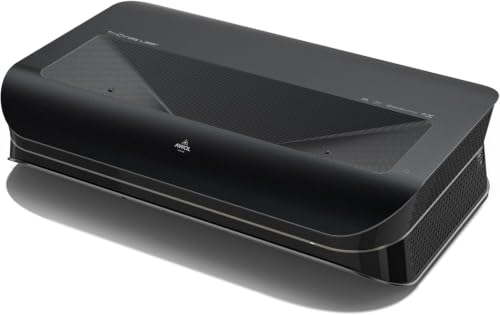
AWOL Vision LTV-3000 Pro — Best Ultra-Short Throw
The LTV-3000 Pro reimagines where a 3D cinema lives. Instead of a box bolted to the ceiling, a tri-laser ultra-short-throw engine sits on a low cabinet directly beneath the screen and throws a vast image up the wall. For households whose ceilings, landlords or aesthetics forbid a traditional install, this geometry is not a novelty; it is the only route to genuine projection, and AWOL’s flagship executes it with serious intent.
Three lasers, one per primary colour, give the picture a saturation and purity that single-laser and lamp designs chase. Animated features — the crown jewels of most 3D libraries — exploit that gamut shamelessly: coral reefs, neon cityscapes and painted skies hold distinct hues where lesser engines smear them into a general glow. The rated output is high, which matters doubly here because UST screens and shutter glasses both take their cut before the image reaches your eyes.
In 3D service the AWOL behaves like the flagship it is. Frame-packed playback is supported, depth stability is excellent, and the absence of a colour wheel removes rainbow artefacts from the list of things sensitive viewers must audition for. Crosstalk stays well controlled in all but the most sadistic high-contrast test scenes, and the picture’s sheer scale does the rest: at UST sizes, foreground objects genuinely occupy your room’s airspace.
The demands are furniture-grade. The projector needs a precisely level, stable surface at an exact distance, and it pairs best with a fixed frame or a proper UST ambient-light screen, because ultra-short angles exaggerate every wall imperfection. Centre-channel placement takes thought, since the projector occupies the spot a speaker wants. Solve those domestic puzzles once and the system turns on like a television while performing like a cinema, which is precisely the promise that justifies its position at the top of this page.
Daytime behaviour separates the AWOL from traditional installations in a way owners feel immediately. Paired with a fresnel or lenticular UST screen, it remains watchable for sport and news in a lit room, then transforms after dark into the depth machine this page cares about. That dual life justifies the cabinet it occupies in households where a dedicated dark room is fantasy. The smart platform is fully featured, the gaming lag is respectable for casual play, and the whole arrangement avoids the ceiling entirely — no electrician, no mount, no projector looming over the seating like office equipment.
Long-term, the tri-laser engine promises colour stability measured in tens of thousands of hours, with no lamp fund and no wheel to age. Keep the intake filters clean, give the chassis the ventilation its manual asks for, and resist moving it once aligned, because UST geometry punishes casual nudges with keystone temptation. Owners who treat it as furniture — placed once, dusted, left alone — report the most television-like ownership in projection, and for many households that ease is worth more than the last increment of black level the Epson holds over it.
Visitors, it should be said, understand the AWOL instantly in a way they never understand a ceiling projector. The picture simply appears on the wall at television scale and then exceeds it, and a 3D demonstration for guests becomes a matter of handing over glasses rather than explaining an installation. For households that entertain, that immediacy has genuine value: the format’s best advertisement is a well-chosen ten minutes shown to a sceptic, and no projector here stages that ambush more effortlessly.
- Image: 4K UHD with tri-laser light engine
- Output class: high, maker-rated for large UST screens
- Placement: ultra-short throw, centimetres from the wall
- Colour: triple laser primaries, very wide gamut
- Stereo: frame-packed 3D supported
Strengths
- No ceiling mount, no long HDMI run, no shadows crossing the picture
- Laser colour that flatters animation and nature documentaries
- Television-like convenience with cinema scale
Trade-offs
- Demands a proper screen and exact furniture placement
- Premium investment before glasses and audio
- Centre speaker placement needs planning around the unit
Best for: mount-free households wanting flagship 3D cinema from a cabinet.
Not suited for: projecting onto a bare, uneven wall or moving between rooms weekly.

BenQ TK700 — Best All-Rounder
Where the AWOL is a statement, the TK700 is a citizen: a conventional 4K DLP projector that mounts, shelves or travels without ceremony and happens to carry full 3D support into a thoroughly modern specification. For the majority of film households — one room, several duties, no appetite for furniture rearrangement — this is the shape of the correct answer.
Its film performance leans bright and detailed. The 4K pixel-shifted image resolves costume texture and landscape grain convincingly on flat material, and when the glasses go on, the healthy output keeps depth scenes from collapsing into murk. BenQ’s colour tuning in film modes is restrained by gaming-projector standards, favouring plausible skin tones over showroom saturation, and long dialogue scenes play without the fatigue that overcooked colour brings.
Depth handling is clean in the DLP manner: fast mirror switching keeps left and right eye information separated, so subtitles and fine foreground detail stay single rather than ghosted. Owners should still store a brighter picture memory for 3D evenings, compensating the shutter tax at the source; the TK700’s menus make that a two-minute job rather than a research project.
Practicalities are unglamorous and good. The lamp is a known, replaceable quantity, the throw suits ordinary room depths, and the input count covers a player, a streamer and a console without a switcher. Fan noise under full power is audible in silent scenes, as with every lamp machine here, and the eco modes trade a little brilliance for calm. Judged as the household’s only projector — films in depth on Friday, flat sport on Sunday — the TK700 makes the fewest apologies on this page.
Travel and flexibility quietly belong to the TK700’s film case as well. It is light enough to move to a garden wall on a summer night or to a holiday house for a film week, duties the installed flagships on this page simply decline. A portable screen, a player and a pair of speakers turn any dark space into a temporary cinema, and the projector’s brightness makes those improvisations look deliberate rather than apologetic. Few owners buy a projector for portability and then use it weekly, but the option reshapes what the purchase means to a family.
Menu design also deserves its sentence: BenQ’s picture controls are labelled in language film viewers recognise, the 3D settings sit where logic suggests, and switching between a flat calibration and a glasses calibration is a memory recall rather than an expedition. Multiply that small courtesy by every screening for five years and it becomes a real ownership advantage, the kind that never appears in a specification table yet decides whether a feature gets used or merely owned.
Resale and upgrade paths round out the TK700’s citizenship. BenQ’s mainstream gaming-cinema models are understood by the second-hand market, parts and lamps remain findable, and the projector’s dual competence means its next owner might be a gamer, a film fan or both. Buying the understood machine in a niche category is rarely the exciting choice and frequently the wise one, particularly when the niche depends on an ecosystem of glasses and discs that rewards stability.
- Image: 4K UHD, single-chip DLP
- Output class: roughly 3,200 ANSI lumens
- Placement: standard throw, mount or shelf
- Light source: replaceable lamp
- Stereo: frame-packed plus broadcast formats
Strengths
- Modern 4K life with legacy 3D fully honoured
- Brightness that survives glasses on sensible screen sizes
- Straightforward installation in ordinary rooms
Trade-offs
- Lamp replacement belongs in the long-term budget
- Black levels trail the Epson flagship clearly
- Limited lens adjustment means careful mounting
Best for: mixed-use households wanting one honest projector for everything.
Not suited for: black-level purists building a dedicated bat-cave cinema.
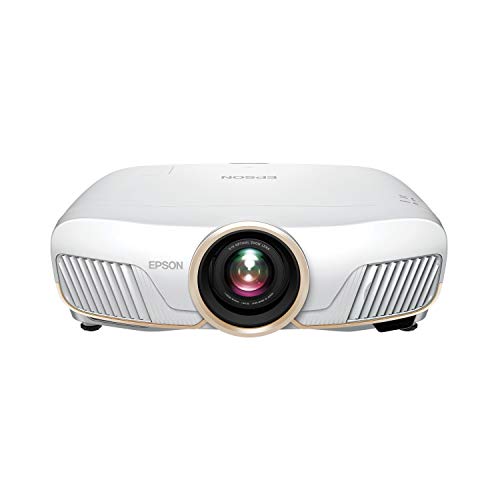
Epson Home Cinema 5050UB — Best Picture Quality
The 5050UB is the connoisseur’s entry and the technological dissenter of this group: a three-chip LCD projector in a DLP-dominated field, carrying Epson’s Ultra Black contrast engineering, a motorised lens with generous shift and memory positions, and a 3D performance that film forums have praised for years. It is large, heavy and entirely serious.
Contrast is the argument. Where DLP machines render night scenes as very dark grey, the 5050UB reaches toward genuine black, and in 3D that difference multiplies: depth depends on separating planes of light, and a projector that can place a dim foreground object against a truly dark background builds space the way cinematographers intended. Underwater sequences, spaceflight and noir all gain a dimension here that brightness alone cannot buy.
The three-chip design brings a second, quieter gift — no colour wheel, hence no rainbow artefacts for the significant minority of viewers who see them, and no sequential-colour compromises in motion. Epson’s colour brightness matches its white brightness, so saturated scenes hold their luminance instead of dimming politely. The machine’s 4K enhancement is a pixel-shifted approach rather than native UHD, a distinction visible mostly in test patterns and spec debates; on film, the contrast advantage outweighs it nightly.
Ownership is installation-grade. The motorised lens stores positions for different aspect ratios, a gift to constant-height screen owners, and the chassis expects a sturdy mount and a room that treats cinema as an appointment. Glasses for Epson’s RF-based ecosystem should be confirmed on the listing and bought generously, since this is a projector guests will ask to see again. For the collector whose 3D shelf is the pride of the house, the 5050UB is the page’s reference point.
The 5050UB’s lens memory deserves expansion because it changes the shape of a film collection’s presentation. Owners with wide screens can store one position for scope-ratio epics and another for academy-ratio classics, filling the screen correctly for each without manual refocusing rituals in the dark. In 3D, where many releases favour the wider canvas, that choreography feels like a private cinema’s projectionist rather than a consumer gadget, and it is a capability nothing else on this page offers at any price.
There is a patience to this projector’s image that rewards unhurried viewing. Its processing avoids the over-sharpened, edge-enhanced look that makes some digital projection feel electronic; grain in a photochemical transfer reads as grain, faces keep their texture, and depth planes separate with an analogue smoothness. Collectors whose shelves lean toward classic restorations and prestige transfers will recognise the sensibility immediately. It asks for the darkest room and the most careful setup here, and repays both with the most film-like evenings on the page.
A note for viewers who wear glasses: the 5050UB’s RF eyewear options include generously sized frames that sit over spectacles without the pressure points that ruin a long feature, and the projector’s brightness reserves let those viewers add the slight extra tint of their own lenses without penalty. Comfort inclusivity sounds like a footnote until a family member quietly stops attending film night; Epson’s ecosystem, chosen carefully, keeps the whole household in the room.
- Image: 4K enhanced via pixel shifting, 3LCD
- Output class: roughly 2,600 lumens, equal colour and white
- Placement: standard throw, motorised lens with shift and memory
- Light source: lamp, high-output cinema class
- Stereo: full 3D support, RF glasses ecosystem
Strengths
- Deepest blacks and most cinematic contrast here
- No rainbow artefacts, by three-chip design
- Lens memory and shift make installation luxurious
Trade-offs
- Big, heavy and priced like the flagship it is
- Lower peak output demands strict light control
- Glasses ecosystem differs from DLP-Link; verify before buying
Best for: dedicated cinema rooms and serious Blu-ray 3D collectors.
Not suited for: casual portable use or bright multipurpose rooms.

Optoma HD28HDR — Best Value
Every category needs the machine that makes the maths easy, and for 3D film that machine is the HD28HDR. It is a 1080p DLP projector with an unusually generous brightness rating, HDR signal acceptance and full stereoscopic support, sold at the kind of price that leaves budget for the screen, the glasses and the discs themselves. Collectors starting from zero should read that sentence twice, because the ecosystem around a projector costs real money.
On film, its personality is vivid clarity. The DLP image is sharp to the corners on a well-aligned setup, colours run lively rather than scholarly, and the output muscle is a genuine 3D asset: scenes that sink on dimmer rivals — a torchlit cave, a dusk canyon flyover — retain their layering here. Blacks are the expected DLP grey-black, acceptable in context and improvable with a grey screen in a room that cannot reach full darkness.
The 1080p ceiling deserves context rather than apology. Blu-ray 3D is itself a 1080p format, so for the core library this projector is, frame for frame, showing you everything the disc contains. Its limits appear on flat 4K material, where it downscales gracefully but cannot invent detail. A buyer whose week is mostly 3D discs and broadcast sport may never feel the lack; a buyer building around 4K streaming premieres should look up the page.
Day-to-day, it is a simple, light, well-understood box: quick to set up for a film night, easy to store between them, and supported by a vast owner community for every question from lamp sourcing to glasses pairing. In a category prone to exoticism, that normality is a feature. The HD28HDR is how most households should enter projected 3D, and many will find no reason to leave.
Budget honesty extends beyond the HD28HDR’s own price tag. Its lamps are among the more affordable genuine replacements in the class, its glasses are the common DLP-Link sort that friends may already own, and its modest size means a basic mount or even a shelf suffices. The whole cost of entering projected 3D — machine, screen, eyewear, player — stays within reach of a household that would laugh at the flagship route, and the experience delivered is not a diluted sample but the genuine article at 1080p.
It also forgives the learning curve of a first cinema. Alignment mistakes are visible but not catastrophic, the menus are short, and nothing about the machine intimidates a newcomer into leaving settings untouched for fear of breaking something expensive. That accessibility matters in a format kept alive by enthusiasts recruiting the curious: lend a friend this projector for a weekend and the format gains a household. The flagships impress; the HD28HDR converts.
There is a final, unfashionable virtue to record: the HD28HDR is easy to lend, easy to replace and easy to forgive. Projectors at this level get carried to parents’ houses, borrowed for weddings and pressed into service for a child’s birthday slideshow, and a machine that shrugs at that life while still anchoring a serious 3D shelf on weekends is a machine designed for how families actually live rather than how brochures imagine they do.
- Image: 1080p Full HD, single-chip DLP
- Output class: roughly 3,600 ANSI lumens
- Placement: standard throw, compact chassis
- Light source: lamp
- Stereo: full HD frame-packed 3D
Strengths
- Brightness per pound spent leads this page
- Native match for the Blu-ray 3D format itself
- Light, simple and community-supported
Trade-offs
- Flat 4K material is downscaled, not displayed natively
- Contrast is serviceable rather than cinematic
- Few smart features; sources are your responsibility
Best for: new collectors and value-led households building a first 3D setup.
Not suited for: 4K-first buyers who treat 3D as a minor extra.

Optoma GT1080HDR — Best for Small Rooms
The GT1080HDR exists because most homes are not shaped like cinemas. Its short-throw lens builds a screen-filling image from about a metre, so a spare bedroom, a student flat or the far end of a living room becomes a 3D venue without surrendering the room’s depth to a projector perched behind the sofa. For renters especially, that geometry is the difference between having projected 3D and reading about it.
Film behaviour mirrors its value sibling with the placement twist. Brightness is ample for glasses viewing at the screen sizes small rooms imply, DLP sharpness keeps animated detail crisp, and the near placement actually helps glasses sync, since the reflected signal travels a short, strong path. Motion in sweeping 3D shots — a camera diving through a canyon — stays coherent, provided the wall or screen is truly flat; at this throw angle, surface waves distort geometry cruelly.
The absence of meaningful zoom turns setup into a furniture measurement exercise: choose the image size, and the projector’s position is decided for you. Cables must reach the front of the room, and the low placement invites a soundbar beneath the screen to keep dialogue anchored where mouths move. None of this is difficult; all of it should be planned rather than discovered mid-installation.
As a second-room or first-flat cinema, the GT1080HDR has a charm the flagships cannot imitate: it asks almost nothing of the building. No mount, no drilling, no permanent claim on the room. When the film ends, the room returns to ordinary life in minutes, and the 3D library remains a cupboard shelf rather than an architectural commitment.
Small-room owners should think about seating as part of the GT1080HDR’s specification. Because the projector sits in front, the audience can sit closer to the screen than a long-throw layout allows without entering the beam, and closeness is exactly what 3D rewards — depth opens up as the image fills more of your vision. A two-metre screen viewed from two and a half metres is a genuinely enveloping cinema, achievable in a bedroom that a traditional setup would dismiss as impossible.
Heat and noise placement follow the same forward logic: the fan sits near the screen, away from ears, and its exhaust should not blow across the seating or onto the screen surface itself. A low, open cabinet shelf handles both, while also keeping the lens out of the reach of passing sleeves and curious pets. Attend to those domestic details and the little short-throw stops reading as a compromise for small spaces; it becomes the projector those spaces were waiting for someone to design.
Students and young renters, in particular, should recognise their circumstances in the GT1080HDR’s design: one room must be bedroom, study and cinema, the tenancy forbids screws, and the budget forbids flagships. This projector asks for a metre of floor and a flat wall and returns a film society. When the tenancy ends, it leaves in a box under one arm, and the deposit survives — a specification no flagship on this page can match.
- Image: 1080p Full HD, single-chip DLP
- Output class: roughly 3,800 ANSI lumens
- Placement: short throw, large image near one metre
- Light source: lamp
- Stereo: supported, DLP-Link glasses
Strengths
- Cinema scale in rooms that defeat standard throws
- Very bright for its class and price
- No installation permanence required
Trade-offs
- Surface flatness is unforgiving at short throw
- Fixed geometry replaces zoom convenience
- Front-of-room cabling needs a plan
Best for: small rooms, renters and spare-room cinemas.
Not suited for: uneven walls or buyers wanting placement freedom.

BenQ X3100i — Best LED Flagship
BenQ’s X3100i approaches 3D from the direction of permanence: an LED light source rated for years of service, wide colour coverage and a full modern feature set in a substantial chassis meant to be installed once and enjoyed for a very long time. Its gaming fame should not obscure its film credentials, which are considerable.
Colour is the experience. LED primaries render the saturated palettes of animated features and the teal-and-amber grades of modern blockbusters with a confidence that lamp machines approximate. In 3D, that colour stability across the light source’s life matters more than owners initially realise: the depth presentation you calibrate in year one is the presentation you still have in year four, undimmed by lamp ageing and unshifted by a replacement bulb’s slightly different character.
The 4K image carries fine detail well, and BenQ’s picture modes give film a calmer, more accurate trim than the brand’s gaming reputation suggests. Brightness is strong rather than class-leading, so screen size ambitions should stay sensible and the room should darken properly; within those courtesies, depth scenes hold together beautifully, with clean separation and minimal ghosting on all but torture-test material.
Ownership polish completes the case: capable built-in audio for casual viewing, a proper smart platform for the streaming half of the week, and power behaviour that feels appliance-like rather than ceremonial. The X3100i costs flagship money and occupies flagship space, but for a household consolidating films, depth library and everyday viewing into one permanent installation, it consolidates convincingly.
The X3100i’s relationship with games, though secondary in this guide, still enriches its film case: a household that plays will use the projector four nights a week instead of one, and a light source rated for years of such service removes the background anxiety that lamp owners feel during long sessions. The machine’s presence encourages use, and use is what justifies the room, the screen and the glasses collection around it. Appliances that invite daily life age into fixtures; appliances reserved for occasions age into cupboards.
Its audio, finally, is good enough to change small decisions. A late-night documentary or a dialogue-led drama can play through the built-in speakers without the small insult of television-thin sound, reserving the full receiver chain for the evenings that deserve it. That convenience, repeated hundreds of times, is how a flagship earns its place in a home rather than merely its price in a catalogue, and it is why the X3100i closes this list as the permanence pick.
BenQ’s colour work on the X3100i also flatters the oldest material in a 3D collection. Early digital animation and aggressively graded action releases can look brittle on projectors that chase brightness at colour’s expense; the LED engine holds their palettes together with a steadiness that feels almost restorative. A format library spans decades of mastering fashions, and the projector that treats all of them kindly is the one that stays at the centre of the room.
- Image: 4K UHD, single-chip DLP
- Output class: roughly 3,300 ANSI lumens
- Placement: standard throw, installation-oriented
- Light source: LED, long rated service life
- Stereo: supported within full feature set
Strengths
- Rich, stable LED colour across years of use
- No lamp changes or brightness decay curve
- Complete modern feature set in one chassis
Trade-offs
- Flagship pricing and physical size
- Brightness asks for a disciplined dark room
- Over-specified for purely occasional viewing
Best for: permanent installations and colour-led film lovers.
Not suited for: portable use or the tightest budgets.
How Do the Six Compare Side by Side?
| Pick | Technology | Placement | Light source | Signature virtue |
|---|---|---|---|---|
| AWOL LTV-3000 Pro | Tri-laser DLP | Ultra-short | Triple laser | Mount-free flagship scale |
| BenQ TK700 | DLP | Standard | Lamp | Versatility |
| Epson 5050UB | 3LCD | Standard | Lamp | Contrast and blacks |
| Optoma HD28HDR | DLP | Standard | Lamp | Value brightness |
| Optoma GT1080HDR | DLP | Short | Lamp | Small-room access |
| BenQ X3100i | DLP | Standard | LED | Colour permanence |
How Should You Assemble a Complete 3D Film Setup?
Work backwards from the disc. The player must output frame-packed 3D, which most UHD and Blu-ray players of the last decade do, but streaming sticks largely do not — a fact that surprises buyers who assumed every HDMI source was equivalent. Keep a dedicated player in the rack for the depth library even if streaming handles everything else, and confirm the receiver in the middle passes 3D untouched; older AV receivers occasionally block what they cannot decode.
Glasses logistics deserve a system, not a drawer. Charge or battery-check every pair before a planned screening, store them in cases away from sunlight, and keep a written note of which standard each pair follows if your household somehow owns two ecosystems. A guest handed dead glasses during the opening reel becomes a flat viewer with a grudge, and the film’s best sequence does not wait for a charging cable.
Calibrate a dedicated 3D picture memory on the projector: brighter than your flat settings, slightly warmer if the glasses tint cool, with motion processing set to whatever your eyes forgive — many viewers prefer it off for film grain integrity. Label that memory clearly. The difference between a household that uses 3D monthly and one that abandons it is usually the ninety seconds of menu friction at the start of each attempt.
What Should Collectors Verify Before Spending?
Verify the format list against your own library. A shelf heavy with imported discs should prompt a region conversation about the player, not the projector, while a library of side-by-side broadcast recordings relaxes the frame-packing requirement entirely. Verify glasses availability for the specific model in your country, because a projector whose glasses have vanished from sale is a depreciating promise.
Verify, too, your tolerance for each technology’s signature. Rainbow-sensitive viewers should audition single-chip DLP with a night scene before committing, or default to the Epson. Brightness-sensitive rooms should favour the Optomas’ output or the AWOL’s muscle. These are not flaws to rank but fits to match, and an honest hour spent matching them saves a return shipment of a very large box.
How Does Crosstalk Happen, and How Do You Minimise It?
Crosstalk — ghosting, in everyday language — occurs when each eye catches a residue of the image meant for the other. Its causes stack: a display that switches too slowly, glasses whose shutters lag the signal, a source with exaggerated depth settings, and sheer brightness pushing a panel or chip beyond its clean range. The symptom is unmistakable, a faint doubled edge around high-contrast foreground objects, and it is the single most common reason newcomers conclude that home 3D is simply poor.
The cure is methodical rather than expensive. Begin with the source’s depth or convergence controls at their defaults, because aggressive settings manufacture ghosting no display can hide. Confirm the projector’s 3D mode matches the incoming format instead of relying on automatic detection during a dark scene. Reduce brightness a notch if highlights bloom into ghosts; the shutter tax means owners habitually overdrive the lamp, and a small retreat often cleans the image while barely touching perceived depth. Finally, judge with a familiar disc whose mastering you trust, so the variable under test is your room rather than somebody’s rushed conversion.
DLP’s switching speed gives the technology a head start here, which is one reason five of these six picks share it, while the Epson demonstrates that careful three-chip engineering can compete honourably. Either way, a well-set example of any projector on this page will show less ghosting in a month of viewing than a badly set flagship shows in an evening.
Why Does the Screen Gain Matter More in 3D Than in Flat Viewing?
Gain describes how a screen concentrates light back toward the audience, and in flat viewing it is mostly a brightness preference. Behind shutter glasses it becomes a survival calculation. A unity-gain surface returns the projector’s taxed output honestly across a wide seating area; a high-gain surface can rescue the centre seats of a dim setup while stranding side seats in falloff and colour shift, an ugly trade for a family sofa. Grey materials complicate the equation productively, sacrificing a little peak light for contrast that survives imperfect darkness.
The practical method is unglamorous: decide your screen size from the seating, choose the projector whose honest output serves that size through glasses, and only then let gain fine-tune the result. Owners who reverse the order — buying a huge screen first and shopping for gain to rescue it — end up with hotspots, narrow viewing cones and a permanent suspicion that 3D is dimmer than it should be. In truth it is exactly as bright as their arithmetic made it.
How Should You Care for Glasses, Lamps and Lenses Over the Years?
Glasses are optical instruments worn on faces, and they reward being treated as both. Clean lenses with a microfibre cloth rather than a sleeve, store pairs in hard cases rather than loose in a media drawer, and keep rechargeable models topped up monthly even in quiet periods, because deep discharge is what quietly kills their cells between seasons. Label each regular viewer’s pair; fit is personal, and a household that respects that fact has fewer abandoned sessions.
Lamp owners should log hours and buy the genuine replacement before the warning light forces a panic purchase at the worst price and the slowest shipping. LED and laser owners trade that ritual for filter discipline: the intake filters on this page’s solid-state machines are small, quick to clean and entirely responsible for whether the engine still breathes freely in year five. Lenses, finally, want almost nothing — a blower, a soft cloth, no solvents, no enthusiasm. The projector that receives this modest care returns the compliment by simply working, screening after screening, while its neglected twin becomes a forum post.
What Mistakes End Most 3D Film Nights Early?
Undercharging the glasses is the champion of ruined evenings, followed closely by discovering that the receiver was silently converting the signal. Test the full chain on a quiet afternoon, end to end, with the actual disc you plan to show. The second mistake is ambient light optimism: a room that feels dark for flat viewing can still wash a shutter-dimmed image into fog, so judge darkness only through the glasses themselves.
Third, owners neglect the spare pair. Glasses get sat on, borrowed and left at other houses; a household with exactly enough pairs has a screening cancelled by arithmetic. Finally, do not judge the format on a poor transfer. A handful of early, rushed 3D conversions poison first impressions unfairly; begin with a natively shot or carefully authored favourite and let the technology present its real case.
Sound, finally, is the silent partner of projected depth, and it deserves budget before any projector upgrade tempts you. A modest surround arrangement, honestly placed, does more for the sensation of occupying a scene than a thousand extra lumens, because the ears believe space faster than the eyes do. The households that describe their 3D evenings as unforgettable are almost always describing, without realising it, a room where the audio geometry and the visual geometry agree — voices anchored to the screen, weather wrapped around the seating, and silence that is genuinely silent between the two.
How Do You Judge a 3D Projector in the First Fortnight?
Resist judging on unboxing night, when novelty flatters everything and the room is still wrong. Instead, run a deliberate fortnight: one natively authored favourite to establish the ceiling, one ordinary catalogue title to establish the average, one dark scene you know intimately from flat viewing to interrogate the blacks, and one session with guests whose reactions will tell you more about comfort and glasses fit than any menu can. Keep brief notes after each — brightness impressions, ghosting moments, fan intrusions — because memory rewrites first impressions within days.
By the second week, adjust exactly three things: the 3D picture memory’s brightness against your darkest test scene, the seating distance by half a metre in whichever direction your notes argue for, and the depth setting at the source if ghosting appeared where the disc is blameless. Then stop adjusting. A projector perpetually being tuned is a hobby; a projector tuned and trusted is a cinema, and the distinction decides whether the household’s 3D shelf grows or gathers the particular dust of good intentions.
What Does a Sensible Upgrade Path Look Like From Here?
Few households should buy their final projector first. The natural path through this page runs from access to refinement: a bright value DLP teaches a household its own habits — which screen size the room loves, how often the glasses genuinely come out, whether darkness discipline survives a summer of light evenings. Those answers, learned cheaply, make the second purchase precise rather than hopeful, and the first machine retires honourably to a bedroom or a relative’s house instead of a cupboard.
The upgrade triggers worth respecting are specific. Move up when contrast, not brightness, is what your diary of complaints records; when the library has grown into wide-ratio presentations that a lens-memory machine would transform; or when the room itself changes and a different throw geometry becomes the honest answer. Move sideways, to UST or short throw, when furniture and architecture argue, not fashion. And keep the glasses and screen across the upgrade whenever standards allow, because the ecosystem around the projector is the part of the investment that compounds.
What should not trigger an upgrade is a specification headline untethered from your shelf. A projector is a servant to a particular collection in a particular room, and the six machines here already span that service from a student’s metre of wall to a collector’s dedicated cinema. Buy the one whose compromises you will never meet in your own viewing, and the format will reward you every time the lights go down.
Final Recommendation
For the dedicated cinema room, the Epson 5050UB remains the connoisseur’s instrument, its blacks giving depth a foundation no rival here matches. For everyone whose room must stay a room, the AWOL LTV-3000 Pro delivers the most startling modern version of the experience, while the TK700 quietly serves the broadest set of households. The two Optomas democratise the format honestly, and the X3100i suits the buyer installing for a decade.
Choose by room first and by romance second, set the chain up once with care, and a format the industry declared finished will keep producing the most memorable evenings in your house — the aeroplane wing over the sofa, the reef around the armchair, the starship arriving in the wall. Projected depth, properly kept, is not nostalgia. It is cinema keeping a promise television broke.
A closing observation about value belongs in any honest account of this category. Projected 3D is one of the few home-entertainment experiences that has become rarer as it has become better: the surviving projectors are mature, the discs are mastered, the glasses are comfortable, and the audience is self-selected for people who genuinely love the effect. Scarcity has filtered the category down to its believers, and the equipment on this page serves them without the compromises of the format’s mass-market years. If you are among those believers, there has never been a better-engineered moment to build the room — only a quieter one, which for film lovers may be the same thing.
What Else Should a 3D Collector Ask Before Ordering?
Should I keep my old television for flat viewing?
Many households do, and the arrangement is healthier than it sounds. The television absorbs news, daytime sport and children’s morning viewing, sparing the projector’s lamp or light engine for the evenings that justify it, while the big screen keeps its sense of occasion. A projector used for everything wears toward ordinariness; a projector reserved for films stays an event, and 3D in particular benefits from remaining slightly ceremonial.
How large a library justifies a dedicated 3D projector?
Smaller than sceptics assume. A shelf of twenty beloved titles, revisited across years and shared with guests, already justifies a value model from this page, because those evenings cannot be replicated by any other device in the house. Collectors measure value in irreplaceable experiences rather than hours logged, and by that accounting the format pays for itself with startling speed.
Does screen size change which pick is right?
Profoundly. Beyond roughly three metres of width, brightness arithmetic promotes the AWOL and the brighter DLP models and asks hard questions of the Epson unless the room is a true cave; below two metres, every machine here is comfortably fed and contrast, colour and geometry should decide instead. Measure your intended width before falling in love with any badge.
Are children comfortable with active 3D glasses?
Most are, in shorter sessions and with lighter, smaller frames chosen for them rather than adult pairs balanced on small noses. Keep early sessions brief, watch for squinting or complaints, and treat flat viewing as an equally welcome choice at family screenings.
Frequently Asked Questions
Are Blu-ray 3D discs still playable on modern players?
Yes. Most UHD Blu-ray and standard Blu-ray players retain frame-packed 3D output for the older format, even though new releases have dwindled. Keep a known-good player in your rack and the existing library remains fully alive on any projector in this guide.
Why do manufacturers quote brightness that 3D never seems to reach?
The quoted figure describes flat viewing under test conditions. Shutter glasses then remove a large share of that light by design, and screen distance removes more, which is why this guide treats output headroom as the category’s first virtue.
Can I watch 3D on a plain wall?
You can, and texture, colour tint and seams will all tax the illusion. A modest fixed screen improves depth stability more than a model upgrade would, and ultra-short-throw owners should treat a proper screen as compulsory rather than optional.
Do all viewers see projected 3D equally well?
No. A minority of people have limited stereo vision and will perceive little depth regardless of equipment, and others find extended sessions tiring. Hosts should always keep flat viewing graceful and unembarrassed; the film matters more than the format.
Is DLP or LCD better for 3D?
DLP offers fast, clean image separation and dominates the market; the Epson’s three-chip design counters with superior blacks and no rainbow artefacts. The better technology is the one whose signature compromise your eyes forgive.
What happens when a lamp model reaches the end of its bulb?
You replace the lamp module, ideally with a genuine unit bought before the old one fails, and the projector returns to full brightness. LED and laser models avoid the ritual entirely at the cost of a higher purchase price.
Can these projectors convert an ordinary 2D film into 3D?
Some models offer a conversion mode that invents depth from a flat picture, and it is worth trying once on a landscape documentary or a slow sporting broadcast, where separated foreground and background give the algorithm something plausible to work with. Treat it as a novelty rather than a viewing mode, though. Faces stretch oddly, subtitles float at the wrong depth, and busy action scenes dissolve into guesswork. A converted evening rarely persuades anyone; a genuine 3D disc, properly mastered, remains the experience this category exists to deliver.
Related Guides
Pair this roundup with our home cinema screen selection guide, the projector placement and throw explainer, and our guide to building a physical media corner.



[…] with our guide to gaming projector setup, compare flat performance in the 4K gaming projector roundup, and read the room-darkening basics […]