What's inside
- Key Takeaways
- Quick Picks
- How We Chose These Picks
- Comparison Table
- Clamshell or Convertible: Which Hinge Matches Your Life?
- What Do People Actually Do With a Touchscreen Laptop?
- How Do You Keep a Touchscreen Laptop Working Well?
- What Screen Size Suits Touch Best?
- Common Mistakes When Buying a Touchscreen Laptop
- Final Recommendation
- Frequently Asked Questions
- Related Guides
As an Amazon Associate I earn from qualifying purchases. This post may contain affiliate links at no extra cost to you.
widgetverdict.com is reader-supported. When you buy through links on our site, we may earn an affiliate commission.
The best affordable touchscreen laptops divide into two species that marketing loves to blur, and this guide exists to unblur them. Three of the six picks are touch clamshells — ordinary laptops whose screens accept fingers, ideal for tapping, scrolling and signing without changing how the machine sits on a desk. The other three are 2-in-1 convertibles whose hinges fold the keyboard away entirely, turning the laptop into a tablet for reading, presenting and annotating. Each species suits a different life, and each pick below is labelled with its true form factor exactly as its listing title supports, because a buyer who orders a clamshell expecting a convertible — or the reverse — has been failed by somebody’s copywriting.
Sizes and budgets spread sensibly across the divide. The clamshells are all 15.6-inch machines from Lenovo, HP and Acer, built around AMD Ryzen or mainstream processors with 8GB or 16GB of memory. The convertibles are 14-inch HP models and a flagship-grade 16-inch Lenovo Yoga 7i with a 2K screen, 16GB of memory and a terabyte of storage. Resolution runs from the HP clamshell’s HD panel — the guide’s one real display compromise, named as such — through full HD to the Yoga’s 2K. Every listing is read strictly by its title, so where a title says 2-in-1, the review explores tablet modes; where it does not, the review promises a hinge that opens and a screen that touches, nothing more.
Touch itself deserves a sentence of framing before the reviews. Nobody needs touch on a laptop; millions of people, once they have it, use it constantly — for the scroll that feels direct, the form that needs a signature, the map that wants a pinch, the presentation that reads better standing. The question is never whether touch is essential but whether the buyer’s habits will touch back, and the form-factor question — clamshell or convertible — is simply that question asked at the level of the hinge.
A word about the guide’s title word — affordable — in a category where it can mislead. Touch adds cost to any laptop, and a folding hinge adds more, so the affordable touchscreen tier is not the floor of the laptop market; it is the floor of the touch market, the level at which the screen, the memory and the build stop being apologies. The six machines here occupy that floor honestly, from the deliberately simple HP clamshell to the Yoga that leans against the ceiling of what “affordable” can mean. Buyers should read the prices in that light — check price on Amazon for each configuration — and judge the premium over a non-touch equivalent as the price of the interaction style itself.
Key Takeaways
- Three picks are touch clamshells: the Lenovo IdeaPad Slim 3, the HP 15.6 and the Acer Aspire Go 15, all at 15.6 inches.
- Three picks are true 2-in-1 convertibles: the HP Pavilion x360, the Lenovo Yoga 7i and the HP Envy x360.
- The Yoga 7i is the flagship of the six — 16-inch 2K touchscreen, Core Ultra 7 155U, with a 1TB PCIe 4.0 SSD alongside its 16GB of DDR5 memory.
- The HP 15.6 clamshell carries the guide’s only HD (non-full-HD) touchscreen, the clearest compromise in the roundup.
- Memory splits evenly: the IdeaPad, Aspire Go and Yoga carry 16GB; both HP convertibles and the HP clamshell carry 8GB.
- Only the Yoga 7i lists Windows 11 Pro and Thunderbolt 4; the other five run Windows 11 Home per their titles.
Quick Picks
| Pick | Badge | Why it earns a place |
|---|---|---|
| Lenovo IdeaPad Slim 3 (2025) | Clamshell with memory | A 15.6-inch FHD touchscreen with 16GB of memory — the strongest clamshell platform here. |
| HP 15.6 Touchscreen | Entry touch laptop | Ryzen 5 7520U and a 512GB drive behind an HD touchscreen for basic touch duties. |
| Acer Aspire Go 15 Touch | Backlit clamshell | 16GB of memory, a backlit keyboard and an FHD touchscreen in Acer’s Go line. |
| HP Pavilion x360 14 | Compact convertible | A 14-inch 2-in-1 with an IPS FHD touch panel and a Core i5-1235U. |
| Lenovo Yoga 7i 2-in-1 | Flagship convertible | A 16-inch 2K touchscreen, Core Ultra 7 power, 1TB of storage and Thunderbolt 4. |
| HP Envy x360 14 | Premium-feel convertible | An Envy-line 2-in-1 with an FHD IPS touch panel, fingerprint reader and backlit keys. |
How We Chose These Picks
Form factor came first and was verified listing by listing, because it is the one attribute a buyer cannot change later. A title that says 2-in-1 — all three convertible picks say it — promises a hinge that folds through tent and tablet positions. A title that says touchscreen without 2-in-1 language promises a clamshell with a touch panel, and the reviews hold those machines to exactly that promise. Buyers comparing across the divide should decide the hinge question before comparing anything else; a convertible’s flexibility and a clamshell’s simplicity are philosophies, not features that can be ranked on one scale.
Panels were graded next, with resolution treated as the honesty test. Full HD is the sensible floor for a touchscreen that will be read at arm’s length, and five picks meet it or beat it — the Yoga’s 2K panel topping the table. The one HD panel, on the HP 15.6, is included because its price position and simple specification serve a real audience, but its review states the compromise in the first paragraph rather than the last: text and interfaces will look softer, and buyers who read documents all day should step up to any FHD pick instead.
Platforms were sorted into the familiar tiers. Sixteen gigabytes of memory — IdeaPad, Aspire Go, Yoga — is the comfortable allocation for a machine that will multitask for years; 8GB, on the two HP convertibles and the HP clamshell, suits lighter single-purpose use and is flagged wherever it appears. Storage is 512GB almost everywhere, with the Yoga’s 1TB the exception, and processors range from the HP clamshell’s entry Ryzen 5 7520U to the Yoga’s Core Ultra 7 155U — a spread the reviews map to real workloads rather than to abstract rankings.
Finally, the guide checked the details that decide daily satisfaction with a touch machine: backlit keyboards (Aspire Go, Yoga, Envy), fingerprint readers (Yoga, Envy), port selection, and the operating system — Pro only on the Yoga, Home everywhere else. Touch laptops are bought for how they feel at 7pm on a sofa as much as for any specification, and the reviews keep returning to that lived experience because it is where these machines are actually judged.
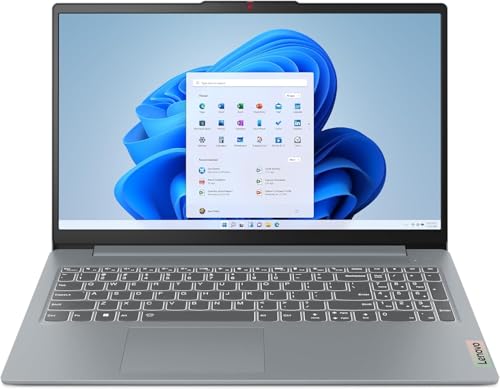
Lenovo IdeaPad Slim 3 (2025) — Clamshell with memory
Form factor, stated plainly as this guide promises: the IdeaPad Slim 3 is a touch clamshell. Its 15.6-inch full HD screen accepts touch input; its hinge behaves like a laptop hinge; it does not fold into a tablet, and this review will not imply otherwise. What it offers instead is the strongest clamshell platform in the roundup — an AMD Ryzen 7 5825U eight-core processor, Radeon graphics, 16GB of DDR4 memory and a 512GB SSD, with Wi-Fi 6, Bluetooth 5.2, a 720p HD camera and Windows 11 Home.
That specification makes it the touch laptop for people whose work is ordinary but voluminous. Sixteen gigabytes is double the allocation of the HP clamshell and both smaller convertibles, and it shows in the texture of a day: a browser that never needs its tabs culled, a spreadsheet beside a document beside a video call, all live at once. The Ryzen 7 5825U is a proven eight-core chip from AMD’s earlier generation — not the newest silicon here, but a known quantity with the core count to keep multitasking smooth.
Touch on a machine like this earns its place in the small moments. Scrolling a long document with a thumb while the other hand holds coffee. Tapping through a photo set. Signing the PDF the school sent. Zooming a spreadsheet cell that the trackpad made fiddly. None of these requires a folding hinge, and all of them happen weekly in a normal household or home-office life — which is the honest case for the touch clamshell as a category: most of touch’s value, none of the convertible’s cost or complexity.
The compromises are generational rather than structural. DDR4 memory and a 720p camera mark the platform as last-generation in its details, and Wi-Fi 6 rather than anything newer keeps it a step behind the Yoga. Buyers who video-call daily may notice the camera; buyers who mostly type, browse, organise and occasionally touch will notice only the competence.
Against the Acer Aspire Go that shares its tier, the IdeaPad trades the backlit keyboard for the stronger processor generation story and Lenovo’s Slim line polish; against the HP clamshell it is simply more machine everywhere except price position. For a buyer who has decided on a clamshell — the correct decision for most desk-and-sofa lives — this is the one to beat.
There is a family-laptop reading of this machine worth stating, because the Slim 3’s specification suits the shared-household role better than its businesslike looks suggest. Sixteen gigabytes means the machine does not punish the next user for the previous user’s open tabs; the big FHD screen makes it the natural machine for the video call with relatives, the shared photo sort, the homework portal and the household accounts — in sequence, in one evening, without a restart or a complaint. Touch lowers the drawbridge for the least technical member of the household, and the Ryzen’s eight cores keep the whole rotation feeling instant. Many families buy exactly one “good laptop”; if it should also be the touch laptop, this is the configuration that will still feel good in its third year of shared service.
- Form factor: touch clamshell
- Processor: AMD Ryzen 7 5825U, 8-core
- Graphics: AMD Radeon
- Memory: 16GB DDR4
- Storage: 512GB SSD
- Display: 15.6-inch FHD touchscreen, 1920 x 1080
- Operating system: Windows 11 Home
Strengths
- 16GB of memory is the best clamshell allocation here.
- An eight-core Ryzen 7 keeps heavy multitasking smooth.
- Full HD touch covers everyday gestures without compromise.
Trade-offs
- The hinge does not fold — no tablet or tent modes.
- DDR4 memory and a 720p camera date the platform details.
- No backlit keyboard is named in the listing.
Best for: home-office and family buyers wanting touch on a strong, simple 15.6-inch laptop.
Not suited for: buyers who need tablet mode, tent mode or pen-on-glass workflows.

HP 15.6 Touchscreen — Entry touch laptop
The honesty paragraph comes first this time, because this pick’s defining fact is its screen: an HD touchscreen, not full HD. On a 15.6-inch panel, HD resolution renders text and interface edges noticeably softer than the FHD picks around it, and a buyer who reads documents for a living should hear that before anything else. What the HP offers in exchange is the entry position of the guide — a Ryzen 5 7520U processor, 8GB of memory, a 512GB SSD, Radeon graphics and Windows 11 Home in a Natural Silver clamshell — a simple, complete touch laptop for light duties.
Those light duties are real and numerous. The kitchen-counter laptop that runs recipes, video calls with family, the household budget and a child’s homework portal does not need full HD or 16GB; it needs to wake quickly, touch responsively and survive being the family’s shared machine. The 512GB drive is genuinely generous for that role — double what many entry machines offer — and the Ryzen 5 7520U, an efficiency-focused quad-core design, keeps the machine quiet and cool through exactly the bursty, browser-led work the role involves.
Touch, at this level, is arguably worth more than resolution. A shared household machine gets used by hands of every age and confidence level, and direct manipulation — tap the thing you want — is the interface everybody already knows from phones. Grandparents video-calling, children on homework portals, a parent signing a school form: the touchscreen collapses the learning curve that a trackpad imposes, and that accessibility is this laptop’s true specification.
Set against its own guide-mates, the limits are clear. Eight gigabytes of memory will show its ceiling if the machine graduates to heavier multitasking; the HD panel will always be the softest screen here; the listing names no backlit keyboard. It is a first touch laptop, a second household laptop, a gift laptop — categories where simplicity and completeness beat sharpness — and within them it is well judged.
How long the screen will spend showing documents, rather than video or a browser’s front page, is the deciding test for this HP. If the answer is “in passing”, the HP’s compromises stay theoretical. If the answer is “all day”, the FHD picks repay their premium every single hour, and this machine should be admired for its honesty and passed by.
Gift buyers should linger on this pick a moment, because it solves the gift problem unusually well. A touchscreen laptop given to a parent, a teenager or a returning student succeeds or fails on first-week friction, and the HP minimises it: big screen, direct touch, nothing to configure beyond an account, storage that will not embarrass anyone for years. The HD panel that a professional would reject is, in the gift context, a trade the recipient will likely never notice against the machine’s general ease — while the giver should still make the trade knowingly, which is why this review placed it first rather than last.
- Form factor: touch clamshell
- Processor: AMD Ryzen 5 7520U
- Graphics: AMD Radeon
- Memory: 8GB RAM
- Storage: 512GB SSD
- Display: 15.6-inch HD touchscreen
- Operating system: Windows 11 Home
Strengths
- The simplest complete touch laptop in the guide.
- A 512GB drive is generous for an entry machine.
- Touch makes it accessible to every age in a household.
Trade-offs
- HD resolution is visibly softer than the FHD picks.
- 8GB of memory limits serious multitasking growth.
- An efficiency processor suits light duties, not heavy ones.
Best for: shared household laptops, first touch laptops and light everyday duties.
Not suited for: all-day document reading, or buyers who will grow into heavy multitasking.

Acer Aspire Go 15 Touch — Backlit clamshell
Acer’s Aspire Go 15 is the second touch clamshell with a full platform: a 15.6-inch FHD touchscreen, an AMD Ryzen 5 processor, 16GB of memory and a 512GB SSD, with Wi-Fi 6, an HDMI port, a webcam and — the detail that lifts it — a backlit keyboard. The Go line is Acer’s value range, and this configuration shows the range at its most sensible: nothing exotic, everything present, touch included.
The backlit keyboard deserves its emphasis because it is the feature buyers forget to check and then miss nightly. Touch laptops migrate — desk to sofa to bed to a dim kitchen — and in the dim places a backlit keyboard is the difference between typing and hunting. Neither HP clamshell rival nor the IdeaPad names one in its listing; the Aspire Go does, and for evening users that single line may outweigh every other difference in the clamshell trio.
HDMI in the listing extends the machine’s social life: the family laptop that drives the television for photos and films, the home worker’s second screen, the presentation in a room with a projector. Wi-Fi 6 covers modern home networks. The Ryzen 5 here is unspecified by model number in the title — a small honesty note: this guide grades it as a current mainstream Ryzen 5 and directs buyers who care about the exact chip to the product page, rather than guessing a generation the listing did not print.
With 16GB of memory the Aspire Go matches the IdeaPad’s multitasking tier, and its FHD panel matches the IdeaPad’s sharpness, which sets up the guide’s cleanest clamshell duel. The Lenovo counters with an eight-core Ryzen 7 of a named generation and its Slim-line finish; the Acer counters with the backlit keyboard, the named HDMI port and the Go line’s value positioning. Households choosing between them are choosing between processor pedigree and evening practicality — both defensible, neither wrong.
As with both clamshell rivals, the hinge is a hinge: no folding, no tablet mode, no tent. Buyers who have read the convertible reviews below with longing should not talk themselves into this machine for its keyboard. Buyers who know their touch use is taps and scrolls at a desk or on a lap will find the Aspire Go the most thoughtfully finished of the three clamshells.
Small-business buyers form another quiet constituency for this machine. A café owner doing the accounts after close, a tradesperson invoicing from the van’s passenger seat turned desk, a market trader reconciling the day on the train home — each works in imperfect light, in short bursts, on a machine that must simply keep up. The Aspire Go’s backlit keys, healthy memory and big touchable screen fit that working pattern with unusual precision for a value line, and its HDMI port doubles it as the shop’s display driver when needed. Value lines are often where thoughtful configuration goes to hide; this is one of those hiding places.
- Form factor: touch clamshell
- Processor: AMD Ryzen 5
- Memory: 16GB RAM
- Storage: 512GB SSD
- Display: 15.6-inch FHD touchscreen
- Ports named in listing: HDMI
- Operating system: Windows 11 Home
Strengths
- A backlit keyboard suits the evening places touch laptops migrate to.
- 16GB of memory and an FHD panel match the tier’s best.
- HDMI connects televisions and projectors without adapters.
Trade-offs
- The exact Ryzen 5 model is not stated in the listing title.
- No folding hinge — clamshell duties only.
- It shares its tier’s 512GB storage ceiling.
Best for: evening and sofa users, with touch, ample memory and a keyboard visible in the dark.
Not suited for: tablet-mode readers, or buyers who need the exact processor model confirmed by the title.

HP Pavilion x360 14 — Compact convertible
Now the hinge changes. The Pavilion x360 is a genuine 2-in-1: a 14-inch IPS touchscreen at full HD that folds through laptop, tent and tablet positions, driven by an Intel Core i5-1235U with Iris Xe graphics, 8GB of memory and a 512GB PCIe SSD under Windows 11 Home. The Pavilion line is HP’s mainstream range, and this is the mainstream convertible formula — the folding laptop as an everyday object rather than a premium statement.
Tablet mode on a 14-inch machine has a specific, lived character worth describing honestly. Folded flat, the x360 is a reading and browsing surface of generous size — recipes on the counter in tent mode, documents and comics in tablet mode, video propped anywhere. It is heavier and thicker than a dedicated tablet, because it is a whole laptop folded in half, and buyers should expect that: the convertible bargain is one device doing both jobs well, not either job perfectly.
The platform is the mainstream tier and is graded as such. The i5-1235U is an efficiency-era processor that handles browsing, documents, media and light creative work with ease; Iris Xe graphics are integrated and adequate for the same. Eight gigabytes of memory is the figure that will age first — fine for the convertible’s natural single-tasking rhythm, tighter for the desktop-style multitasking the 16GB picks absorb. The 512GB PCIe SSD is the full mainstream allocation.
Who is it for? The student whose laptop becomes a reading tablet in the evening. The professional who presents standing, screen folded into a tent on the client’s desk. The household that wants one device by the sofa that is sometimes a laptop and sometimes a big, capable tablet. In each scene the Pavilion’s ordinariness is the virtue: a known brand’s mainstream convertible, specified without surprises, at the affordable end of its category.
Its rivals within the guide sharpen the choice. The Envy x360 adds HP’s premium line finish, a fingerprint reader and a backlit keyboard at the same screen size; the Yoga 7i doubles memory and storage and enlarges everything. The Pavilion is the convertible for buyers who want the folding life without paying for its refinements — a legitimate and popular place to stand.
Tent mode deserves a paragraph of its own, because it is the convertible position newcomers underestimate and owners end up using most. Folded into its inverted V, the Pavilion stands on a kitchen counter through a flour-dusted recipe session, on a tray table through a film, on a desk edge through a video call that needs the camera high and the keyboard gone. It is the mode that turns a laptop into furniture — present, stable, screen-forward — and it asks nothing of the user beyond the fold itself. Buyers who cannot picture tent mode in their week should test the picture honestly before paying for any hinge; buyers who can picture it three times have already justified this machine.
- Form factor: 2-in-1 convertible
- Processor: Intel Core i5-1235U
- Graphics: Intel Iris Xe
- Memory: 8GB
- Storage: 512GB PCIe SSD
- Display: 14-inch IPS touch, Full HD 1920 x 1080
- Operating system: Windows 11 Home
Strengths
- True 2-in-1 folding at the mainstream position.
- An IPS FHD panel reads well in every folded position.
- The 14-inch size keeps tablet mode manageable.
Trade-offs
- 8GB of memory is the convertible tier’s ceiling to watch.
- Folded tablet mode is thicker than a dedicated tablet.
- No fingerprint reader or backlit keyboard is named.
Best for: students and presenters wanting a first convertible for reading, tent and tablet use.
Not suited for: heavy multitaskers, or buyers expecting dedicated-tablet thinness.

Lenovo Yoga 7i 2-in-1 — Flagship convertible
The Yoga 7i is the machine the rest of this guide is measured against: a 16-inch 2K touchscreen in a 2-in-1 chassis, an Intel Core Ultra 7 155U processor, 16GB of DDR5 memory, a 1TB PCIe 4.0 SSD, Wi-Fi 6E, a backlit keyboard, a fingerprint reader, Thunderbolt 4, a webcam, a numeric keypad and Windows 11 Pro — the listing even bundles an HDMI cable. Every line a buyer could ask a title to confirm, this title confirms. It is the flagship convertible of the roundup and priced-positioned accordingly within the affordable touchscreen category’s upper reach.
Start with the screen, because a 16-inch 2K touch panel that folds is a genuinely versatile instrument. In laptop mode it is a big, sharp editing and document canvas. In tent mode it is a presentation surface that stands on a desk and invites a finger. In tablet mode — and 16 inches folded is a commitment, best on a lap or a table rather than one-handed — it is a reading and annotation board of luxurious size, the closest thing here to a digital desk pad. Photographers culling, teachers annotating, consultants sketching through a problem with a client: the Yoga’s screen serves all of them at a scale the 14-inch convertibles cannot.
The platform matches the panel’s ambition. Sixteen gigabytes of DDR5 and a terabyte of fast storage remove the ceilings that shadow the other convertibles; the Core Ultra 7 155U is a current-generation processor; Thunderbolt 4 opens docking and fast drives; the fingerprint reader and backlit keyboard cover the daily rituals. Windows 11 Pro makes it the only pick here that a business can deploy without an edition conversation.
Honesty requires the size caveat in full: a 16-inch convertible is a laptop first and a tablet by courtesy. Its tablet mode is for laps, tables and two hands, and buyers whose mental image is a one-handed reading device should scale down to the 14-inch HP convertibles and accept their smaller platforms. The Yoga’s fold is about versatility at a desk and in a meeting, not about replacing a paperback-sized reader.
For buyers who want one machine that does the most things at the highest level in this guide — biggest screen, sharpest panel, deepest specification, folding hinge, Pro system — the Yoga 7i is not merely the recommendation but the definition of the category’s top. Check price on Amazon, because flagship convertibles move around their tier; then buy it as the long-term machine it is specified to be.
Teachers and trainers form a natural audience that the specification seems almost designed for. The Yoga presents in tent mode to a small group, annotates in tablet mode while walking the room, grades at a desk in laptop mode with the numeric keypad earning its place in the mark book, and docks through Thunderbolt when the classroom or office offers a big screen. Each mode answers a real hour of the teaching week, and the 2K panel keeps shared content legible from the back of a small room. Machines that serve several professions at once often serve none of them well; the Yoga escapes that trap because its modes are the same tool at different angles, not different tools competing inside one chassis.
- Form factor: 2-in-1 convertible
- Processor: Intel Core Ultra 7 155U
- Memory: 16GB DDR5
- Storage: 1TB PCIe 4.0 SSD
- Display: 16-inch 2K touchscreen
- Ports named in listing: Thunderbolt 4, HDMI cable bundled
- Operating system: Windows 11 Pro
Strengths
- A 16-inch 2K folding screen is the guide’s most versatile canvas.
- 16GB of memory and 1TB of storage remove platform ceilings.
- Thunderbolt 4, fingerprint reader and Pro Windows complete the spec.
Trade-offs
- Sixteen inches folded is a two-handed tablet experience.
- It tops the guide’s affordable touchscreen tier.
- Size and weight argue against constant one-bag travel.
Best for: professionals wanting one folding machine for desk work, presenting and annotation at scale.
Not suited for: one-handed tablet readers, or minimalists who travel ultralight.

HP Envy x360 14 — Premium-feel convertible
The Envy x360 answers the Pavilion from one rung up HP’s own ladder. Also a 14-inch 2-in-1 with an FHD IPS touch panel, it runs an Intel Core 5 120U processor with 8GB of memory and a 512GB SSD, and adds the Envy line’s signature refinements as named in its listing: a fingerprint reader and a backlit keyboard, in a Natural Silver finish under Windows 11 Home. The Envy badge has always sold the feel of the machine — the materials, the details, the sense that the laptop was finished rather than merely assembled — and this listing is that proposition at the affordable end.
The two named extras are daily-life features, and their presence reframes the 8GB conversation slightly. A fingerprint reader turns every wake into a touch — doubly apt on a touchscreen machine — and a backlit keyboard serves the folded machine’s natural habitats: the dim living room, the evening train, the bedside table. Buyers choosing between the HP convertibles are really choosing whether those rituals matter more than the Pavilion’s plainer value, because screen, storage and memory tier are otherwise shared.
The Core 5 120U is a current mainstream processor, a generation fresher in design than the Pavilion’s i5-1235U, tuned for the responsive, bursty rhythm of browsing, documents and media that defines convertible life. Eight gigabytes of memory remains the platform’s honest limit — comfortable for the convertible’s single-focus usage, a ceiling for desktop-style multitasking — and this guide repeats the flag rather than letting the Envy’s polish obscure it.
As a tablet, the Envy shares the 14-inch class virtues: big enough to read and annotate with pleasure, small enough to hold folded for a chapter or a meeting. As a laptop, it is the one a professional can open in a client’s office without the machine underselling them. That presentational quality is intangible and real, and it is what the Envy line exists to sell.
Place it in the guide and its role is precise: the refined mainstream convertible. The Pavilion undercuts it on plainness, the Yoga towers over it on specification, and the Envy holds the middle where finish and features meet. Buyers who touch their laptop a hundred times a day — who notice a keyboard’s light and a reader’s speed — will find the premium the easiest money in this guide to justify.
There is a professional-image calculation in this pick that guides rarely admit and buyers always make. The laptop opened in a client meeting is part of the presenter’s outfit, and the Envy’s silver finish, backlit keys and tidy proportions signal competence before a word is spoken — unfair, superficial and entirely real. Freelancers, consultants and anyone whose work is partly performed in other people’s offices can rationally pay for that signal, especially when, as here, it arrives attached to a genuinely capable convertible rather than instead of one.
- Form factor: 2-in-1 convertible
- Processor: Intel Core 5 120U
- Memory: 8GB RAM
- Storage: 512GB SSD
- Display: 14-inch FHD IPS touch
- Extras named in listing: fingerprint reader, backlit keyboard
- Operating system: Windows 11 Home
Strengths
- Fingerprint reader and backlit keyboard refine daily rituals.
- Envy-line finish presents well in professional settings.
- A current Core 5 processor keeps convertible duties responsive.
Trade-offs
- 8GB of memory still caps heavy multitasking.
- It shares the 512GB storage tier of its class.
- The Pavilion x360 offers the same screen size more plainly.
Best for: buyers wanting a polished 14-inch convertible for work, reading and presenting.
Not suited for: power multitaskers, or buyers for whom finish details carry no value.
Comparison Table
| Pick | Form factor | Display | Memory | Storage |
|---|---|---|---|---|
| IdeaPad Slim 3 (2025) | Touch clamshell | 15.6-inch FHD touch | 16GB DDR4 | 512GB SSD |
| HP 15.6 Touchscreen | Touch clamshell | 15.6-inch HD touch | 8GB RAM | 512GB SSD |
| Acer Aspire Go 15 | Touch clamshell | 15.6-inch FHD touch | 16GB RAM | 512GB SSD |
| HP Pavilion x360 14 | 2-in-1 convertible | 14-inch FHD IPS touch | 8GB | 512GB PCIe SSD |
| Lenovo Yoga 7i | 2-in-1 convertible | 16-inch 2K touch | 16GB DDR5 | 1TB PCIe 4.0 SSD |
| HP Envy x360 14 | 2-in-1 convertible | 14-inch FHD IPS touch | 8GB RAM | 512GB SSD |
Clamshell or Convertible: Which Hinge Matches Your Life?
Answer by inventorying your last month of laptop use. Count the moments a tablet position would genuinely have helped: reading long documents away from a desk, presenting to someone across a small table, annotating a PDF, following a recipe or a workout with the screen propped in tent mode, watching video in a cramped seat. If those moments number in the dozens, a convertible’s hinge will earn its keep and its small compromises in thickness are a fair trade. If they number in the single digits, the honest machine is a clamshell, and the money saved belongs in memory, screen or storage.
Consider also where the machine will be touched. Clamshell touch serves the desk and the lap: taps, scrolls and signatures delivered to a stable, upright screen. Convertible touch serves the hand and the room: a screen that comes to the user, folds flat for a pen or a finger, stands alone for an audience. The three clamshells here are all 15.6-inch desk-and-sofa machines; the convertibles split between portable 14-inch folders and the Yoga’s desk-scale 16-inch fold.
Pen support is the question to ask before ordering any convertible, and this guide flags it honestly: none of the six listings names a bundled pen. Buyers whose annotation plans involve handwriting should verify pen compatibility for the exact model on the product page, and budget the pen as an accessory, rather than assuming the folding hinge implies one in the box.
What Do People Actually Do With a Touchscreen Laptop?
The unglamorous answer is: navigate. Touch becomes the fast lane for the small journeys — scrolling the long page, flicking through photos, pinching the map, tapping the dialog’s confirm button without hunting the cursor. After a month, most owners describe the pattern as reaching for the screen when the trackpad feels indirect, and the reaching becomes so habitual that a non-touch loaner machine feels faintly broken. That habit, not any single application, is what a touchscreen purchase actually buys.
Forms and signatures form the second great use. School permissions, delivery confirmations, tenancy documents, the endless PDFs of modern administration — a touchscreen signs them where they lie, and a convertible signs them flat like paper. Households that handle such documents weekly feel this benefit out of all proportion to its spec-sheet prominence.
Shared screens are the third. A laptop that can be touched can be driven by two people at once — the grandparent and the grandchild on a photo set, the colleague pointing at the figure in the spreadsheet, the child showing the parent the homework. Computing spent decades as a one-pointer activity; touch quietly makes it social again, and several picks in this guide — the household HP clamshell, the presentable Envy, the tent-capable Yoga — are best understood as social machines.
How Do You Keep a Touchscreen Laptop Working Well?
Care begins with the glass itself. Touchscreens collect fingerprints as a condition of their usefulness, and a microfibre cloth kept in the laptop bag — used weekly, with the machine off — restores the clarity that makes the panel pleasant to read. Avoid household glass cleaners unless the manufacturer blesses them; a barely damp cloth handles the realistic grime of a touch machine, and the screen you can see clearly is the screen you will keep touching.
Hinges on the convertibles deserve gentle respect. Open and fold from the centre of the lid rather than a corner, keep the fold path clear of cables and crumbs, and let tent mode rest on clean surfaces — the hinge is a mechanism rated for a long life of ordinary handling, and ordinary handling is all it asks. Clamshell owners have the easier version of the same duty: a hinge that only opens is a hinge with a quiet life.
Software settings complete the care. Touch targets in Windows can be made more forgiving through accessibility settings — larger text scaling on the HD-panel HP will also soften its resolution compromise noticeably — and tablet-mode behaviours on the convertibles can be tuned so the keyboard and interface respond the way the owner expects when the machine folds. An hour of such tuning in the first week pays itself back across the machine’s whole life, because most touchscreen disappointment is really unadjusted-default disappointment.
What Screen Size Suits Touch Best?
Touch rewards size in a way keyboards do not, because the finger is a blunter instrument than a cursor. At 15.6 inches — all three clamshells here — interface elements sit at comfortable tapping scale, split-screen work keeps two readable halves, and the machine reads as a shared surface across a table. The cost is portability: a 15.6-inch touch laptop is a household and office resident, moved between rooms rather than carried across cities.
At 14 inches — the HP convertibles — the balance tips toward the person rather than the room. Folded, the machine is holdable; open, it fits the train table and the lecture desk; its screen still shows a document properly. It is the size of the individual traveller, and its touch serves one user’s hands rather than a gathered family. Neither size is better; they are answers to different geographies of use, and buyers should locate their own geography honestly before the specification comparison begins.
The Yoga’s 16 inches stand apart as the presenter’s size: the screen meant to be looked at by others, across a desk, in tent mode, with content legible at a distance. In laptop mode it is simply a large, sharp canvas. Its buyers are purchasing audience as much as area, and that is a coherent thing to purchase — provided the folded weight has been honestly imagined, as this guide keeps insisting, before the order rather than after the delivery.
Common Mistakes When Buying a Touchscreen Laptop
Ordering a clamshell and expecting tablet mode. The commonest disappointment in this category is a hinge misunderstanding. If the listing does not say 2-in-1, the screen does not fold back — full stop. This guide labels every pick’s form factor in its first paragraph and its spec list; imitate that discipline on any listing you read elsewhere.
Accepting an HD screen for an all-day reader. The HP 15.6’s HD panel is defensible for light, shared duties and indefensible for eight hours of daily documents. Resolution is the specification that touches every minute of use; it should be the last place a heavy reader saves money.
Assuming a pen is in the box. No listing in this guide names a bundled pen. Convertible buyers planning handwriting or drawing should confirm compatibility and price the pen into the purchase, or the first week with the new machine will include an avoidable second order.
Paying for a convertible and never folding it. The hinge premium is real money. Buyers whose honest inventory shows a desk-bound life should take the clamshell and its stronger platform at the same money — the IdeaPad’s 16GB against the Pavilion’s fold is exactly that trade, stated in products.
Buying the biggest convertible for one-handed reading. A 16-inch 2-in-1 folded flat is a table-and-lap device, and buyers who pictured a paperback replacement will feel misled by physics rather than by any listing. Match the folded size to the reading position: 14 inches for hands, 16 for surfaces.
Ignoring memory because the screen stole the show. Touch is the headline; memory is the lifespan. The 8GB picks suit their roles, but buyers planning years of growing multitasking should let the 16GB machines — IdeaPad, Aspire Go, Yoga — set their shortlist.
Final Recommendation
Decide the hinge first, honestly and before any specification comparison, and the rest of this guide resolves into a short errand. That ordering — posture before processor, geography before gigabytes — is unfashionable in a market that sells chips, but it is how these particular machines will actually be lived with, on laps and counters and tray tables, long after the unboxing week’s specification pride has faded into habit. Clamshell buyers should take the IdeaPad Slim 3 for its 16GB platform and eight-core processor, or the Acer Aspire Go if a backlit keyboard and named HDMI matter more to their evenings; the HP 15.6 serves light, shared household duties with its compromises in plain sight. Convertible buyers start at the Pavilion x360 for honest mainstream folding, step to the Envy x360 for its reader, backlight and finish, and arrive at the Yoga 7i when they want the category’s full expression — the big 2K folding screen on the deepest specification here. Six machines, two philosophies, no blurred labels: whichever you choose, you will know exactly what its hinge does, and that knowledge, carried into the order with the configuration checked twice, is the whole difference between a touchscreen laptop that delights its owner for years and one that merely surprises them in the first week.
One calibration remains for buyers hesitating between the two HP convertibles, since they frame the category’s value question in miniature. The Pavilion and the Envy share a screen size, a storage figure and a memory tier; they differ in processor generation, in two named extras — the fingerprint reader and the backlit keyboard — and in the finish those extras ride on. That is a small spec-sheet gap and a large daily-experience gap, because the extras are touched at every wake and every dim evening. Guides can only point at such gaps; the buyer’s own hands, remembering their own evenings, must price them.
Frequently Asked Questions
Is a touchscreen worth it on a laptop?
For navigation, forms and shared use, most owners who try it keep it. Touch accelerates the small interactions that fill a day and makes a laptop usable by people who find trackpads alien. It is least valuable to desk workers with a good mouse who never present or sign; for them a clamshell’s touch is a bonus rather than a reason, and a non-touch machine at the same specification would serve as well. A fair self-test before buying: borrow or try a touch laptop for one ordinary day of your own tasks, and notice honestly how often your hand leaves the keyboard heading for the screen uninvited — that involuntary reach is the most reliable demand forecast available.
What is the difference between a touch clamshell and a 2-in-1?
The hinge. A touch clamshell — the IdeaPad, the HP 15.6 and the Aspire Go here — opens like any laptop and its screen accepts touch in that position only. A 2-in-1 — the Pavilion, the Yoga and the Envy — folds its keyboard through tent and stand positions into a full tablet. Same touch technology, different physical lives, and the buyer’s habits should choose between them. There is a durability footnote that cuts in the clamshell’s favour: a simple hinge has less to wear, while a 360-degree hinge is engineered for its travel and generally lasts the machine’s life under normal handling — so the choice should be made on use, not on anxiety.
Do these touchscreen laptops come with a pen?
None of the six listings names a bundled pen, so plan as if the answer is no. Buyers who want handwriting or drawing should confirm pen compatibility for the exact model and budget the pen separately. Finger touch, which every pick supports by definition, covers navigation, signing and casual annotation without any accessory. Note the distinction between a finger signature — fine for most household and school documents — and the pressure-sensitive handwriting a pen enables for notes and sketches; the first is included everywhere here, the second is an accessory decision to make deliberately rather than discover.
Is 8GB of memory enough for a convertible?
For the convertible rhythm — one or two applications in focus, reading, media, presenting — yes, and three picks here run it. It becomes tight when the machine is asked to live like a desktop, with many applications and tabs held open for days. Buyers with that habit should look at the 16GB picks: the IdeaPad and Aspire Go among the clamshells, the Yoga among the convertibles. The practical dividing line is the browser: a convertible used with a dozen tabs and a document is a happy 8GB machine, while one used with sixty tabs, a spreadsheet suite and a video call in parallel has quietly become a desktop workload wearing a folding costume.
Which pick is best for a student?
The Pavilion x360 for its folding versatility between lectures, library reading and evening media — with the IdeaPad Slim 3 as the alternative for students whose work is essay-and-research multitasking, where its 16GB and bigger screen serve better than a hinge. The Envy x360 suits the student who also presents and wants the polished finish. Students should also weigh the machine against the course’s length: a convertible bought in the first year will be asked to survive to graduation, and the picks with 16GB of memory carry that longer horizon more comfortably than the 8GB tier.
Will a touchscreen drain the battery or slow the laptop down?
The touch layer itself is a minor power consumer compared with the screen’s backlight, and none of these machines should be rejected on that ground. What actually governs battery life is brightness, workload and the processor’s efficiency design — the U-series chips throughout this guide were chosen by their makers for exactly that balance. Buyers who need all-day untethered life should favour the efficiency processors and moderate brightness habits over worrying about the touch layer. Convertible owners gain one small trick: folded into tent or tablet mode for video and reading, the machine sips power compared with full laptop multitasking, so the hinge quietly extends the untethered day for exactly the leisure uses that fill it.
Can a 16-inch convertible really work as a tablet?
Yes, with the right expectations: the Yoga 7i’s tablet mode is a lap, table and two-hands experience — superb for annotation, culling and reading at a desk or in an armchair, less suited to one-handed reading in bed. Buyers whose tablet image is one-handed should choose the 14-inch convertibles, whose folded size matches that image honestly. Interestingly, the big folded screen finds a second career as a drawing-board substitute in meetings — passed flat across a table, sketched on with a finger, wiped and passed again — a use nobody lists in a specification and many owners discover by accident.
Related Guides
Touch buyers who travel constantly and live mostly out of a single bag should weigh the same machines’ lighter cousins in the guide to affordable lightweight laptops with weights verified carefully from the listings. If the touchscreen is destined for a parent or grandparent at home, the gentler shortlist of affordable laptops for seniors, built around big, clear screens and simple setups overlaps this one usefully, particularly on the practical question of screen size for reading comfortably at real length. And when the second screen joins the desk, the companion survey of curved computer monitors from 24-inch desk sizes to 34-inch sizes picks up exactly where the laptop’s own smaller panel leaves off at the desk.



[…] weighing touch for culling will find the full landscape mapped in the roundup of affordable touchscreen laptops sorted by clamshell and convertible form. Those who travel to shoots should also weigh the machines in the guide to affordable lightweight […]