Our Top Picks


What's inside
As an Amazon Associate I earn from qualifying purchases. This post may contain affiliate links at no extra cost to you.
This guide is prepared by a camera-gear research desk working from manufacturer listings and documentation. The comparisons below are built from published listings, specifications, and documentation rather than from personal use of any charger or battery named here, and product details are drawn from what makers and sellers publish about their own products. Some links in this guide point to Amazon, and the site may earn a commission when a reader buys through one of them. As an Amazon Associate we earn from qualifying purchases.
Few accessories shape a day with a Fujifilm X-series camera as quietly as the charger waiting back at the hotel, the studio, or the kitchen counter. The NP-W126 and NP-W126S batteries that power a long line of Fuji bodies are compact, which makes them easy to carry in multiples, but that same compact size means many photographers cycle through two, three, or four packs in a single wedding, trip, or video shoot. When the batteries multiply, the charger stops being an afterthought. How many slots it offers, how it takes power, whether it travels well, and whether it arrives bundled with spare batteries all start to matter as much as the camera settings themselves.
This roundup gathers eight charging options built around the NP-W126 and NP-W126S format: dual-slot USB chargers bundled with pairs of batteries, a three-slot charger with three batteries, a single-battery digital USB charger from an established accessory maker, a compact USB charger sold on its own, and a traditional AC wall charger that replaces the original Fuji unit. Between them they cover most of the ways Fuji shooters actually recharge — from a power bank in a camera bag, to a USB-C wall adapter shared with a phone, to a wall outlet at home that never needs a cable hunt at all.
Reading the sections that follow, keep your own routine in mind. A travel photographer who charges overnight in hotel rooms needs something different from a videographer rotating packs between takes, and both need something different from a hobbyist who simply wants a second battery ready for weekend walks. The product sections describe what each listing actually includes, which cameras each maker names for compatibility, and the situations each design suits best, so the differences rest on documented contents rather than on guesswork.
NP-W126 and NP-W126S: the background
The NP-W126 is the rechargeable lithium-ion battery Fujifilm introduced for its X-series interchangeable-lens cameras and premium compact models. It has served in bodies across several generations, from earlier X-T and X-E models through to recent releases, and it also appears in fixed-lens cameras in the X100 line. The NP-W126S is the later, revised version of the same physical battery. The S revision was developed with newer, more power-hungry bodies in mind, particularly around sustained video recording and the heat that long recording sessions generate inside a battery compartment.
Crucially for charger shopping, the two batteries share the same physical format and the same charging contacts. A charger built for the NP-W126 charges the NP-W126S, and vice versa, which is why nearly every listing in this guide names both designations together. The cameras named across these listings span a wide stretch of the Fuji catalogue: the X100V and X100VI, the X-T30 and X-T30 II, the X-T20, the X-S10, the X-E4, the X-M5, the X-A5, and many relatives besides. If your body takes an NP-W126-family battery, the chargers gathered here are the relevant category.
There are still practical distinctions worth knowing. Fujifilm’s own guidance over the years has pointed owners of certain newer bodies toward the S battery for demanding work, especially continuous video, because the revised cell behaviour suits those loads better. Third-party batteries vary in how completely they communicate with the camera. In general terms, a decoded battery is one built to exchange the same status information with the body as the original pack, so the camera can show a battery level and apply its normal power management. A battery that is not fully decoded may still power a camera, but the percentage readout and warning behaviour can be less informative. Listings do not always state decoding clearly, so buyers who depend on an accurate on-screen gauge should read the fine print of any specific listing carefully before ordering.
Capacity claims deserve the same calm reading. Two of the bundles below publish milliamp-hour figures in their titles — one at 1300mAh per pack and one at 1600mAh per pack — while the others do not headline a capacity at all. A higher printed figure suggests a larger energy store on paper, but real-world shot counts depend on the camera, the temperature, screen use, stabilisation, and how much video is mixed in. Treat published capacity as one documented data point among several, not as a promise about a particular day of shooting.
What to look for in an NP-W126 charger
Slots: one, two, or three
Slot count is the simplest decision and the one with the largest effect on daily routine. A single-slot charger is small and light, and it suits a photographer who owns two batteries in total and charges one while the other sits in the camera. A dual-slot charger, the most common format in this guide, refills a matched pair overnight and matches the way most two- and three-battery kits rotate. A three-slot charger goes further, bringing a full working set back together in one session, which appeals to event and video shooters who come home with every pack depleted. More slots also mean a larger unit on the desk or in the bag, so the choice is really about how many batteries you typically drain before you next see an outlet.
How the charger takes power
Most modern NP-W126 chargers are USB devices. Some accept USB-C input, some accept both USB-C and Micro-USB, and some are built around USB Power Delivery, where a PD-capable adapter can supply power at a level the charger is designed to use. USB power is what makes these chargers flexible: the same unit can run from a wall adapter, a laptop port, a car adapter, or a power bank, which is why USB chargers dominate travel kits. An AC wall charger takes the opposite approach, plugging straight into a mains socket with no separate adapter or cable involved. That simplicity suits a permanent home charging spot, even though it gives up the power-bank option on the road.
Bundles versus charger-only
Half the products below are bundles: a charger packaged with two or three batteries. Bundles are the economical route when a kit needs spares as well as a way to charge them, and they guarantee the included packs and the charger were sold to work together. Charger-only products — the Nitecore, JJC, and Kastar entries here — make sense when your existing batteries are healthy and only the charging side needs replacing, upgrading, or duplicating for a second location. Neither route is inherently better; the right one depends on whether the gap in your bag is batteries, charging capacity, or both.
Indicators, covers, and build details
Listings call out a handful of smaller features that separate otherwise similar dual chargers. LED indicators that show charging status per slot help you spot which pack is ready without picking each one up. A digital display, as on the Nitecore design, presents charging information on a screen. A magnetic snap cover, featured on one bundle below, closes over the batteries to keep the unit tidy in a bag and help keep contacts and packs together in transit. None of these details changes what the charger fundamentally does, but each one removes a small friction from a routine repeated hundreds of times a year.
best battery life mirrorless cameras
The chargers and bundles, product by product
K&F Concept 1300mAh battery two-pack with dual-slot fast charger
The first K&F Concept entry in this guide is a complete two-battery kit: two NP-W126 and NP-W126S compatible batteries, each published at 1300mAh, together with a dual-slot charger the listing describes as a fast charger. Two slots and two batteries is the classic rotation arrangement — one pack can sit in the camera while the other charges, or both spares can refill together overnight — and this bundle supplies both halves of that arrangement in a single box.
Input flexibility is the detail that stands out in the listing. The charger accepts both Type-C and Micro-USB input, which sounds like a small point until a trip puts it in context. Type-C covers the cables most photographers already carry for phones, laptops, and newer cameras, while Micro-USB covers the older cables that still live in drawers, rental cars, and borrowed adapters around the world. A charger that accepts either is simply harder to strand without a usable cable, and for a travel accessory that resilience is worth real weight in a buying decision.
The compatibility list in the listing names the Fujifilm X-M5, X100VI, X100V, X-S10, X-T30, X-T30 II, X-T20, X-E4, and A5. That spread covers the recent fixed-lens favourites, the compact interchangeable-lens bodies many people travel with, and slightly older models that remain in heavy second-hand circulation. Owners of any of those bodies are the natural audience: someone building a two-spare kit from scratch, or replacing ageing original packs with a matched pair plus a charger that can live in the bag rather than on one specific desk.
1600mAh battery two-pack with two-channel PD 20W USB fast charger and magnetic snap cover
The second bundle raises the published capacity figure and the charging specification at the same time. Its two NP-W126 and NP-W126S batteries are listed at 1600mAh each, the highest capacity figure published among the products in this guide, and its two-channel charger is described as a PD 20W USB fast charger. In general terms, USB Power Delivery is the negotiated fast-charging standard used across phones, tablets, and laptops; a charger built around a PD 20W input is designed to draw on a PD-capable USB-C adapter rather than relying on the modest output of an old basic USB port. Buyers considering this bundle should plan on pairing it with a suitable PD adapter to use it as the listing intends.
The other named feature is the magnetic snap cover. Covers are uncommon on chargers in this category, and the practical appeal is easy to picture: the lid snaps shut over the seated batteries, keeping the whole unit as one tidy object in a camera bag instead of a charger with two packs that can shift, separate, or knock against other gear. For photographers who charge in transit — in a bag pocket, a car, or a crowded media room — that small piece of industrial design addresses a real annoyance.
Compatibility in the listing reaches across the Fujifilm X100VI, X100V, X-M5, X-E5, X-S10, X-T30, X-T30 II, X-T20, X Half, X-E4, and A5. The inclusion of the X-E5 and the X Half places this bundle among the listings that explicitly address the newest bodies in the line. Photographers who have recently moved to one of those cameras and want a higher-capacity published figure, PD-based charging, and a cover for bag carry will find this the most feature-stacked of the two-packs gathered here.
Nitecore FX1 digital USB camera battery charger
The Nitecore FX1 takes a different position in the category: it is a charger only, sold for owners who already have NP-W126 or NP-W126S batteries they are happy with. Nitecore builds the FX1 as a digital USB camera battery charger, and the digital element is its defining trait. Rather than a simple status light, a charger of this style presents charging information on a display, so the person charging can see the state of the process at a glance instead of interpreting a blinking indicator.
A charger-only purchase is often the most rational one. Batteries age at different rates, and a photographer whose original packs still hold a useful charge gains nothing from buying more of them; what improves the routine is a better or additional charging point. A USB-powered unit like the FX1 can live permanently in a travel pouch, run from whatever USB source is at hand, and leave the original home charger undisturbed on the desk. It is also the natural spare-charger strategy: two chargers in two places remove the single point of failure that a forgotten charger represents on a trip.
Because the listing keeps its description focused — a digital USB charger compatible with Fujifilm NP-W126 and NP-W126S batteries — this is the entry to shortlist when the priority is the charger itself rather than a bundle, and when a display-based readout appeals more than a basic lamp. It suits methodical shooters who like information while their gear charges, and anyone duplicating a charging setup across a home and a travel kit.
FCDAZR battery two-pack with USB dual charger
The FCDAZR entry returns to the bundle format: two NP-W126 and NP-W126S batteries with a USB dual charger. Its listing does not headline a capacity figure for the batteries, so the honest way to read this product is on its structure rather than on a number — a matched pair of spare packs and a two-slot USB charger that can refill both together, powered from the same kinds of USB sources as the other USB chargers in this guide.
The named compatibility list is broad and current: the Fujifilm X100VI, X100V, X-M5, X-E5, X-S10, X-T30, X-T30 II, X-T20, X Half, X-E4, and A5. As with the other recent bundles, the presence of the X-E5 and X Half signals that the listing is written with the latest generation of bodies in view, alongside the long-serving X100V and X-T30 family cameras that make up a large share of the NP-W126 installed base.
Where does a straightforward bundle like this fit? It is the uncomplicated answer for a photographer who has just bought into the system — perhaps with a camera that shipped with a single battery — and wants the standard working arrangement of spares plus a dual charger without paying attention to covers, displays, or delivery standards. It also works as a second kit: a complete, self-contained charging set for a second bag, a partner’s camera, or a backup body, where having everything in one box matters more than any single headline feature.
best 1 inch sensor travel zoom cameras
K&F Concept three-pack battery set with upgraded three-slot charger
The second K&F Concept entry is the largest kit in this guide: three NP-W126 batteries and an upgraded three-slot charger for the NP-W126S format. Three batteries and three slots change the rhythm of a shooting day. Instead of rotating a pair and planning around which pack is ready, the owner of this kit can finish a day with every battery spent, seat all three at once, and start the next morning with the whole set full. For weddings, events, travel days with no midday break, and video work that draws steadily on a pack, that one-session reset is the entire argument for the product.
The listing describes the charger as upgraded, language that positions it as a step beyond the brand’s standard dual-slot offering, and the compatibility list is written for the current Fujifilm range: the X100VI, X100V, X-M5, X-E5, X-T30 II, X-T30, X Half, X-S10, X-T20, X-E4, and A5, with the X-T30 III also named in the product title. A three-slot unit is inevitably the biggest charger here, so it suits a home base or a generously sized bag more than a minimalist pouch, but buyers shopping at this level usually know their battery count already justifies the space.
Consider this kit if your limiting factor is rotation depth. Photographers who regularly drain two batteries before lunch will recognise the problem it solves, and so will anyone who has ever packed for a dawn start by checking which of several packs happened to be charged. With three of everything, the system is simple enough to describe in one sentence: shoot any pack, charge every pack, every night.
Artman battery two-pack with dual LED charger
The Artman bundle pairs two NP-W126 and NP-W126S batteries with a dual charger whose named feature is its LED indication — a dual LED charger, in the listing’s words. Per-slot LED status is the classic, immediately readable way to run a charging shelf: a glance shows which side is still working and which pack can go straight into the bag. For many photographers that simple certainty is worth more than a detailed display, because charging usually happens in the background of an evening rather than as an activity in itself.
Artman’s compatibility list is the widest published among the bundles here. It names the Fuji X100VI as a headline model and lists compatibility with the Fujifilm X-M5, X-E5, X Half, X100V, X-S10, X-T30 II, X-T30, X-T20, X-T3, X-Pro3, X100F, X-A7, A5, and X-E4. The inclusion of the X-T3 and X-Pro3 is notable, since several newer-focused listings stop at the lighter bodies; owners of those larger, older professional models who need fresh packs and a dual charger are explicitly addressed here. The X100F likewise extends the list a generation further back in the fixed-lens line.
This is the bundle to weigh when the camera in the bag is one of those older flagships, or when a household runs several Fuji bodies of different vintages and wants one spare-battery kit whose listing names them all. Two batteries, two slots, and clear LED status keep the proposition easy to understand, and the breadth of the named range does the rest of the work.
JJC NP-W126 battery charger with USB to USB-C cable
JJC’s entry is a charger-only product, like the Nitecore, but with a different emphasis. The listing names the charger for the Fuji X-E5, X-T30, X-T50, X-M5, and X100VI, and the compatibility list runs long: the X-E5, X-M5, X-T50, the X-T30 III and X-T30 II generations, the X-T20, X100V, X100F, X Half, X-T3, X-T2, X-S10, X-E4, X-A7, and X-T200. That is one of the most extensive camera lists in this guide, reaching from the newest compact bodies back through several generations of the X-T and X-E lines.
The other concrete detail in the listing is the included USB to USB-C cable. An included cable sounds minor until a charger arrives without one and the first charge waits on a scavenger hunt through a cable drawer. Here the box is self-sufficient: connect the charger to a USB-C source with the supplied lead and the setup is complete. For a product whose whole job is convenience, shipping with its own cable is a coherent choice, and it makes this charger an easy recommendation as a travel spare that can be dropped into a bag and forgotten until needed.
JJC is a long-standing name in photographic accessories, and this product fits the brand’s usual territory: a practical, single-purpose tool at the simpler end of the category. Choose it when your batteries are sorted, your camera sits anywhere in that long compatibility list, and what the kit lacks is a compact second charger — for a second body, a second home, or the inside pocket of the bag that always travels.
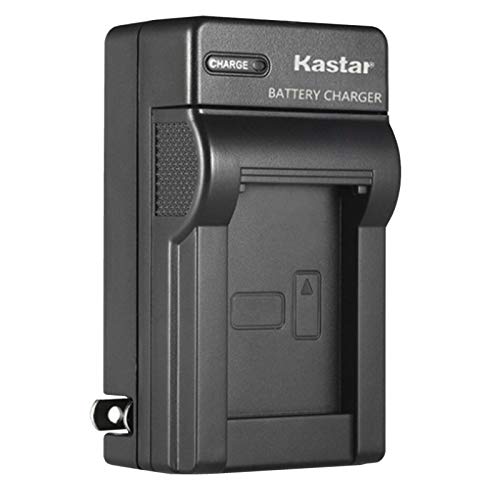
Kastar AC wall battery charger, replacement for the Fuji BC-W126
The Kastar charger is the outlier in this guide, and deliberately so. It is an AC wall battery charger, presented as a replacement for the Fujifilm NP-W126 and NP-W126S battery’s original companion, the Fuji BC-W126 charger. Where every other product here is a USB device, the Kastar plugs directly into a wall outlet. There is no adapter brick to pair it with, no cable to pack, and no dependence on a USB port’s output: the charger and the power source are one object.
That design has a clear home. A wall charger suits a fixed charging station — the shelf where camera gear lives, the office corner, the studio — where it can stay plugged in and ready, and where a battery can be dropped in the moment it comes out of a camera. It also serves owners whose original BC-W126 has been lost or has failed and who simply want the same style of charger again rather than a change of system. The trade-off is travel flexibility: away from a mains socket, a wall charger cannot sip from a power bank the way the USB models can.
The compatibility list reflects the long history of the battery format, naming the Fujifilm X-H1, X-M1, X-S10, X-T1, X-T2, X-T3, X-T10, X-T20, X-T30, X-T100, and X-T200. Several of those bodies — the X-H1, X-T1, X-M1 — predate most of the other listings in this guide, which makes the Kastar the natural shortlist entry for owners of early X-series cameras whose charging needs are entirely at home. As a replacement-style charger sold on its own, it assumes you already have the batteries; what it restores is the original, uncomplicated way of charging them.
Side-by-side comparison
The table below collects only what the listings themselves state: what is in the box, how the charger is powered, and a distinguishing detail from each product title. Cameras named by each maker are covered in the individual sections above.
| Product | Included | Power input | Listing highlight |
|---|---|---|---|
| K&F Concept 1300mAh bundle | 2 batteries, dual-slot charger | Type-C and Micro-USB | 1300mAh per battery, described as a fast charger |
| 1600mAh PD bundle | 2 batteries, 2-channel charger | USB, PD 20W | 1600mAh per battery, magnetic snap cover |
| Nitecore FX1 | Charger only | USB | Digital charger design |
| FCDAZR bundle | 2 batteries, dual charger | USB | Broad current-model compatibility list |
| K&F Concept 3-pack bundle | 3 batteries, 3-slot charger | USB-style multi-slot charging | Largest kit in this guide, upgraded charger |
| Artman bundle | 2 batteries, dual charger | USB | Dual LED status, widest bundle camera list |
| JJC charger | Charger only, USB to USB-C cable | USB-C via supplied cable | Long multi-generation compatibility list |
| Kastar AC wall charger | Charger only | AC wall outlet | Replacement for the Fuji BC-W126 |
Read as a map, the category divides into three decisions. First, batteries or no batteries: four bundles include two packs, one includes three, and three products are chargers alone. Second, power: everything except the Kastar runs from USB in some form, while the Kastar answers to a wall socket. Third, emphasis: the PD bundle adds a delivery standard and a cover, the Nitecore adds a digital presentation, the JJC adds its own cable, and the three-slot K&F Concept kit adds sheer rotation depth. Most buyers will find that one of those three decisions settles the shortlist on its own.
Charging guidance for NP-W126 owners
Whichever charger you choose, a few general practices apply across the whole NP-W126 family. Charge batteries at ordinary room temperature where possible, and let a pack that has come in from a cold day of shooting warm up before it goes on the charger; lithium-ion cells in general prefer moderate conditions to extremes. Keep the battery contacts and the charger contacts clean and dry, since the connection between pack and charger is a simple metal interface that dust and moisture do nothing to help. A soft, dry cloth is all that routine contact care requires.
Rotation is the habit that most extends the useful life of a multi-battery kit. Use the packs in turn rather than always draining the same favourite, and avoid leaving every battery sitting fully depleted for long stretches between shoots. If a camera will rest for an extended period, storing its batteries partly rather than completely charged is the widely accepted general practice for lithium-ion cells, and removing the battery from a body that will sit unused for months is a sensible precaution as well.
On the road, the USB chargers in this guide share one strategic advantage worth planning around: they separate the act of charging from the availability of a wall socket. A dual charger running from a power bank can refill a pair of packs during a train journey, a flight connection, or a drive between locations, which effectively turns transit time into charging time. The wall charger gives that option up in exchange for zero-fuss charging at base. Many experienced Fuji shooters quietly run both systems — USB for travel, wall for home — and the charger-only prices of products like the JJC and Kastar entries make that two-location strategy easy to assemble from this list.
Finally, match the charger to the body count, not just the battery count. Two photographers sharing one household kit, or one photographer running a main body and a backup, will cycle batteries faster than any single-camera routine. In those cases the three-slot kit, or two dual chargers in two places, stops being an extravagance and becomes the arrangement that keeps every camera in the house ready to pick up.
Matching a charger to a shooting style
It can help to picture the main Fujifilm routines and the products that map onto them. The travel photographer carrying an X100VI or an X-M5 in a small bag usually owns two or three batteries, charges overnight, and values small size and flexible power above everything else. For that routine, a dual-slot USB bundle is the natural centre of the kit, and the details that matter are input type and any cover that keeps the unit tidy among cables and clothing. The dual-input K&F Concept bundle and the PD bundle with its magnetic snap cover are the two listings written most directly for that pocket of a bag.
The event and video shooter works to a different clock. Batteries cycle during the day, not just after it, and the cost of an empty pack is measured in missed moments rather than inconvenience. Depth is the priority: more batteries, more slots, and a charging arrangement that can be understood at a glance in a dark venue or a busy preparation room. The three-slot K&F Concept kit answers the depth requirement in a single product, while the Artman bundle’s clear dual LED status suits a charging shelf where several packs are in play at once and their owners need to know, instantly, which ones are ready to go back into a camera.
The home-based photographer, meanwhile, often undervalues simplicity until the original charger disappears. A permanent charging point that never travels, never borrows a phone cable, and never competes for a laptop port has a quiet appeal that specification tables do not capture. That is the Kastar wall charger’s territory, and it is also where a charger-only USB model such as the JJC, left plugged in beside the desk with its supplied cable, earns its place. None of these routines is more legitimate than the others; they are simply different answers to the question of where a Fujifilm camera sleeps at night, and the listings above contain a considered option for each of them.
Frequently asked questions
Can one charger handle both NP-W126 and NP-W126S batteries?
Yes. The two batteries share the same physical format and charging contacts, and every product in this guide is listed for both designations. A charger bought for an older NP-W126 kit remains the right charger for NP-W126S packs, and the bundles here can be used with a mixed set of the two.
Which cameras do these chargers serve?
Between the eight listings, the named cameras cover most of the NP-W126 era of the Fujifilm range: the X100V, X100VI, and X100F; the X-T30 family including the X-T30 II, the X-T20, X-T3, X-T2, and X-T1; the X-S10; the X-E4 and X-E5; the X-M5; the X-Half; the X-Pro3; and the X-A5, X-A7, X-T100, and X-T200, among others. Always confirm your exact body against the individual listing before ordering, since each maker publishes its own list.
Is a higher published capacity always better?
Not automatically. In this guide, two bundles publish capacities — 1300mAh and 1600mAh per battery — and the rest do not headline a figure. A larger figure indicates a larger stated energy store, but the shooting time a battery delivers also depends on the camera model, temperature, screen and stabilisation use, and the balance between stills and video. Capacity is best treated as one documented specification to weigh alongside slot count, input type, and compatibility.
Why choose a USB charger over a wall charger, or the reverse?
USB chargers can run from wall adapters, laptops, car adapters, and power banks, which makes them the flexible travel choice. A wall charger such as the Kastar plugs straight into an outlet with no cable or adapter involved, which makes it the simplest permanent home setup and a direct replacement for the original Fuji BC-W126 style of charging. The choice is about where charging happens, not about which is more correct.
What does a decoded battery mean, in general terms?
In general terms, a decoded third-party battery is built to communicate battery status to the camera the way the original pack does, so the body can display charge level and manage power normally. Communication completeness varies between third-party packs, and listings do not always describe it, so photographers who rely on a precise on-screen gauge should check the specific listing’s wording on this point before buying.
How many spare batteries does a typical Fuji shooter need?
It depends on the work. A light stills routine may never drain a second pack, while a full day of events or a video-heavy shoot can cycle through three or more. The bundles in this guide reflect that spread: two-packs for the common two- and three-battery rotation, and one three-pack kit for photographers who regularly come home with every battery spent.
Check prices on Amazon
Live listings for the shortlist in this guide are pulled from Amazon below, so prices and availability are always current at the moment you look.

Closing thoughts
The NP-W126 format has powered Fujifilm cameras for long enough that its charging category is fully mature, and the eight products here show the shape of that maturity. There is no single winner, because there is no single Fuji routine. The photographer building a first spare kit is well served by a straightforward two-battery dual-charger bundle such as the FCDAZR or Artman sets. The traveller who charges from whatever power is at hand will notice the K&F Concept dual-input design and the PD bundle with its magnetic cover. The heavy rotator has a genuine three-slot, three-battery answer. And the owners who need no batteries at all can choose between a digital USB charger, a cable-included compact charger, and a wall charger that restores the original BC-W126 arrangement.
Start, as the opening sections suggest, with the unglamorous questions. How many batteries do you drain before you next see power? Where does charging actually happen — a desk, a hotel, a bag in transit? Is the gap in the kit batteries, charging points, or both? Answer those from your own routine, match the answers against what each listing documents, and the right charger from this list tends to identify itself. Batteries are the least visible part of a camera system, right up until the moment they are the only part that matters; a charging setup chosen with a little care makes that moment rare.


