What's inside
- Key Takeaways
- Quick Picks
- How We Chose These Picks
- What Makes a Gaming Microphone Good?
- Wired or Wireless for Gaming?
- How Do Microphones Change the Way a Team Plays?
- What Should You Know About Fit During Long Sessions?
- How Do You Choose Between Two Headsets on the Same Platform?
- How Do the Six Gaming Headsets Compare?
- What Separates a Good Night of Gaming Audio From a Great One?
- How Should You Set Up a Gaming Headset Microphone?
- How Do Game Genres Change What You Need?
- What Mistakes Do Gaming Headset Buyers Make?
- How Does a Gaming Headset Handle Work Calls and Study?
- What Do Streamers and Creators Need Beyond a Good Mic?
- How Should Parents and Households Choose a Shared Gaming Headset?
- How Do You Get Better at Hearing the Game?
- Final Recommendation
- One Last Consideration Before You Order
- A Note on Second-Hand and Spare Headsets
- Frequently Asked Questions
- Related Guides
As an Amazon Associate I earn from qualifying purchases. This post may contain affiliate links at no extra cost to you.
widgetverdict.com is reader-supported. When you buy through links on our site, we may earn an affiliate commission.
Where to buy: each of the six headsets below links to its Amazon listing, and together they cover the platforms where voice chat actually happens — PC, PlayStation, and Xbox — in wired and wireless forms.
A gaming headset lives or dies by two conversations at once. The first is the game talking to you: footsteps on a staircase behind you, a reload sound through a wall, the direction of an engine note as it crosses the map. The second is you talking to your team, through a microphone that sits inches from a mechanical keyboard, a controller’s clicking sticks, and the fan of the machine under your desk. The best gaming headsets with microphone treat both conversations as first-class work, and the failures in this category are usually lopsided — beautiful game audio paired with a microphone that makes you sound like a drive-through intercom, or a lovely mic attached to drivers that smear every positional cue into mush.
This guide compares six headsets that balance the two conversations at different prices and platforms. Razer contributes two versions of its BlackShark V2 X — one for PC and PS5, one built for Xbox with a 3.5mm connection. Logitech answers with the wired G432, carrying DTS Headphone:X 2.0 surround, and the wireless G733 Lightspeed with its suspension headband and Blue VO!CE microphone technology. HyperX brings the Cloud III, the comfort-famous line’s wired model with connections for every platform in the house. JBL’s Quantum 100M2 closes the list as the detachable-mic value pick that works with everything through a 3.5mm jack.
Platform is the first filter, and this guide respects it strictly: an Xbox player needs a headset whose connection and chat behaviour are built for Xbox, a wireless devotee needs a dongle ecosystem their console accepts, and a PC player has the widest choice of all. The reviews state each pick’s platform plainly, because a superb headset that cannot join your platform’s party chat is not a bargain — it is a return label waiting to be printed.
Key Takeaways
- A gaming headset must be judged on game audio and microphone together; either one alone will betray you mid-match.
- The Razer BlackShark V2 X twins split by platform: one for PC and PS5, one built for Xbox over 3.5mm.
- Logitech’s G432 offers wired DTS Headphone:X 2.0 surround, while the G733 goes wireless with Lightspeed and Blue VO!CE mic processing.
- The HyperX Cloud III is the multi-platform comfort pick, connecting by USB-C, USB-A, and 3.5mm.
- JBL’s Quantum 100M2 is the value doorway, with a detachable mic and memory foam cushions.
- Cardioid microphones earn their keep by rejecting the keyboard inches from your face.
Quick Picks
| Pick | Badge | Why it earns its place |
|---|---|---|
| Razer BlackShark V2 X | Best for PC and PS5 voice chat | TriForce Titanium 50 mm drivers and a HyperClear cardioid mic tuned to reject desk noise. |
| Razer BlackShark V2 X for Xbox | Best for Xbox players | 50mm drivers and a cardioid mic in a lightweight, comfortable 3.5mm design made for Xbox. |
| Logitech G432 | Best wired surround | DTS Headphone:X 2.0, 50 mm drivers, USB and 3.5 mm connections, and a flip-to-mute mic. |
| Logitech G733 Lightspeed | Best wireless | Lightspeed wireless, a suspension headband, Blue VO!CE mic processing, and PRO-G audio for PC and PS5. |
| HyperX Cloud III | Best multi-platform comfort | Memory foam comfort with USB-C, USB-A, and 3.5mm connectivity across PC, PS5, PS4, and Xbox Series X|S. |
| JBL Quantum 100M2 | Best value with detachable mic | A detachable microphone, memory foam ear cushions, and a 3.5 mm jack that works with PC and consoles. |
How We Chose These Picks
We scored every candidate on both conversations. For game audio, that meant driver size and tuning aimed at positional clarity — the ability to place a sound in space — rather than bass weight alone. For voice, it meant microphone pattern and placement: cardioid booms that favour your mouth and reject the desk were favoured heavily, because a gaming desk is one of the noisiest microphone environments in ordinary life. Headsets with microphones as an afterthought did not survive the first cut, whatever their drivers promised.
Platform coverage shaped the final six deliberately. PC and PlayStation players are well served by USB and proprietary wireless; Xbox players live in a stricter connection world, so a dedicated Xbox pick was non-negotiable. We also insisted on a genuine value option and a genuine wireless option, because a guide that only serves one budget or one connection religion fails the players who came looking for the others.
Comfort evidence closed the selection. Gaming sessions run longer than meetings, and a headset that wins the first hour and loses the third is a bad recommendation. Suspension headbands, memory foam, and lightweight frames all appear in the final six because the makers treated long-session wear as engineering rather than upholstery. Where a pick’s comfort is merely adequate, the review says so.
What Makes a Gaming Microphone Good?
Pattern first. A cardioid microphone listens hardest in the direction it points — at your mouth — and least from behind, which is where your keyboard, mouse, and PC fans live. That single design choice explains why gaming mics so often embarrass office headsets in home setups: the gaming world demanded rejection of desk noise years ago, and the engineering followed. When you read the picks below, the repeated word “cardioid” is not marketing rhythm; it is the feature your teammates will actually hear.
Placement and consistency come next. A boom holds the capsule at a fixed distance from your mouth, so your volume stays steady as you lean, turn, and celebrate. Detachable and flip-up designs trade a little of that fixed geometry for flexibility — the JBL’s mic removes entirely for media use, the Logitech G432’s flips up to mute — and each review weighs that trade honestly. What you should not accept is a microphone whose position wanders; a wandering mic is a volume rollercoaster for everyone listening.
Processing is the third layer. Technologies like Logitech’s Blue VO!CE apply broadcast-style filtering to the voice — taming plosives, steadying level, adding clarity — which flatters streamers and steadies ordinary party chat alike. Processing cannot rescue a bad capsule in a bad position, but on top of good hardware it is the difference between sounding present and sounding produced. Judge microphones the way your teammates will: in a recording, mid-game, with the keyboard going.
Wired or Wireless for Gaming?
Wired remains the zero-compromise connection for latency and reliability. A cable carries game audio and voice with no battery to die in the final round, no wireless interference in a flat full of devices, and no dongle to misplace — which is why four of our six picks are wired, and why competitive players on desks still plug in without embarrassment. The 3.5mm wired models add a universality wireless cannot match: the same headset moves between controller, PC, and handheld without asking permission.
Wireless buys freedom that some setups genuinely need. A living-room player crossing to a console, a streamer who stands and gestures, anyone whose desk geometry makes a cable a trip hazard — for them, a proper gaming wireless system like the G733’s Lightspeed, built for low-latency play rather than borrowed from phone Bluetooth, is worth its premium. The honest costs are charging discipline and platform pickiness: wireless ecosystems are not interchangeable between consoles, so the platform check matters twice as much.
The deciding question is embarrassingly practical: where do you sit, and what do you play on? Answer those two and the wired-versus-wireless argument usually settles itself, leaving budget and comfort to choose among the survivors.

Razer BlackShark V2 X — Best for PC and PS5 voice chat
Razer’s BlackShark V2 X was designed with esports input, and it shows in the priorities: TriForce Titanium 50 mm drivers for the game, a HyperClear cardioid microphone for the team, and a frame light enough to disappear during a long session. It is wired, aimed at PC and PS5, and finished in black without the light show that announces lesser gaming gear. The design brief appears to have been “win matches, sound clear, charge nothing,” and the result is one of the most focused headsets in this guide.
The microphone is the headline for this guide’s purposes. Cardioid rejection keeps a mechanical keyboard’s clatter out of your callouts to a degree that surprises people upgrading from a basic mic, and the capsule’s voice tuning keeps you intelligible without sounding thin. Teammates hear the callout, not the desk. On the listening side, the TriForce drivers separate frequencies cleanly, so footsteps and reloads sit in their own space instead of drowning in explosion bass — the exact separation competitive play rewards.
The compromises are wired life and a closed, isolating fit that warms over marathon sessions. There is no wireless freedom and no platform-hopping beyond its PC and PS5 remit. Within that remit, though, the V2 X is the pick we would hand a competitive player who asked for one recommendation and no homework.
- Connection: Wired, for PC and PS5
- Drivers: TriForce Titanium 50 mm
- Microphone: HyperClear cardioid
- Wearing style: Closed, lightweight frame
Strengths
- Cardioid mic rejects keyboard noise superbly.
- Driver separation keeps positional cues readable.
- Light frame suits long competitive sessions.
Trade-offs
- Wired only; no wireless option in this model.
- Closed fit warms up across marathons.
- Platform remit is PC and PS5, not Xbox.
Best for: competitive PC and PS5 players who live on voice chat. Not suited for: Xbox players, who should take the dedicated version below.

Razer BlackShark V2 X for Xbox — Best for Xbox players
Xbox players are the most underserved audience in gaming audio, because the platform’s connection rules narrow the field — which is why this guide carries a dedicated Xbox version of the BlackShark V2 X rather than a footnote. It connects by the 3.5mm audio jack, carries 50mm drivers and a cardioid mic, and is described by Razer as lightweight and comfortable: the V2 X formula translated for the controller in an Xbox player’s hands.
The 3.5mm path is a virtue here, not a compromise. Plugging into the controller means chat and game audio arrive through the connection Xbox designed for the purpose, with no dongle diplomacy and no wireless ecosystem questions. The cardioid microphone performs the same desk-noise rejection as its PC sibling, so party chat hears your voice rather than your keyboard — a real consideration now that plenty of Xbox players game at desks with the full mechanical symphony beside them.
What you give up versus the PC model is USB versatility; what you gain is certainty on your platform. Comfort follows the family pattern of light weight and session-length wearability. If your gaming life is centred on Xbox and your voice chat matters, this is the straightforward, purpose-built answer, and the existence of a platform-specific version is exactly how a guide should treat Xbox rather than as an afterthought.
- Connection: 3.5mm audio jack
- Drivers: 50mm
- Microphone: Cardioid mic
- Platform: Xbox
- Fit: Lightweight, comfortable design
Strengths
- Purpose-built for Xbox through the controller jack.
- Cardioid mic keeps party chat clear of desk noise.
- Lightweight comfort for long sessions.
Trade-offs
- 3.5mm only; no USB connection for PC features.
- Wired to the controller, as the platform intends.
- Shares the closed-fit warmth of its sibling.
Best for: Xbox players who want proven voice chat without adapters. Not suited for: PC players wanting USB surround features.
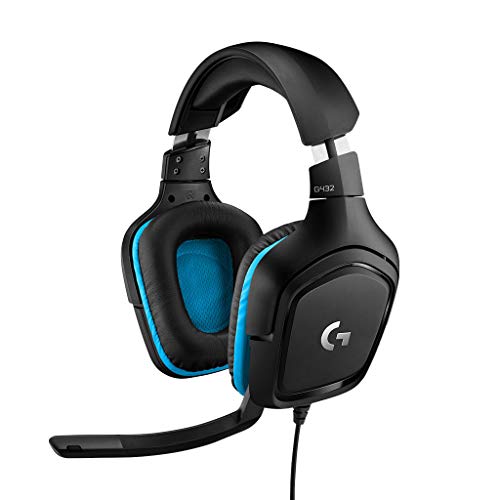
Logitech G432 — Best wired surround
The G432 is Logitech’s wired all-rounder: 50 mm audio drivers, DTS Headphone:X 2.0 surround sound, both USB and 3.5 mm connections, and a flip-to-mute microphone, in a black design that has served PC gamers for years. Its argument is completeness at a sensible tier — surround for immersion, two connection paths for flexibility, and a mic gesture so natural that muting becomes a flick rather than a decision.
DTS Headphone:X 2.0 is the feature to understand correctly. On PC over USB, it renders a surround image through stereo drivers, widening the sense of space in games that support it and giving directional cues a stage to move across. It will not turn a headset into a cinema, and purists sometimes prefer plain stereo for competitive purity — the G432 lets you choose, which is the right design. The flip-to-mute mic, meanwhile, earns daily affection: lift the boom, you are muted; drop it, you are live. No button, no ambiguity, no software state to misread mid-match.
The build is the honest compromise at this tier — functional plastics rather than premium materials, and a fit that suits most heads without the luxury of the G733’s suspension system. Long sessions are comfortable enough for the majority, though the headset wears its price in its materials if you handle it beside costlier rivals. As a complete wired package for PC play with surround on tap, it remains easy to recommend.
- Connection: USB and 3.5 mm
- Drivers: 50 mm audio drivers
- Surround: DTS Headphone:X 2.0
- Microphone: Flip-to-mute mic
Strengths
- DTS surround widens game space on PC.
- USB and 3.5 mm cover PC and controller play.
- Flip-to-mute is the fastest mute gesture here.
Trade-offs
- Plastic build feels functional beside premium rivals.
- Surround benefits are PC-centred.
- Fit is adequate rather than luxurious.
Best for: PC players wanting wired surround and connection flexibility. Not suited for: buyers chasing premium materials or wireless freedom.

Logitech G733 Lightspeed — Best wireless
The G733 is the guide’s wireless flagship: Lightspeed wireless connection, a suspension headband, Blue VO!CE microphone technology, and PRO-G audio drivers, for PC and PS5. It is also the design extrovert of the six — where the Razers are all business, the G733 wears its gaming identity openly. Underneath the styling, though, the engineering brief is serious: low-latency wireless that gaming can trust, comfort engineered for hours, and microphone processing borrowed from broadcast.
Blue VO!CE is the differentiator teammates hear. It applies real-time filtering to your voice — clarity, level steadiness, a produced quality that streamers chase with separate equipment — and in ordinary party chat it simply makes you the clearest voice in the channel. The suspension headband handles the comfort half by distributing weight across a strap rather than a rigid band, a design long-session players tend to convert to permanently once tried. PRO-G drivers keep game audio disciplined, favouring clarity over boom.
Wireless ownership rules apply: charge it or lose it mid-session, and its ecosystem is PC and PS5 rather than Xbox. The detachable mic is a thoughtful touch for using the headset as media headphones away from the desk. For the player who wants to stand, roam, and still sound produced, the G733 is the complete wireless answer in this guide.
- Connection: Lightspeed wireless
- Drivers: PRO-G audio
- Microphone: Blue VO!CE mic technology, detachable
- Headband: Suspension design
- Platforms: PC, PS5
Strengths
- Blue VO!CE processing makes voices sound produced.
- Suspension headband excels across long sessions.
- Lightspeed wireless is built for gaming latency.
Trade-offs
- Battery discipline is mandatory.
- No Xbox wireless path in this ecosystem.
- Styling is bold for shared or office-adjacent spaces.
Best for: PC and PS5 players who want wireless freedom and a produced voice. Not suited for: Xbox players or forgetful chargers.
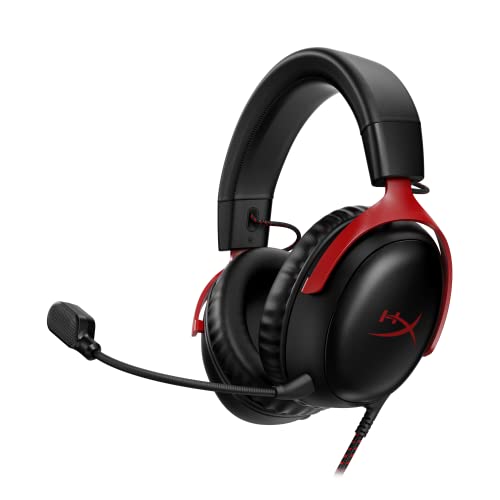
HyperX Cloud III — Best multi-platform comfort
The Cloud line built its name on comfort, and the Cloud III continues it as a wired headset for PC, PS5, PS4, and Xbox Series X|S, connecting by USB-C, USB-A, and 3.5mm, with memory foam cushioning. In a guide full of specialists, the Cloud III is the diplomat: one headset that walks between every platform in a household and feels like a pillow on all of them. For the player whose week crosses a work PC, a PlayStation, and an Xbox in the living room, that diplomacy is the whole product.
Memory foam is not a spec-sheet flourish here; it is the reason Cloud owners keep their headsets for years. The cushions and headband distribute pressure so evenly that the headset’s presence fades during play, and the wired connection means the experience is identical on every platform — no per-console wireless negotiations. Voice quality from its microphone is clear and natural for party chat, favouring an honest presentation of your voice over heavy processing.
The trade is the absence of wireless and of surround processing as a headline; the Cloud III bets on fit, connections, and honest stereo instead. History suggests the bet is well placed for its audience. If your household games on everything and your sessions run long, this is the headset least likely to be replaced, because comfort is the feature that never becomes obsolete.
- Connections: USB-C, USB-A, and 3.5mm
- Platforms: PC, PS5, PS4, Xbox Series X|S
- Cushioning: Memory foam
- Type: Wired gaming headset
Strengths
- Three connection types cover every platform in the house.
- Memory foam comfort is the line’s proven signature.
- Consistent wired behaviour everywhere it plugs in.
Trade-offs
- No wireless option for couch-crossing freedom.
- No headline surround processing.
- Cable management follows you between platforms.
Best for: multi-platform households and comfort-first players. Not suited for: wireless devotees or surround-processing seekers.

JBL Quantum 100M2 — Best value with detachable mic
JBL’s Quantum 100M2 is the value doorway into this category, and it is smarter than its tier usually manages: a detachable microphone, memory foam ear cushions, and a 3.5 mm jack that works with PC and consoles. The detachable mic is the idea to steal — unplug it and the headset becomes plain headphones for a train or a desk, plug it back in and you have a gaming headset with a proper boom. For a first gaming headset, or a household spare that serves three platforms, that flexibility is worth more than a specification war.
JBL’s audio heritage shows in the tuning: game sound arrives with the brand’s characteristic energy, and voices in chat are rendered clearly on your side. The microphone, when attached, does the honest work of a boom — positioned, consistent, clear enough that teammates stop asking you to repeat callouts. Memory foam at this tier is a genuine courtesy; many value rivals use firmer foam that announces itself by the second hour.
Expectations should match the tier in materials and in microphone refinement — the Quantum’s mic is competent rather than cardioid-sophisticated, and a loud keyboard will make itself known more than it does through the Razers. But as an entry point that refuses to feel like a punishment, and as the only pick whose microphone comes off for media life, it earns the closing place in this guide on merit.
- Connection: 3.5 mm jack
- Microphone: Detachable mic
- Cushions: Memory foam ear cushions
- Works with: PC and consoles
Strengths
- Detachable mic doubles the headset as media headphones.
- Memory foam comfort is rare at this tier.
- 3.5 mm connection works across PC and consoles.
Trade-offs
- Microphone is competent rather than noise-rejecting elite.
- Materials reflect the value tier.
- No USB or surround features.
Best for: first gaming headsets and households wanting one flexible spare. Not suited for: streamers needing broadcast-grade voice rejection.
How Do Microphones Change the Way a Team Plays?
It is easy to treat voice chat as a social layer spread over the real game, but anyone who has played with and without it knows the microphone changes the game itself. Teams that communicate scout more, rotate earlier, and tilt less, because information arrives faster than any ping system can carry it and frustration has a voice to leave through. A clear microphone is therefore a performance feature in the most literal sense: the callout that lands half a second sooner, understood the first time, is worth more than a marginal improvement in driver specification. This is why this guide weighs microphones as heavily as audio, and why the cardioid designs dominate the picks.
There is a subtler effect on the other side of the channel. Players moderate their own play when they can hear themselves being heard — the sidetone effect — and teams with good audio all round develop a calmer register, because nobody is shouting over noise nobody else can identify. Bad microphones create a particular misery spiral: the player with the noisy mic gets muted by teammates, loses information, plays worse, and concludes the team is the problem. Equipping a squad is partly an act of friendship, and the value picks in this guide exist partly so that the friend with the dreadful mic can be handed a solution rather than an exile.
Streamers live at the extreme of this logic, where the microphone is not team equipment but broadcast equipment, and the audience hears every flaw the teammates forgive. For them the processing-rich picks — Blue VO!CE above all — compress the distance between a gaming headset and a dedicated streaming microphone to a gap many channels can happily live with. Judge your own ambition honestly: party chat forgives, audiences notice.
What Should You Know About Fit During Long Sessions?
Gaming sessions outlast meetings by hours, and headset fit fails on a schedule: the clamp that felt secure at minute ten is a headache at hour two, the cushion that felt plush is a sweat patch at hour three. The designs in this guide attack the problem differently — suspension headbands that float the weight, memory foam that distributes it, lightweight frames that simply bring less of it — and the honest way to choose is by your own session length and head shape rather than by review scores. Players who wear glasses should be especially deliberate, since temple pressure is the most common silent reason headsets get returned.
Heat management is fit’s second half. Closed-back designs, which most gaming headsets are for isolation’s sake, trap warmth; fabric cushions breathe better than sealed leatherette, and a headset you can wear slightly looser without losing its seal is worth real money in a warm room. Breaks help more than any material: the players who last five hours are the ones who lift the headset off during loading screens and queues, a habit that also rests the ears’ perception and keeps positional audio feeling fresh.
Finally, fit includes the microphone. A boom that drifts downward across a session quietly degrades your voice for everyone else, and a boom too stiff to adjust discourages the small corrections that keep it placed. When you first set up any pick in this guide, adjust the boom deliberately, note how it feels at the right position, and re-check it whenever teammates say you have gone quiet. Your voice is a setting, and settings drift.
How Do You Choose Between Two Headsets on the Same Platform?
When platform and connection no longer separate the candidates — two wired PC headsets, say — decide on the microphone’s working environment first. A quiet room with a membrane keyboard forgives almost any mic; a mechanical keyboard in a shared flat demands cardioid rejection and rewards the Razers specifically. Next, decide by session length: marathon players should let comfort arbitrate between otherwise equal picks, because comfort is the only feature whose value grows every hour you wear the thing.
Then consider your second life for the headset. If it will serve work calls, weigh the produced-voice processing and the on-camera look; if it will travel, weigh the detachable microphone and the case you will actually carry; if it will be shared with a household, weigh the connections that let it serve everyone’s machines, which is the Cloud III’s whole thesis. The last tiebreaker is the maker’s ecosystem you already own — matching software, matching dongles, one less control panel on the PC — a boring consideration that quietly improves daily life more than a decibel here or there.
What you should not do is decide by driver diameter, the industry’s favourite large number. Fifty millimetres appears across this guide on headsets that sound meaningfully different, because tuning, housing, and seal shape the result at least as much as the driver’s size. Read for pattern, placement, and fit; listen where you can; and remember that your teammates’ verdict on your microphone will reach you within one match, free of charge.
How Do the Six Gaming Headsets Compare?
| Headset | Connection | Microphone | Platforms | Strongest suit |
|---|---|---|---|---|
| Razer BlackShark V2 X | Wired | HyperClear cardioid | PC, PS5 | Competitive voice chat |
| Razer BlackShark V2 X Xbox | 3.5mm | Cardioid | Xbox | Xbox party chat |
| Logitech G432 | USB and 3.5 mm | Flip-to-mute | PC, consoles via jack | Wired surround |
| Logitech G733 | Lightspeed wireless | Blue VO!CE, detachable | PC, PS5 | Wireless with produced voice |
| HyperX Cloud III | USB-C, USB-A, 3.5mm | Boom mic | PC, PS5, PS4, Xbox Series X|S | Comfort everywhere |
| JBL Quantum 100M2 | 3.5 mm | Detachable | PC, consoles | Value flexibility |
Platform sorts the table first: Xbox players have two honest paths, the dedicated Razer or the Cloud III’s jack; PC and PS5 players choose among all six by connection and comfort. Then decide your microphone ambition — cardioid rejection for noisy desks, Blue VO!CE production for streamers, detachable flexibility for mixed media life — and the table narrows to one or two names quickly.
What Separates a Good Night of Gaming Audio From a Great One?
Beyond the headset itself, three habits separate the players who praise their audio from the players who blame it. The first is volume honesty: positional cues live in quiet details, and a headset turned up until explosions are thrilling buries the footsteps it was bought to reveal. Play at the level where the quiet sounds are audible and the loud ones are merely firm, and the whole soundscape becomes information instead of weather. The second habit is per-game adjustment — most games bury their best audio settings behind menus, with headphone modes and dynamic range options that change a headset’s character completely. Ten minutes in a new game’s audio menu is worth a tier of hardware.
The third habit is microphone maintenance of the social kind: ask your regular teammates, once, how you actually sound, and believe them. Players tune their aim daily and their audio never, which is backwards — your aim affects your score, but your voice affects whether anyone wants to queue with you tomorrow. The picks in this guide all clear the bar of sounding good; the great nights come from owners who verified it in the environment that matters, mid-game, with the keyboard running and the round on the line.
There is a final, unfashionable truth: the best gaming audio setup is the one already on your head when the invite arrives. A slightly lesser headset that lives at your desk, charged or cabled, positioned and configured, beats a superior one in a drawer across the room for the only session that counts — tonight’s. Buy the headset your routine will actually keep ready, and the good nights become the ordinary ones.
How Should You Set Up a Gaming Headset Microphone?
Position the boom so the capsule sits near the corner of your mouth, then test it in the environment you actually play in: game running, keyboard in use, friends in a call. Record or use your platform’s mic test and listen for the two classic faults — your voice buried under desk noise, which means the mic is too far or gain is too low, and your voice distorted and booming, which means it is too close or gain is too high. Adjust in small steps; microphone setup is a five-minute task that pays out over hundreds of hours of clearer chat.
Set your platform’s noise suppression thoughtfully. Console and PC chat systems offer their own suppression layers, which stack with a cardioid mic’s natural rejection — helpful against a loud room, but stacked too aggressively they can clip the beginnings of words. If teammates say you sound robotic, turn the software layer down before blaming the hardware. Sidetone, where available, is worth enabling lightly: hearing a whisper of your own voice stops the slow volume creep that ends with you shouting at midnight.
Finally, manage the physical side. Route a wired cable so a chair wheel cannot find it, keep a wireless headset’s charging cable at the desk rather than in a drawer, and wipe cushions after long sessions. Gaming headsets die by cable, cushion, and battery neglect far more often than by electronics.
How Do Game Genres Change What You Need?
A headset that serves one genre faithfully can underserve another, and honest buying starts by naming your dominant genre. Competitive shooters reward positional precision and microphone rejection above all: the Razers’ tuning and cardioid discipline exist for this world, where a footstep’s direction is information and a callout’s clarity is a weapon. Story-driven and open-world games reward immersion — width, warmth, and the surround stage the G432 offers — because their audio is cinema as much as signal. Neither tuning is superior; they are answers to different questions, and the player who splits time evenly should weight the competitive answer, since immersion forgives more readily than a missed callout does.
Racing and simulation players listen differently again: engine notes carry gear and grip information, and long sessions in a rig make comfort the deciding sense — the Cloud III’s memory foam earns fans in rigs for the same reason it does at desks. Sports and party games, played on a couch with friends in the room, reward the wireless freedom of the G733 and a microphone that can be detached when the headset becomes the room’s shared media headphones. Horror players, a constituency of their own, should know that every headset in this guide will make the jump scare worse, and that this is a compliment.
Voice-heavy genres — tactical shooters, MMO raids, social deduction games where your voice is literally the gameplay — push the microphone from accessory to protagonist. In social deduction especially, a muddy or noisy mic is a tell that loses games, which may be the purest argument in this entire guide for buying the microphone first. Match the headset to the genre you play most, let the second genre enjoy the spillover, and be suspicious of any product claiming to be genre-proof.
The household dimension closes the section: shared headsets serve shared genres, and the multi-platform picks exist because a family’s week contains all of the above. One headset per genre is a luxury; one headset honest across genres is a strategy, and it is the strategy the middle of this guide is built around.
What Mistakes Do Gaming Headset Buyers Make?
Platform blindness is the expensive one: buying a wireless headset whose ecosystem excludes your console, or a PC-first USB model for an Xbox-centred life. Check the platform line before the driver size. The second mistake is judging by game audio alone in a quiet room, then discovering in the first real match that the microphone broadcasts every keystroke. The microphone is half the product; test it noisily or not at all.
Comfort mistakes run third: a two-minute try-on tells you nothing about hour three, which is why suspension bands and memory foam recur throughout this guide. Buyers also chase surround labels without checking platform support — surround processing is often a PC-USB feature that a console connection does not carry — and they forget that a detachable or flip-up mic changes how a headset fits a mixed media life. Buy for your platform, your desk noise, and your session length, in that order.
How Does a Gaming Headset Handle Work Calls and Study?
Increasingly, the headset bought for Friday night is the headset worn on Monday morning, and the picks in this guide mostly survive the crossover well. The same cardioid rejection that keeps a keyboard out of party chat keeps it out of a seminar; the same comfort that serves a raid serves a revision session. The two genuine frictions are appearance and connection. A bold gaming silhouette on a client call is a judgement call about your workplace’s culture rather than a technical flaw — the G733 wears its identity loudest, the Razers and Cloud III could pass in most offices — and a console-first connection may need the 3.5mm path to join a work laptop, which the multi-connection picks here handle gracefully.
Students feel the crossover most keenly, because one headset must cover lectures, library media, and games on a student budget. For them the value and multi-platform picks argue strongly: the Quantum 100M2’s detachable mic turns it into respectable library headphones, and the Cloud III’s three connections mean the same headset serves the dorm PC, the console, and the laptop in a lecture recording session. Buying one honest all-rounder beats owning a gaming headset and a broken pair of earbuds in parallel.
The crossover also runs the other way, and it is worth a warning: an office headset bought for work will disappoint for games in positional audio and microphone rejection alike. If gaming is half the headset’s life, buy from this guide and let the work calls enjoy the upgrade, rather than the reverse.
What Do Streamers and Creators Need Beyond a Good Mic?
The microphone gets a creator ninety percent of the way; the remaining ten percent is behaviour and setup. A headset mic sits close to the mouth, which is a gift for consistency, but it also captures breath and plosives that a desk microphone on a shock mount would forgive — boom angle, slightly below the airstream, is the creator’s first skill. Gain staging is the second: set the level so your excited voice, not your calm test voice, peaks without distortion, because the clip that gets shared will be the excited one. The processing-rich picks in this guide, Blue VO!CE above all, exist to compress exactly these disciplines into defaults a new creator can trust on day one.
Monitoring matters more than gear at this level. Creators who hear themselves accurately — a touch of sidetone, honest playback of a test recording — improve faster than creators who buy a second microphone. And consistency beats quality in audience perception: a good headset mic used identically every stream sounds more professional than a rotation of better devices set up differently each time. The audience bonds with a voice it recognises.
When a channel outgrows a headset microphone, the upgrade path is a dedicated USB or XLR microphone, and the headset retires to game audio and monitoring — a graceful second life that the comfort-led picks here are particularly suited to. Buy the headset for the player you are now; the creator you may become has a clear path from it.
How Should Parents and Households Choose a Shared Gaming Headset?
A shared household headset lives a harder, more social life than a personal one, and the buying criteria shift accordingly. Connections come first in a new way: the headset must serve the family console, the shared PC, and possibly a school laptop, which is the Cloud III’s three-connector thesis and the Quantum’s 3.5mm universality stated as household policy. Durability and replaceable cushions climb the list, because shared gear is handled by everyone and owned by no one, and the headset that survives a household is the one whose wear parts can be refreshed rather than the one with the most impressive launch video.
Volume habits deserve a family’s calm attention. Settle on the principle that clarity beats loudness — a well-sealed headset at moderate volume serves both the game and the listener better than a loose one turned up — and let the younger players learn on the picks whose fit seals properly on smaller heads. Session moderation is a household agreement rather than a hardware feature, but a comfortable headset paradoxically helps: players who are not fighting pressure and heat take their breaks more willingly than players mid-battle with their equipment.
Finally, a shared headset is often a child’s first microphone in front of strangers, which makes the voice-chat etiquette conversation part of the purchase: who you talk to, what you share, and how the mute works. The headsets in this guide all make that conversation easier by making the mute physical and findable. Buy the connections your house needs, teach the habits your house values, and the headset becomes one of the household’s better citizens.
How Do You Get Better at Hearing the Game?
Positional audio is partly a skill, and the headset is only the instrument. New players hear a wash of sound; experienced players hear a map, because they have learned their game’s audio language — which footstep belongs to which surface, how a reload sounds through a wall versus across a field, what the silence after a door means. The fastest way to build that literacy is deliberate: play a familiar map with the visual minimap ignored for a few rounds, call out what you hear before you see it, and notice how often the headset was right and your interpretation was late. The picks in this guide all resolve enough detail for that training to work; the difference between tiers shows up as how much effort the listening costs at hour two.
Settings literacy compounds the skill. Most games offer headphone-specific mixes, dynamic range compression for night play, and separate volume channels for effects, music, and voice — and the default mix is rarely the informative one. Turn music down until effects own the foreground, keep voice chat on its own channel loud enough to command attention, and re-check the mix after every major game update, because updates reset audio more often than players realise. A headset cannot fix a mix that buries its strengths; an owner who tunes the mix owns a better headset than the one they bought, whichever pick in this guide is on their head.
And when the skill plateaus, the honest upgrade order is comfort first, microphone second, drivers third — because you hear more in hour three with a fresh head than any specification delivers to an aching one.
Final Recommendation
Competitive PC and PS5 players should take the Razer BlackShark V2 X for the clearest callouts per pound spent, and Xbox players should take its dedicated sibling without a second thought. Logitech splits the remaining honours: the G432 for wired surround value, the G733 for wireless freedom with a produced voice. Households that game on everything should buy the HyperX Cloud III and stop thinking about headsets for years, while first-time buyers should start with the JBL Quantum 100M2 and upgrade only when they know which feature they miss. Our single default for a desk-bound player who talks as much as they play is the BlackShark V2 X — because in the end, your team remembers your voice long after they forget your aim.
One Last Consideration Before You Order
Buy from a listing with a return path you have actually read, and judge the headset across three real sessions rather than one unboxing. Session one tells you about fit’s first impression and the microphone’s first verdict from your teammates. Session two tells you about hour-two comfort, when novelty stops subsidising pressure points. Session three, ideally in your loudest, latest, most ordinary gaming conditions, tells you the truth about the whole system — voice, audio, and endurance together. The headsets in this guide have passed that three-session test in thousands of homes; the ones that fail it in yours should go back while the window is open, because a gaming headset is a hundred-hour purchase being judged, correctly, in its first ten.
A Note on Second-Hand and Spare Headsets
A retired gaming headset makes an excellent household spare — for a guest, a younger sibling, or the inevitable week when a cable dies before a tournament — provided its cushions are refreshed and its microphone is tested before it is needed. Keep the spare with its cable coiled loosely and its platform noted, because a spare whose compatibility nobody remembers is furniture, not insurance of any kind. The same logic scales to teams and clubs: one known-good spare headset per group converts equipment failure from an event into an errand. It is a fitting closing thought for a guide about communication hardware — the best setup is the one still working on the night everything else goes wrong.
Frequently Asked Questions
Can I use one headset for PC and Xbox?
Yes, if it connects by 3.5mm or offers the right multi-platform support — the HyperX Cloud III in this guide connects by USB-C, USB-A, and 3.5mm across PC and consoles. Wireless is the restrictive case: console wireless ecosystems are not interchangeable, so check the platform line carefully.
Why do my teammates hear my keyboard?
Your microphone is picking up the desk because of its pattern, its distance from your mouth, or both. A cardioid boom positioned near your mouth rejects far more keyboard noise; software suppression can help further, applied gently so it does not clip your words.
Is surround sound in a headset worth it?
For immersion in story games, yes — the G432’s DTS Headphone:X 2.0 widens the soundstage noticeably on PC. For competitive play, many players prefer clean stereo for precise cues. The honest answer is to treat surround as a flavour you can toggle, not a deciding specification.
Does a detachable microphone matter?
If the headset doubles as your media headphones, yes: removing the boom, as on the JBL Quantum 100M2 and the G733, makes it a normal pair of headphones in public. If it never leaves the desk, a fixed or flip-up boom is simpler and one less part to lose.
How long do gaming headset cushions last?
With daily play, expect cushions to be the first wear item, softening and eventually flaking over time. Wiping them down and keeping spares in mind when you buy — especially for long-term picks like the Cloud III — keeps a good headset feeling new.
Should I buy a separate microphone instead of a headset?
Only when your voice work outgrows chat: dedicated streaming, recording, or podcasting, where a desk microphone’s placement and capsule justify the extra equipment and the desk space it commands. For gaming with voice chat — even serious, competitive, daily gaming — the headsets in this guide keep the microphone at the perfect distance automatically, move with you, and cost less than the separate-microphone path once a stand and interface are counted. Most players who buy a separate mic first end up buying a good headset anyway for everything the mic cannot do.
Related Guides
For carrying your setup between home and campus, see Best Affordable Laptop Backpacks and Best College Laptop Backpacks. Daily commuters should also read Best Commuter Laptop Backpacks.


